Artwork
The Refectory (Le refectoire)
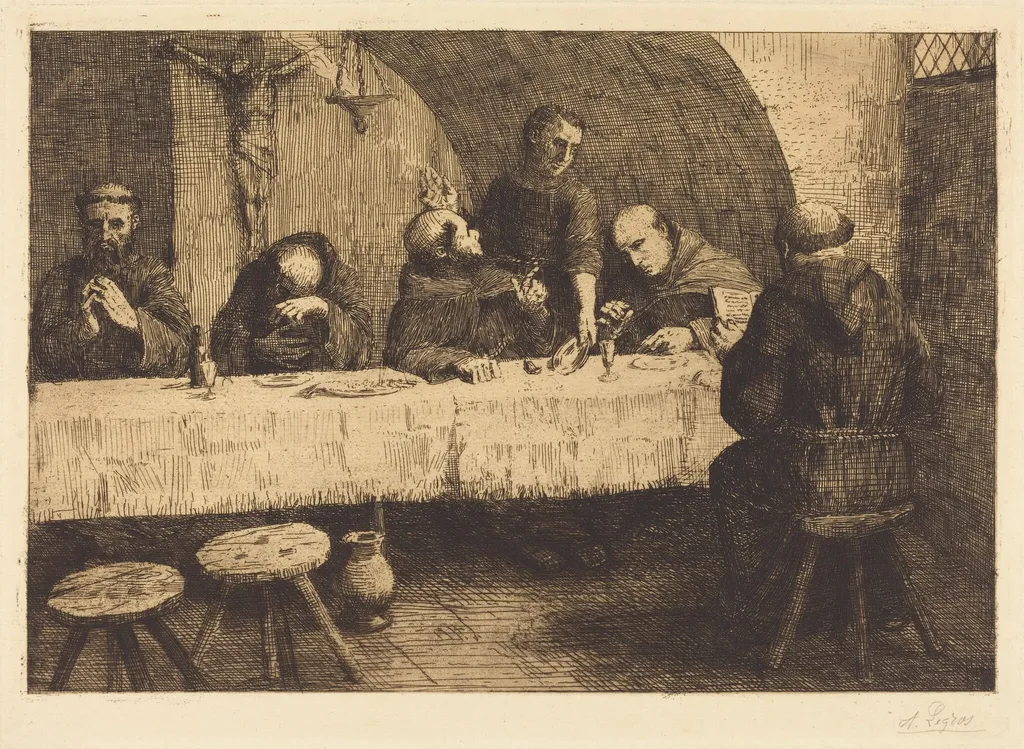
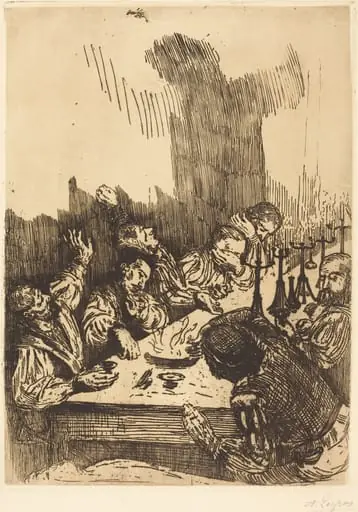
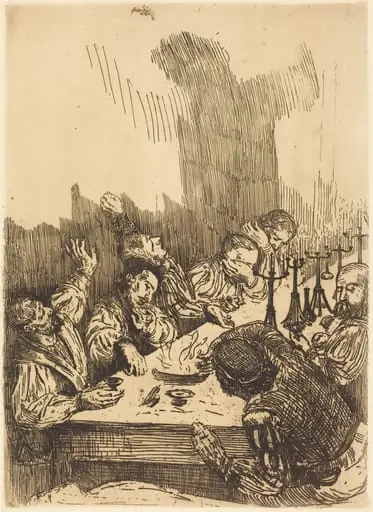
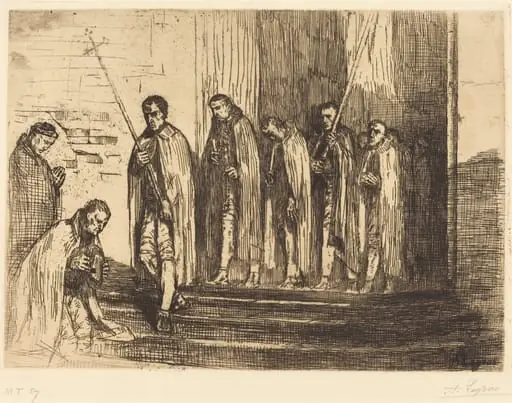
The Refectory (Le refectoire) is an ink print by the Romanticist artist Alphonse Legros. It dates from 1874 and is held in the collection of the National Gallery of Art.
About this work
Overview
Created in 1874, *The Refectory* is an etching by Alphonse Legros, a French artist who settled in Britain in 1863 and became a naturalized citizen.
Created in 1874, *The Refectory* is an etching by Alphonse Legros, a French artist who settled in Britain in 1863 and became a naturalized citizen. Known for his work across painting, sculpture, and printmaking, Legros contributed significantly to the revival of etching as a serious artistic medium in Victorian England. This print captures a quiet moment in a communal dining setting, reflecting his interest in everyday life and tactile surface treatment.
Subject & Meaning
The scene portrays six individuals seated around a long wooden table in a dimly lit room, likely a monastic refectory. Their plain clothing and subdued expressions suggest a life of simplicity and routine. The lone candle on the table casts a narrow glow, emphasizing intimacy and restraint. Legros avoids narrative drama, instead focusing on the quiet dignity of shared meals and the stillness of communal ritual.
Technique & Style
Legros employed traditional etching methods, using acid to bite lines into a metal plate, resulting in a surface of uneven, hand-drawn strokes. The texture is deliberately rough, with irregular lines that mimic the grain of wood and the shadowed depth of stone. This approach rejects polished finish in favor of tactile immediacy, aligning with 19th-century realist ideals that valued authenticity over idealization.
History & Provenance
Legros produced this work during his early years in Britain, a period when he was actively engaged in the British art scene and helping to elevate etching’s status. While specific ownership records from the 1870s are sparse, the print was likely circulated among artists and collectors interested in the revival of graphic arts. It remains part of the broader legacy of his printmaking output in late Victorian England.
Context
In the 1870s, British artists were re-engaging with etching as a medium for personal expression, moving away from reproductive prints toward original, expressive work. Legros, influenced by French realism and Dutch genre painting, brought a sober, observational approach to his subjects. *The Refectory* reflects this trend, aligning with broader European interests in depicting ordinary life with emotional gravity.
Legacy
Legros’s etchings, including *The Refectory*, helped establish a new standard for artistic printmaking in Britain, influencing later generations of printmakers who valued directness and texture. His emphasis on the handmade line and unidealized subject matter contributed to the acceptance of etching as a legitimate fine art form, distinct from commercial illustration.
Artist & collection

Artist
Alphonse Legros (French pronunciation: ; 8 May 1837 – 8 December 1911) was a French, later British, painter, etcher, sculptor, and medallist.