Artwork
Claude's Farm
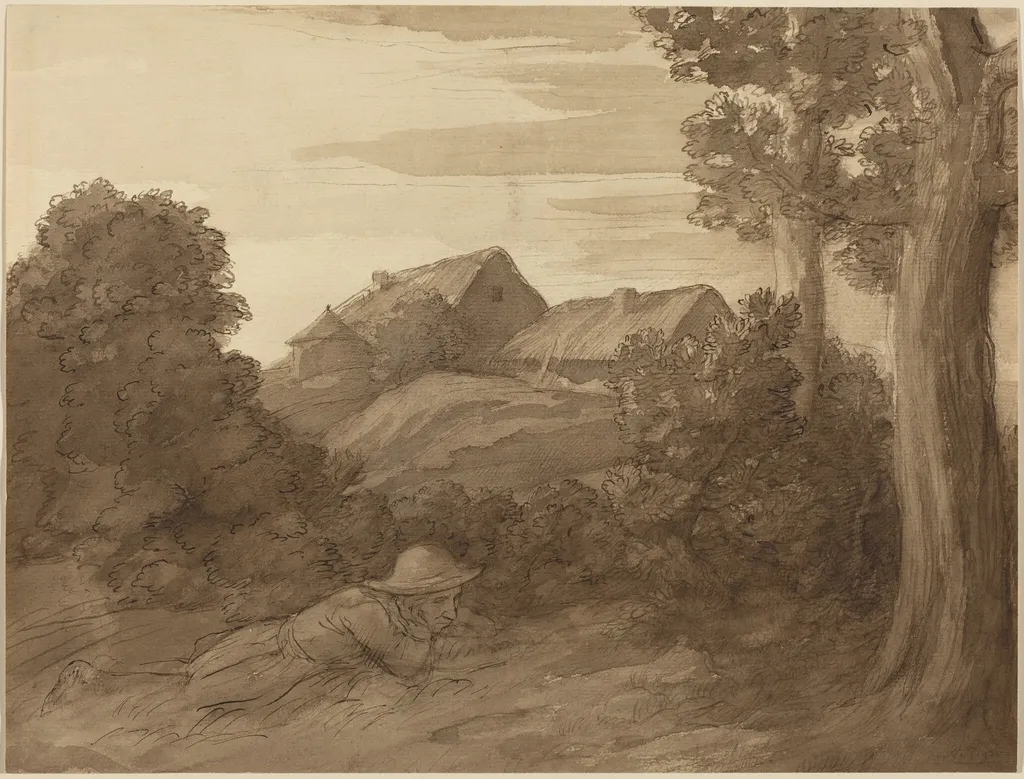
Claude's Farm is an ink drawing by the Romanticist artist Alphonse Legros. It dates from 1874 and is held in the collection of the National Gallery of Art.
About this work
Overview
Claude's Farm is a pen and brown ink drawing with brown wash on laid paper, created by Alphonse Legros in 1874. The work captures a serene rural landscape.
Subject & Meaning
The drawing depicts a peaceful countryside scene with a solitary figure resting on a hillside, wearing a wide-brimmed hat, set against a backdrop of a small house, trees, and rolling hills under a soft sky.
Technique & Style
Legros employed quick, loose lines to convey movement in the natural elements, and cross-hatching to build texture. The warm, earthy tone of the brown ink and wash suggests a spontaneous, on-site sketch.
History & Provenance
Created in 1874 by Alphonse Legros, a French-born, British-naturalized artist, who played a significant role in Britain's etching revival after his 1863 relocation to London.
Context
While primarily known for his contributions to etching, 'Claude's Farm' showcases Legros' skill in drawing, reflecting his broader practice as a painter, etcher, sculptor, and medallist.
Legacy
As a key figure in the revival of etching in Britain, Legros' body of work, including 'Claude's Farm', continues to represent the artistic exchange and innovations of his time.
Own this work as a print
Artist & collection

Artist
Alphonse Legros (French pronunciation: ; 8 May 1837 – 8 December 1911) was a French, later British, painter, etcher, sculptor, and medallist.

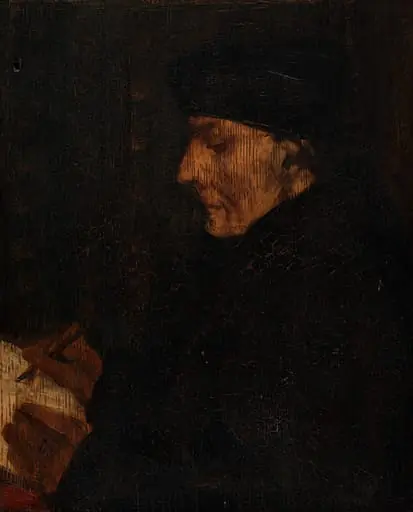
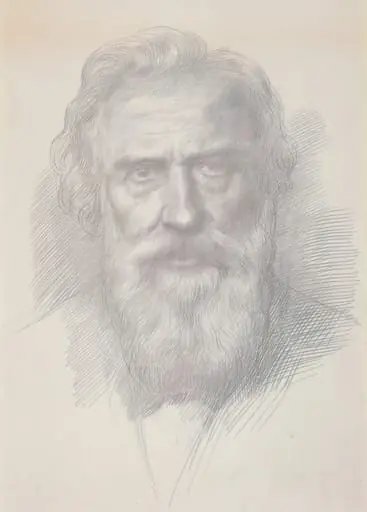
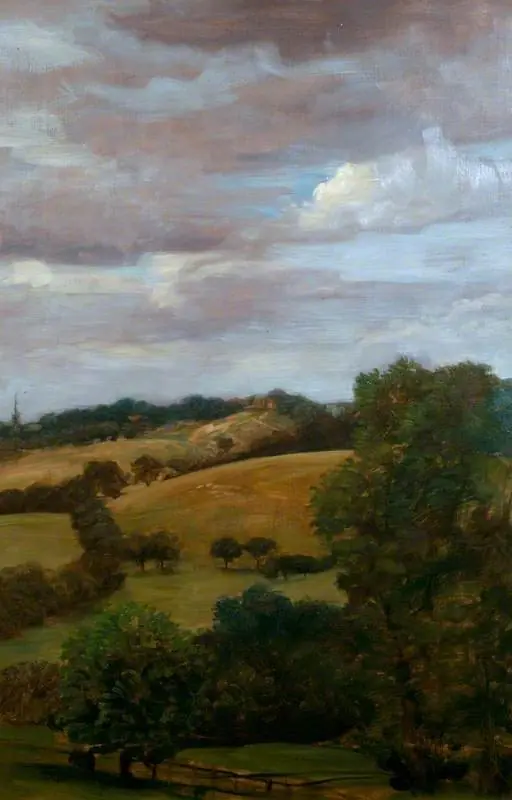
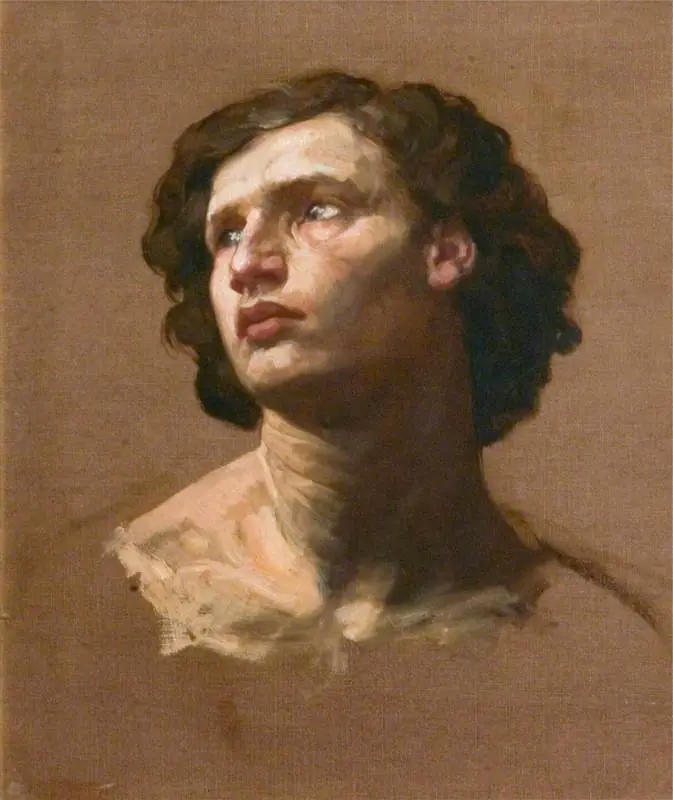
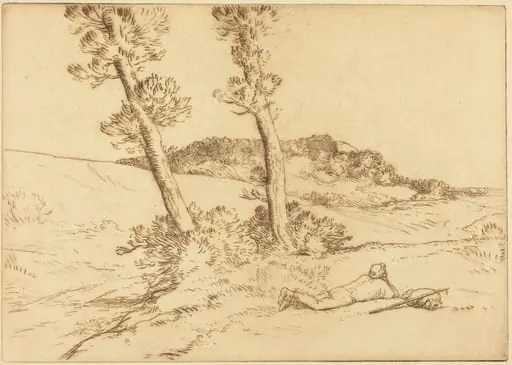 Traveler Reclining on the Grass (Le voyageur etendu sur le gazon)
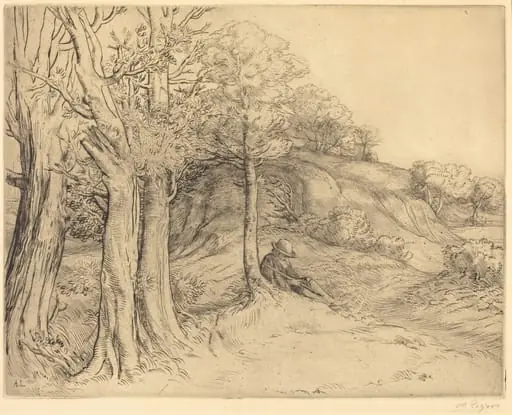 Solitude (Solitude (Paysage))
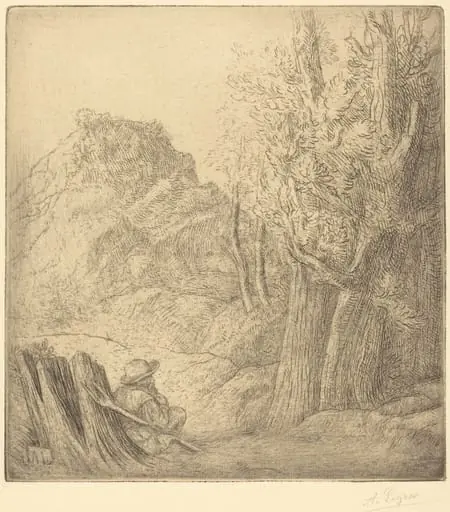 Old Village (Ville vieille)
 The Flight into Egypt: Altered from Seghers
 Procris and Cephalus
 Woods Near a Village with Rabbit Catchers and Their Greyhounds
 At the Foot of the Hill
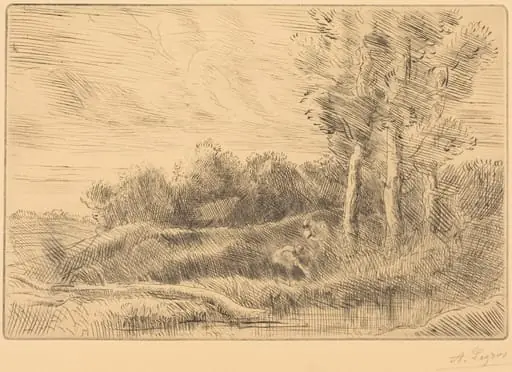 The House of the Well (La maison du puits)
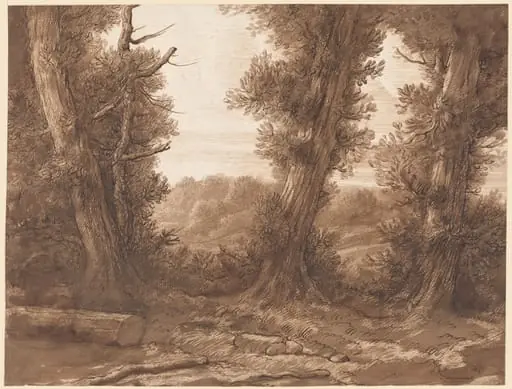 The Big Trees
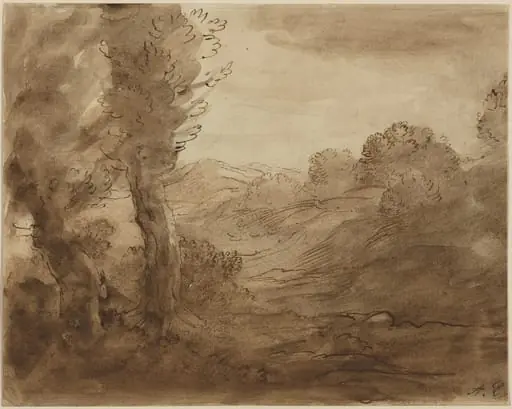 Footpath in Burgundy