Artwork
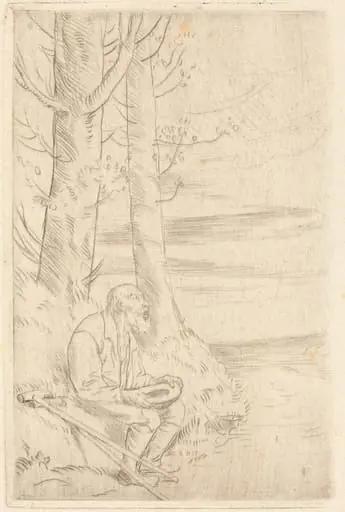
Day-dream (Le reveur)
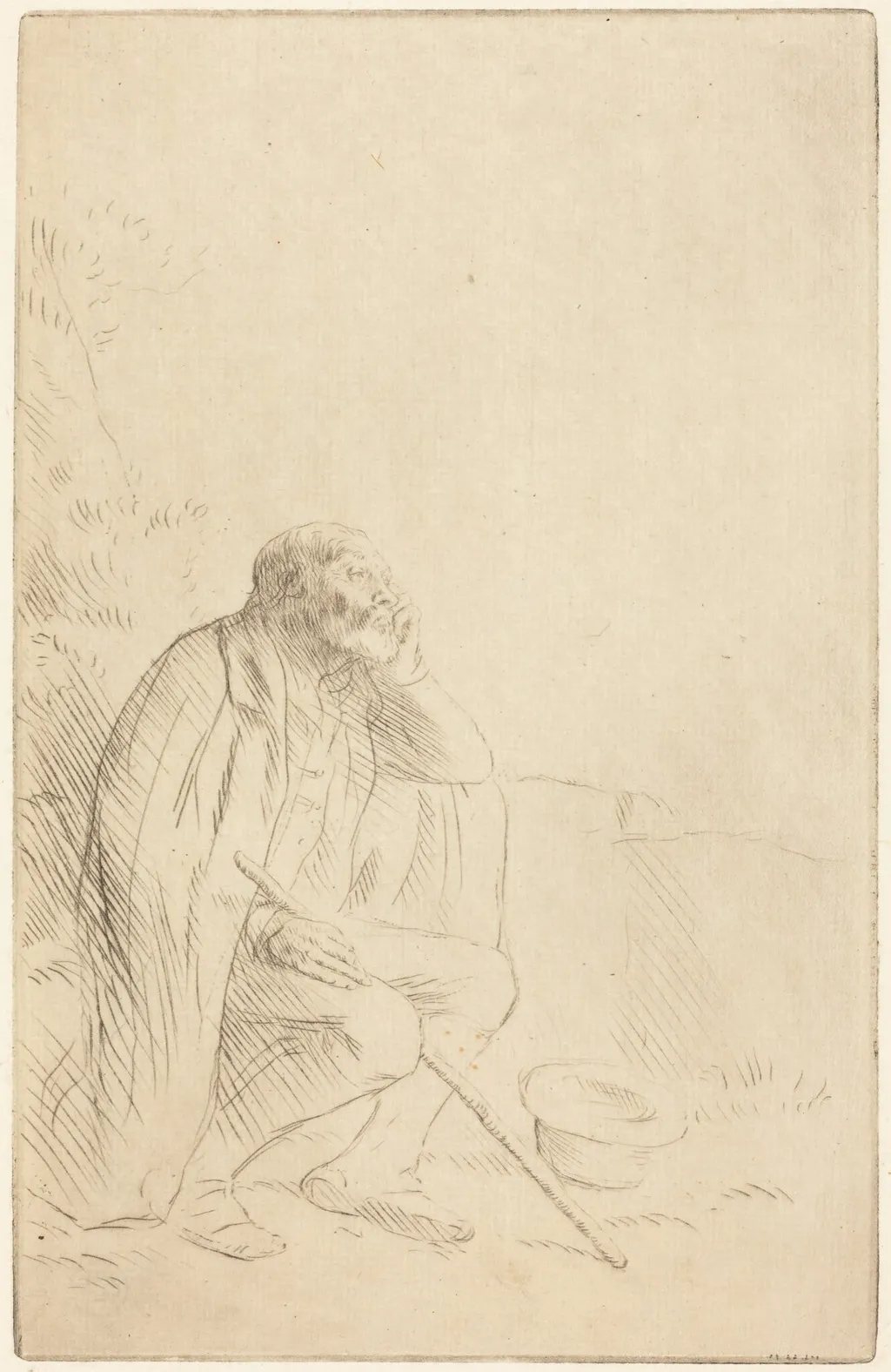
Day-dream (Le reveur) is an ink print by the Romanticist artist Alphonse Legros. It dates from 1874 and is held in the collection of the National Gallery of Art.
About this work
Overview
This work exemplifies his interest in intimate, contemplative subjects and his technical experimentation with print media to achieve subtle tonal effects.
Created in 1874 by Alphonse Legros, *Day-dream (Le rêveur)* is a print combining drypoint with a photographic reproductive technique. Legros, originally French but based in London since 1863, was instrumental in revitalizing printmaking in Britain. This work exemplifies his interest in intimate, contemplative subjects and his technical experimentation with print media to achieve subtle tonal effects.
Subject & Meaning
The image portrays an elderly man seated alone in an open field, his posture slumped, hat and walking stick resting beside him. Barefoot and loosely clothed, he faces away from the viewer, absorbed in private thought. The figure’s stillness and isolation evoke introspection, suggesting a quiet communion with nature rather than narrative action. The absence of clear context invites interpretation as a meditation on solitude and inner life.
Technique & Style
Legros employed drypoint to create rich, velvety lines, enhanced by a photographic process to amplify tonal gradations. The sketchlike quality of the lines conveys immediacy, avoiding polished finish in favor of atmospheric suggestion. Loose, irregular strokes define the figure and landscape, emphasizing mood over precision. This approach aligns with 19th-century printmakers seeking to capture transient emotional states through direct, hand-drawn marks.
History & Provenance
Produced during Legros’s tenure at the Slade School of Fine Art, the print reflects his influence on British print culture. Though not widely exhibited at the time, it circulated among collectors and students drawn to his revival of etching as a serious artistic medium. Its production using a hybrid technique underscores Legros’s interest in merging traditional craftsmanship with emerging photographic technologies.
Context
In the 1870s, British art saw renewed interest in printmaking as a vehicle for personal expression, partly due to Legros’s pedagogical efforts. *Day-dream* resonates with Romantic traditions that valued emotional resonance and natural settings over academic idealism. Yet it diverges from overt drama, favoring quietude—a shift reflecting broader trends toward psychological depth in late 19th-century visual culture.
Legacy
Legros’s work, including *Day-dream*, helped redefine etching as a medium for individual vision rather than mere reproduction. His fusion of tactile line work with photographic processes influenced later generations of printmakers seeking to balance spontaneity with technical innovation. The print remains a quiet testament to his role in bridging French and British artistic practices during a period of technical transition.
Artist & collection

Artist
Alphonse Legros (French pronunciation: ; 8 May 1837 – 8 December 1911) was a French, later British, painter, etcher, sculptor, and medallist.

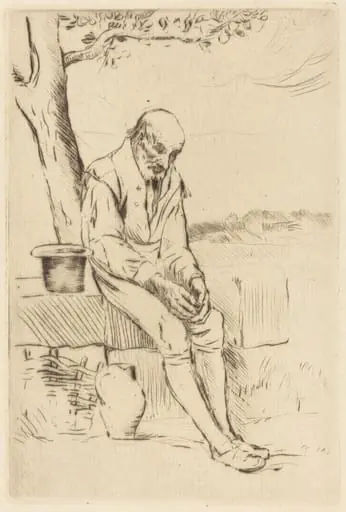 "Since Then" ("Depuis ce temps-la")
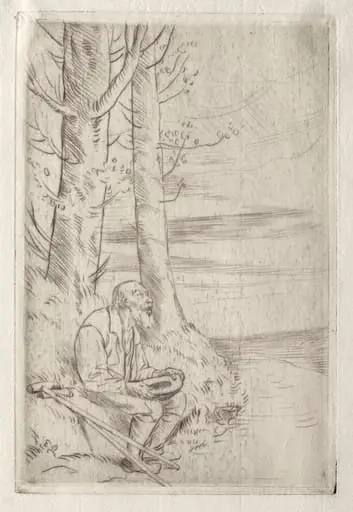 The Blind Beggar
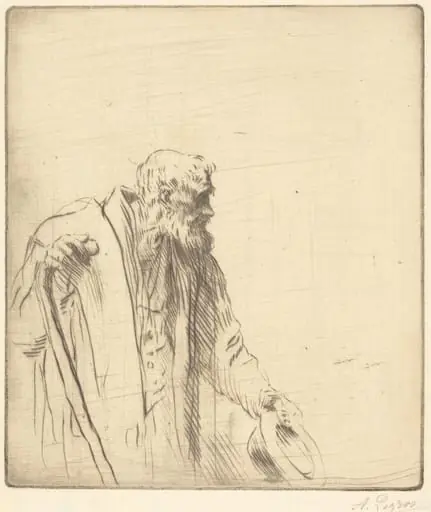 Beggar (Un mendiant)
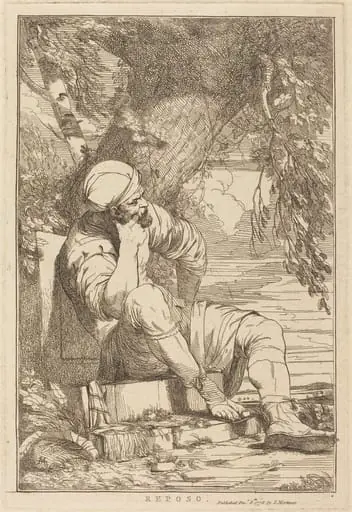 Reposo
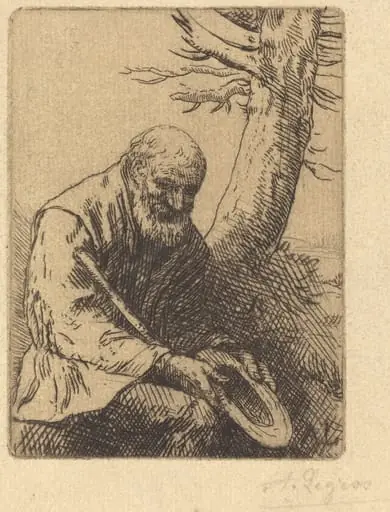 Beggar with Hat in Hand (Mendiant avec son chapeau a la main)
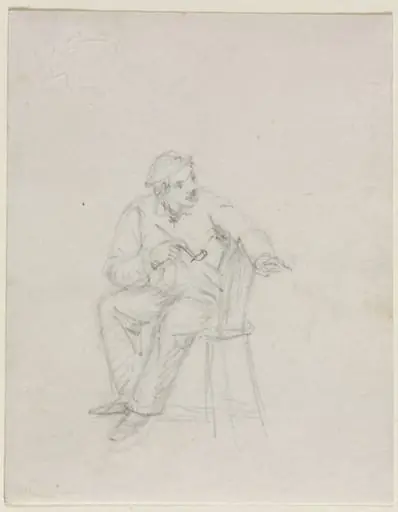 Man Smoking a Pipe
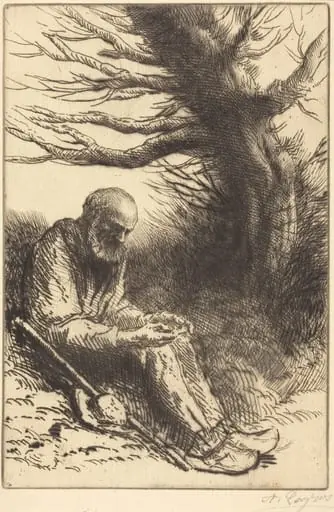 Old man, Old Tree (Vieil homme, vieil arbre)
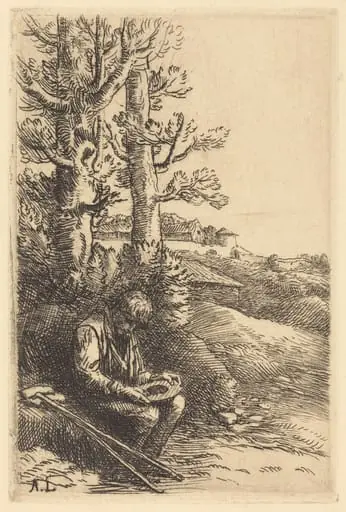 Little Beggar (Le petit mendiant)
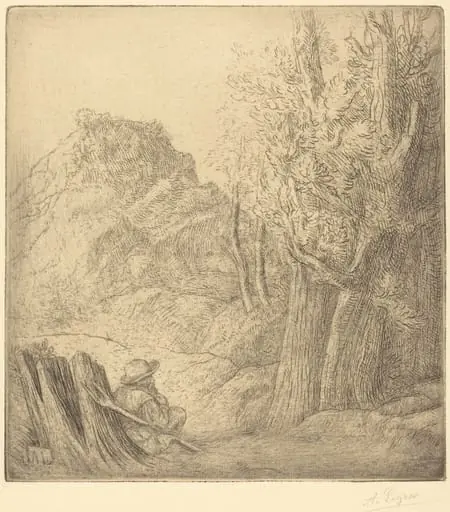 Old Village (Ville vieille)
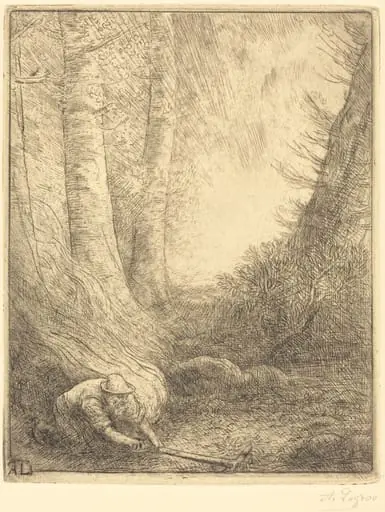 Burning the Grasses (Le bruleur d'herbes)
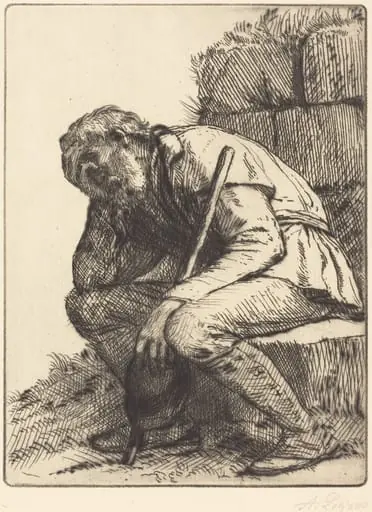 Desperate Man (Le desespere)
 Blind Beggar (Le mendiant aveugle)