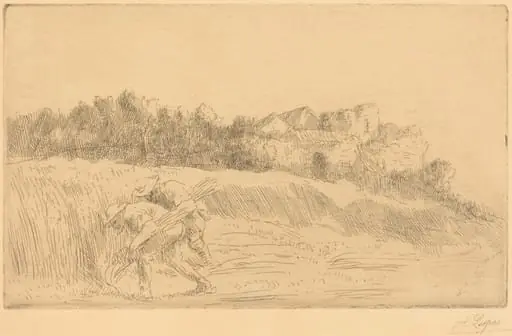
Artwork
Fagot-cutter (Le coupeur de fagots)
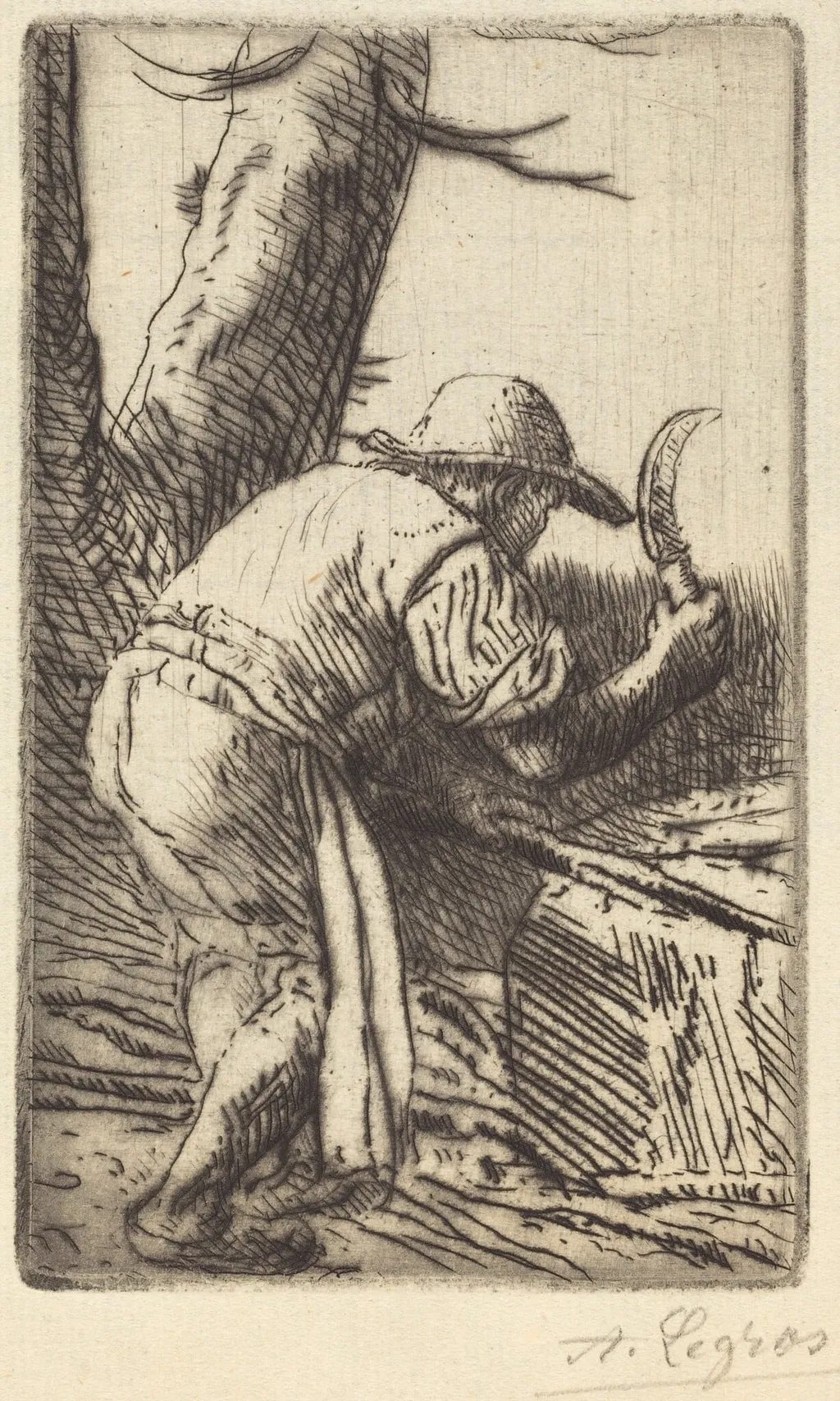
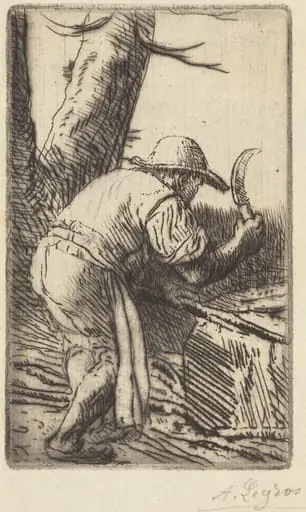
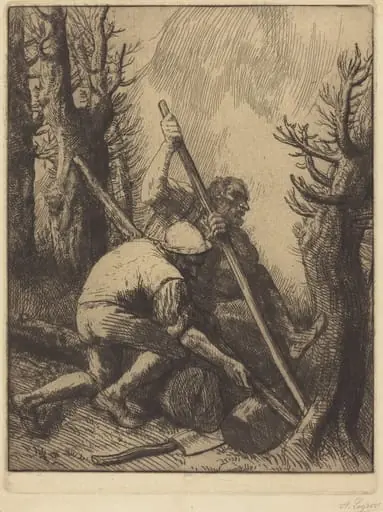
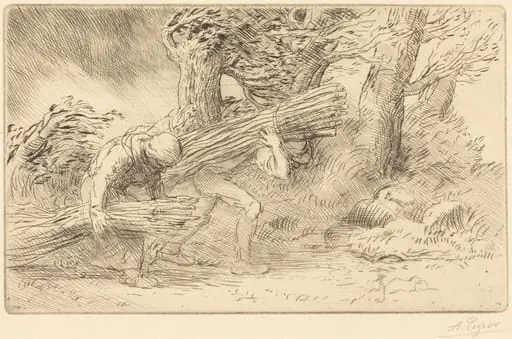
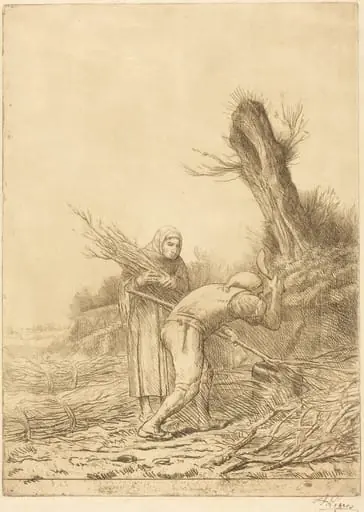
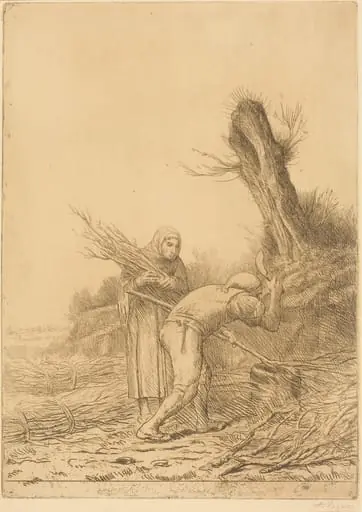
Fagot-cutter (Le coupeur de fagots) is an ink print by the Romanticist artist Alphonse Legros. It dates from 1874 and is held in the collection of the National Gallery of Art.
About this work
Overview
Fagot-cutter (Le coupeur de fagots) is an 1874 etching and drypoint print by Alphonse Legros, a French-born artist naturalized in Britain. The work showcases a laborer engaged in cutting wood, characteristic of Legros’s focus on everyday subjects.
Subject & Meaning
The print depicts a man cutting wood bundles with a curved tool, positioned with his back to the viewer in front of a tree trunk. His rustic attire and pose emphasize a rural, labor-oriented theme, highlighting the dignity of manual work.
Technique & Style
Legros employed intaglio techniques, evident in dark lines, shading, and visible cross-hatching. The detailed rendering of textures and forms reflects his skill in etching and drypoint, contributing to the revival of etching in Britain.
History & Provenance
Created in 1874, the piece exemplifies Legros’s contribution to the British etching revival. While specific provenance details are not provided, the work aligns with his thematic and technical preoccupations during his London period.
Context
Though not directly attributed to Romanticism in the provided sources, the emphasis on a rustic setting and the focus on light and texture through intaglio techniques might suggest affinities with Romantic themes, encouraging comparison with works from that movement.
Legacy
As part of Legros’s oeuvre, Fagot-cutter reflects his enduring impact on British etching. The piece, through its subject matter and technique, contributes to the broader appreciation of labor-themed art and the intaglio medium in the late 19th century.
Artist & collection

Artist
Alphonse Legros (French pronunciation: ; 8 May 1837 – 8 December 1911) was a French, later British, painter, etcher, sculptor, and medallist.