Artwork
Woodcutters, 3rd plate (Les bucherons)
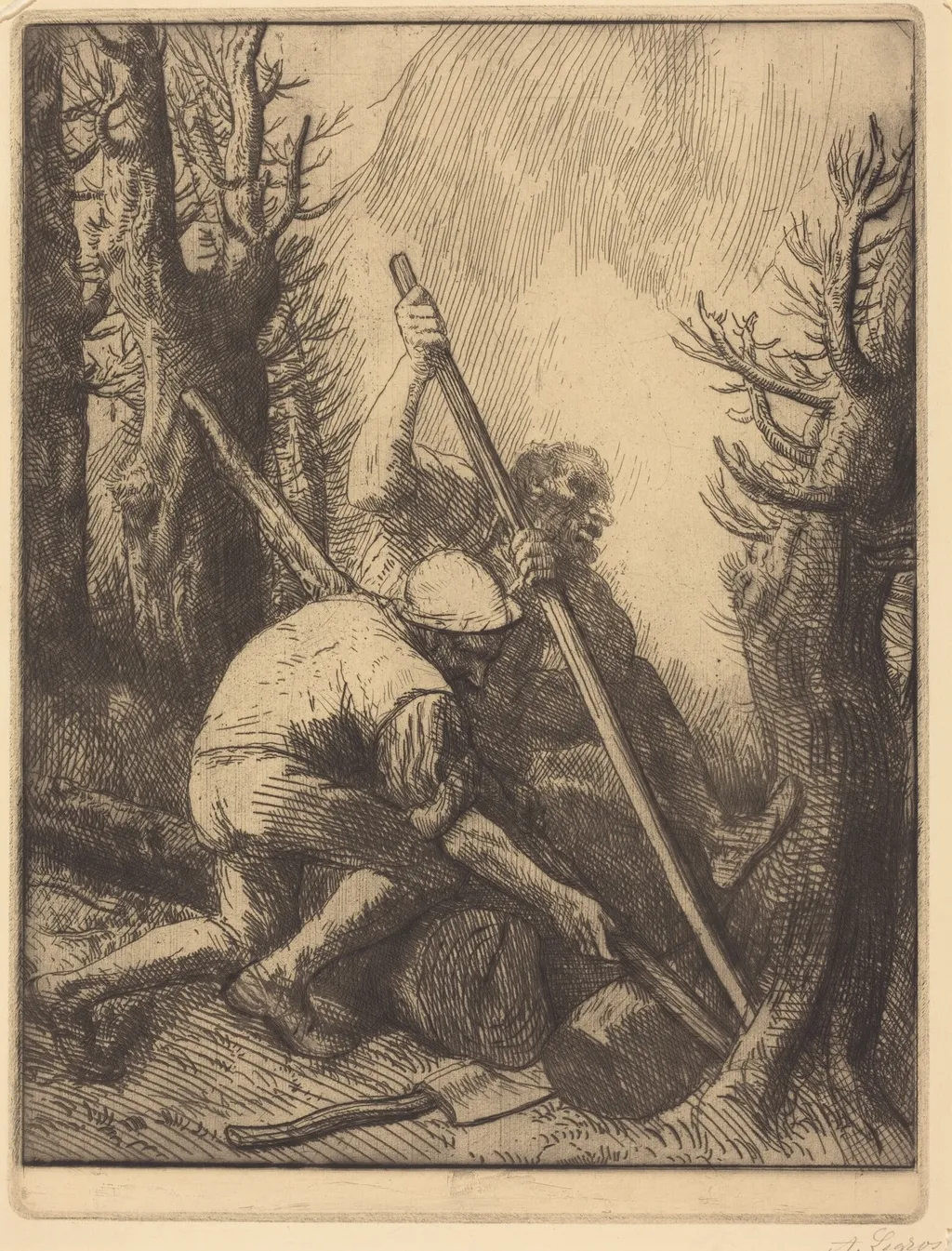
Woodcutters, 3rd plate (Les bucherons) is an ink print by the Romanticist artist Alphonse Legros. It dates from 1874 and is held in the collection of the National Gallery of Art.
About this work
Overview
Woodcutters, 3rd plate (Les bucherons) is an 1874 etching by Alphonse Legros, a French artist who relocated to Britain. This print showcases his contribution to the revival of etching in 19th-century London.
Subject & Meaning
The etching portrays two laborers in a forest, intently cutting down trees. The scene emphasizes the physicality of their cooperative work, conveying a sense of industriousness and quiet dedication.
Technique & Style
Legros employed bold lines and expressive shading to achieve depth and texture. The dense foliage background contrasts with the foreground figures, highlighting the men's exertion in a style aligned with Romanticism's emphasis on nature and human emotion.
History & Provenance
Created in 1874, this etching reflects Legros's influence on British printmaking following his 1863 move to London. His multifaceted career spanned painting, sculpture, and printmaking.
Context
This work is associated with the Romantic movement, which often highlighted the relationship between humans and the natural world, emphasizing emotional and physical labor within landscapes.
Legacy
As a key figure in Britain's etching revival, Legros's *Woodcutters* contributes to the medium's renewed popularity in the late 19th century, influencing subsequent generations of printmakers.
Artist & collection

Artist
Alphonse Legros (French pronunciation: ; 8 May 1837 – 8 December 1911) was a French, later British, painter, etcher, sculptor, and medallist.

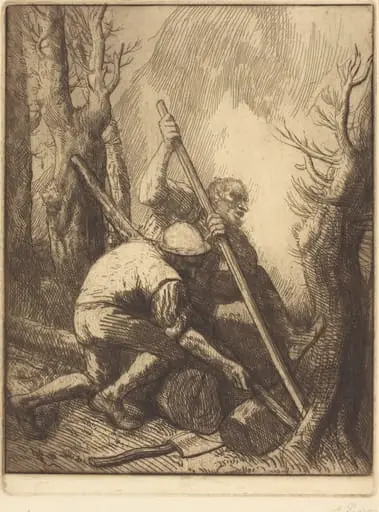 Woodcutters, 3rd plate (Les bucherons)
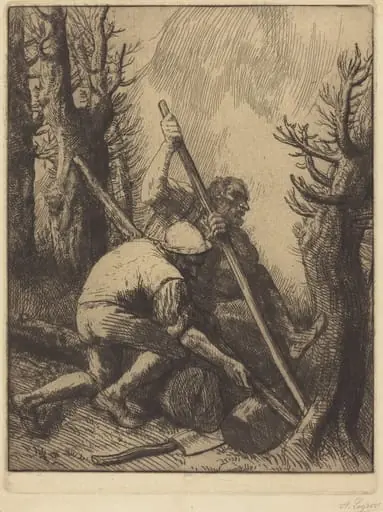 Woodcutters, 3rd plate (Les bucherons)
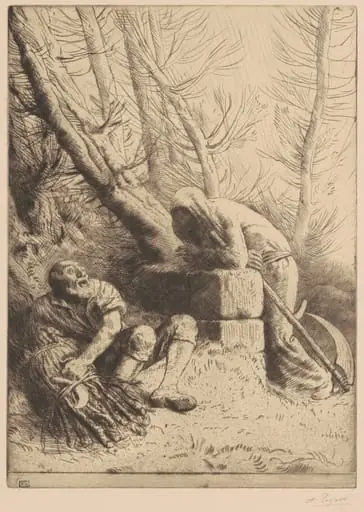 Death and the Woodcutter, 4th plate (La Mort et le bûcheron)
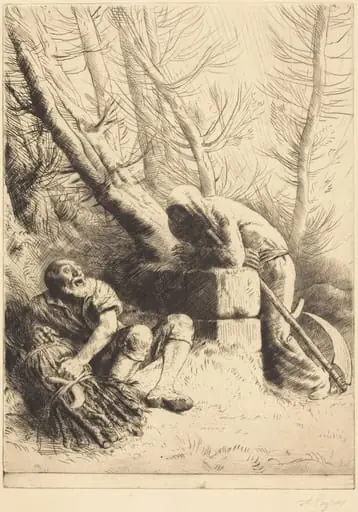 Death and the Woodcutter, 4th plate (La mort et le bucheron)
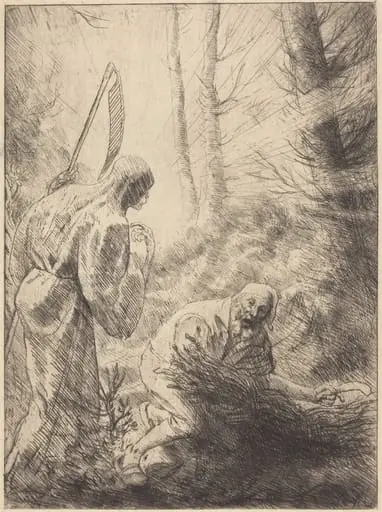 Death and the Woodcutter, 2nd plate (La Mort de le bucheron)
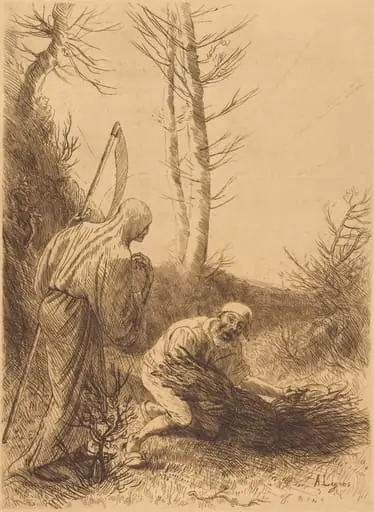 Death and the Woodcutter, 2nd plate (Le mort et le bucheron)
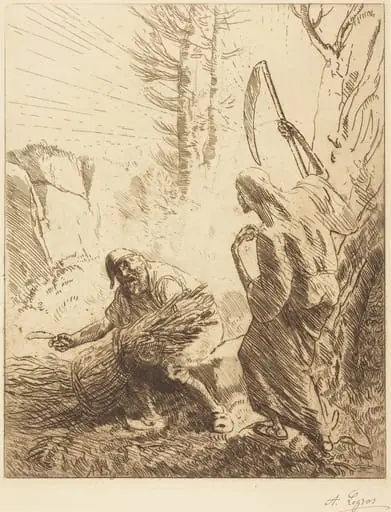 Death and the Woodcutter, 3rd plate (La mort et le bucheron)
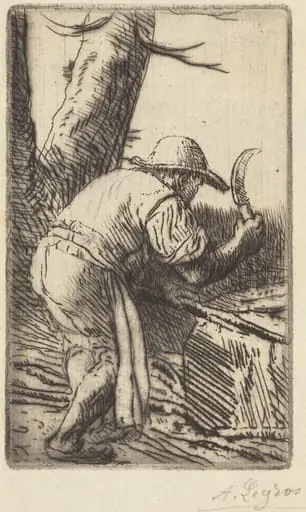 Fagot-cutter (Le coupeur de fagots)
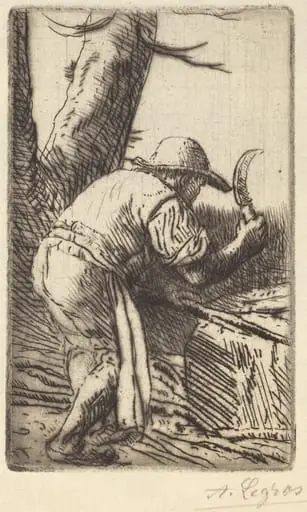 Fagot-cutter (Le coupeur de fagots)