Artwork
Farm on a Hillside in Sunlight (La ferme du coteau; Effet de soleil sur le coteau)
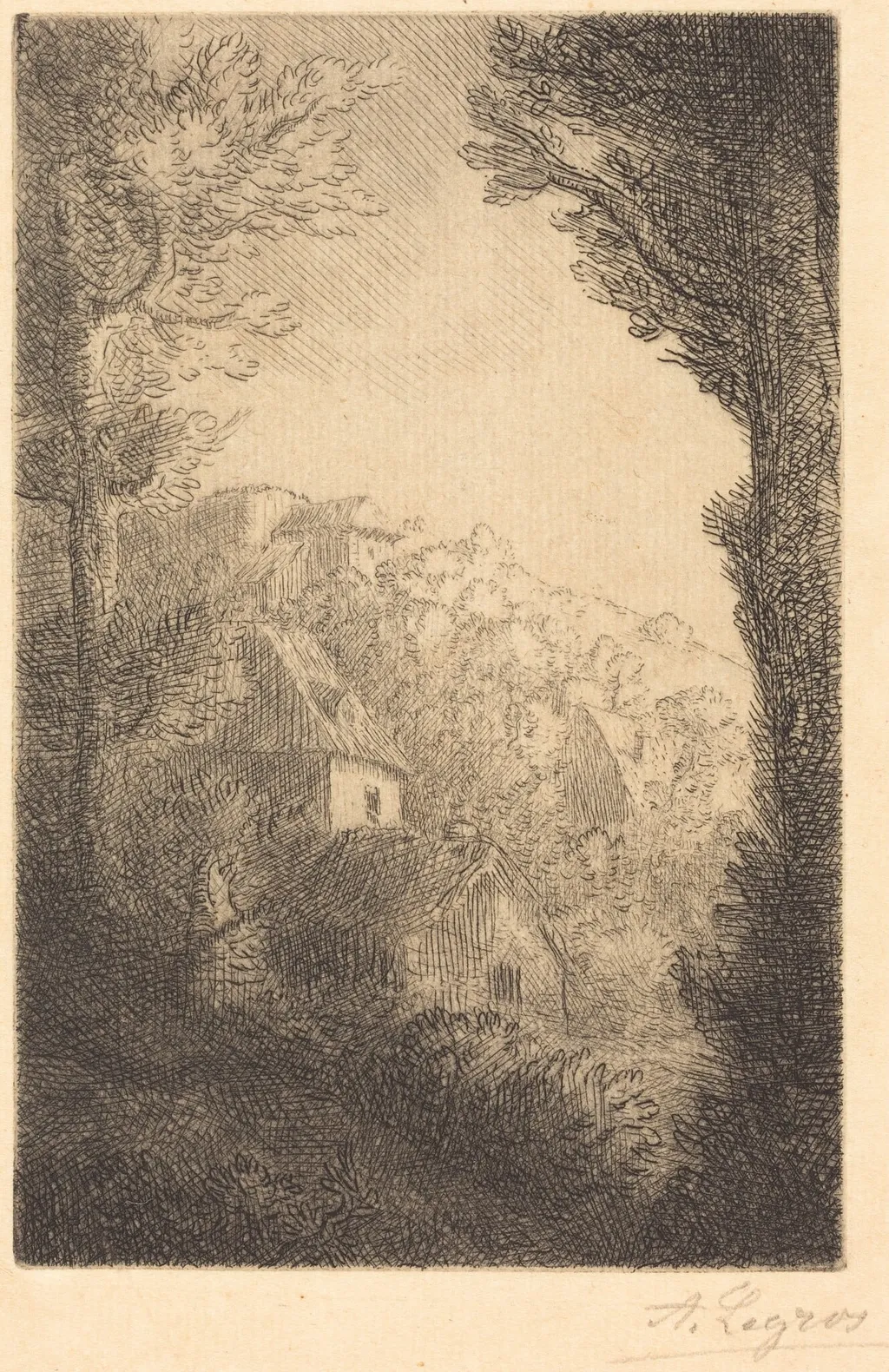
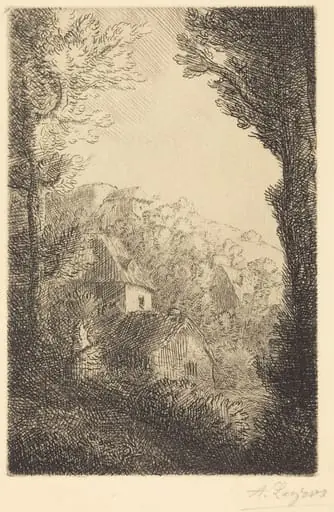
Farm on a Hillside in Sunlight (La ferme du coteau; Effet de soleil sur le coteau) is an ink print by the Romanticist artist Alphonse Legros. It dates from 1874 and is held in the collection of the National Gallery of Art.
About this work
Overview
The work belongs to a broader revival of etching as a serious artistic medium in Victorian England.
Created in 1874, *Farm on a Hillside in Sunlight* is an etching by Alphonse Legros, a French artist who moved to London in 1863 and became influential in British printmaking. The work belongs to a broader revival of etching as a serious artistic medium in Victorian England. Legros, known for his work across multiple disciplines, used this print to explore light and landscape with quiet precision, avoiding dramatic sentiment in favor of observed reality.
Subject & Meaning
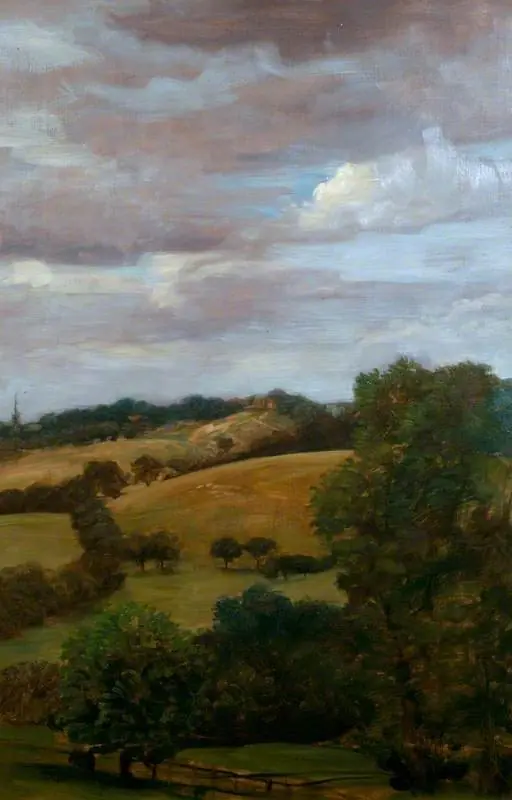
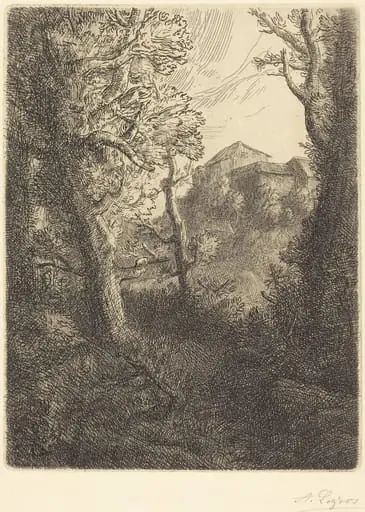
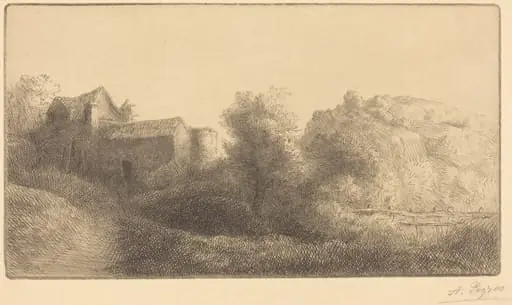
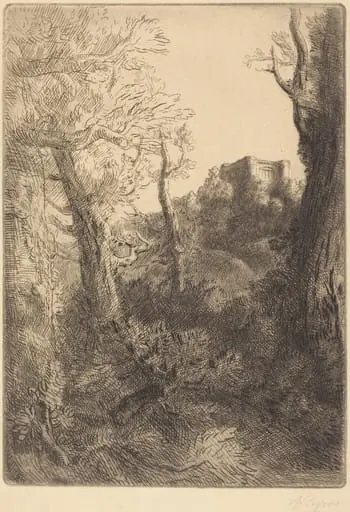
The scene portrays a modest farmhouse nestled on a gently sloping hill, surrounded by tall, gnarled trees that frame the composition. Sunlight strikes the land with clear direction, casting sharp, elongated shadows across the fields and roof. There is no human presence, and the focus lies in the quiet harmony between architecture and terrain. The image conveys a sense of stillness and endurance, reflecting rural life without idealization or narrative.
Technique & Style
Legros employed fine, controlled etching lines to model form through contrast rather than tone. The interplay of light and shadow is achieved by varying line density and direction, with dense clusters defining dark areas and sparse strokes suggesting sunlit surfaces. The technique avoids broad washes or heavy burin work, relying instead on the delicacy of the etched line to suggest texture and depth, aligning with the observational rigor of mid-Victorian printmaking.
History & Provenance
The print was made during Legros’s early years in Britain, a period when he was actively engaged with the Royal Academy and the Society of Painter-Etchers. Though not widely exhibited at the time, it reflects his commitment to etching as a vehicle for serious artistic expression. The work remained in private collections in Britain and France, with no major institutional acquisition recorded until the late 20th century.
Context
In the 1870s, British artists were re-engaging with etching as a means of personal expression, moving away from reproductive prints toward original compositions. Legros, trained in Paris but settled in London, bridged French realism and British aesthetic reform. His landscapes, like this one, responded to the growing interest in rural life amid industrialization, offering a contemplative counterpoint to urban progress.
Legacy
Legros’s etchings, including this one, contributed to the legitimization of etching as an independent art form in Britain. His technical discipline influenced a generation of printmakers, including those in the New English Art Club. While less celebrated today than his paintings, this print remains a quiet example of how subtle line work could convey atmosphere and place without embellishment.
Artist & collection

Artist
Alphonse Legros (French pronunciation: ; 8 May 1837 – 8 December 1911) was a French, later British, painter, etcher, sculptor, and medallist.