Artwork
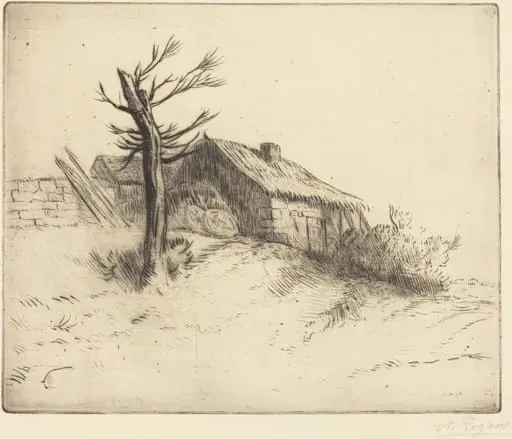
Farm with Large Tree (La ferme au grand arbre)
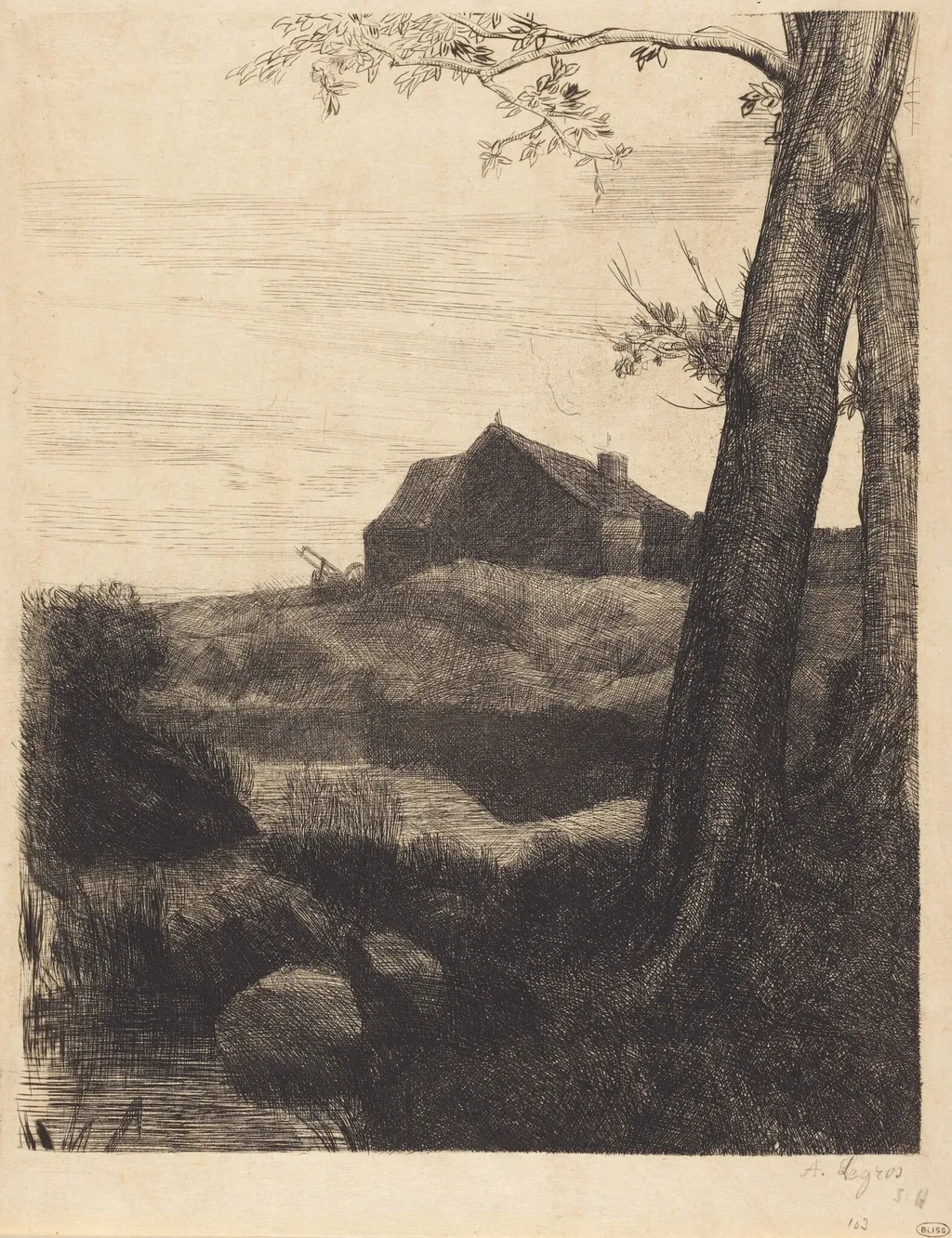
Farm with Large Tree (La ferme au grand arbre) is an ink print by the Romanticist artist Alphonse Legros. It dates from 1874 and is held in the collection of the National Gallery of Art.
About this work
Overview
Created in 1874, *Farm with Large Tree* is a print by Alphonse Legros, a French artist who settled in Britain and became a naturalized citizen.
Created in 1874, *Farm with Large Tree* is a print by Alphonse Legros, a French artist who settled in Britain and became a naturalized citizen. The work combines etching, drypoint, and aquatint to render a quiet rural scene with unusual emotional depth. Legros, known for his versatility across media, helped reinvigorate the art of printmaking in England after moving to London in 1863. This piece exemplifies his technical precision and sensitivity to atmosphere.
Subject & Meaning
The scene portrays a modest farmstead overshadowed by a massive, ancient tree whose twisted roots grip the soil. The building’s half-collapsed roof suggests abandonment or decay, while the sharp angle of sunlight slicing across its wall introduces a sense of fleeting time. The tree, both protective and imposing, may symbolize endurance against erosion—natural or human. There is no human presence, yet the land bears silent witness to passage and neglect.
Technique & Style
Legros layered etching for precise outlines, drypoint for rich, velvety textures in the tree’s bark and roots, and aquatint to achieve subtle gradations of shadow. The interplay of these methods gives the tree physical weight and the light a tangible quality, as if it were falling through air. Unlike flat line drawings, the print’s tonal depth creates a sculptural effect, grounding the scene in tactile reality rather than mere representation.
History & Provenance
Executed during Legros’s early years in Britain, the print reflects his engagement with rural English life after leaving France. It was made at a time when he was actively teaching and promoting printmaking at the Slade School of Art. While its early ownership is undocumented, the work entered major public collections in the 20th century, including the National Gallery of Art in Washington, where it remains accessible as part of a broader reassessment of 19th-century British printmaking.
Context
In the 1870s, etching experienced a revival in Britain, partly due to Legros’s influence and his advocacy for the medium as a serious artistic form. His work stood apart from the ornamental prints popular at the time, favoring raw, atmospheric depictions of laboring landscapes. This piece aligns with broader European trends toward realism and the poetic treatment of rural decline, echoing the concerns of writers like George Eliot and painters such as Millet.
Legacy
Legros’s technical innovations in printmaking influenced a generation of British artists, including those in the Etching Revival movement. *Farm with Large Tree* remains a key example of how etching could convey emotional weight through texture and tone, not just line. Though less widely known today, his contributions helped establish printmaking as a legitimate medium for serious artistic expression in Victorian Britain.
Artist & collection

Artist
Alphonse Legros (French pronunciation: ; 8 May 1837 – 8 December 1911) was a French, later British, painter, etcher, sculptor, and medallist.

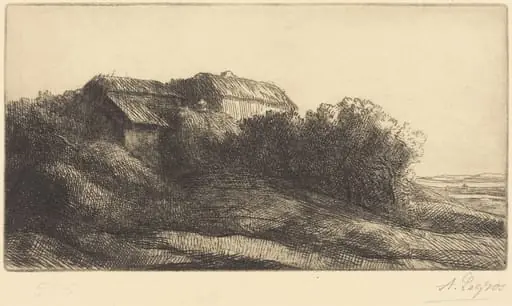 Cottage on a Hillside (Chaumiere sur le coteau)
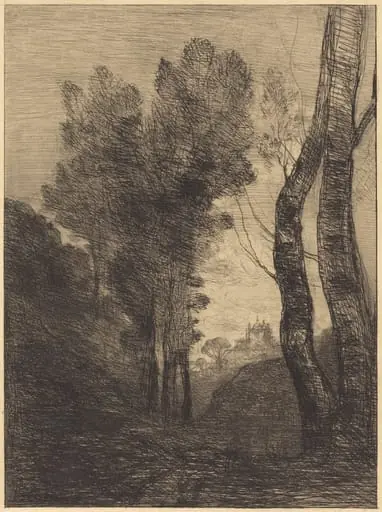 Environs of Rome (Environs de Rome)
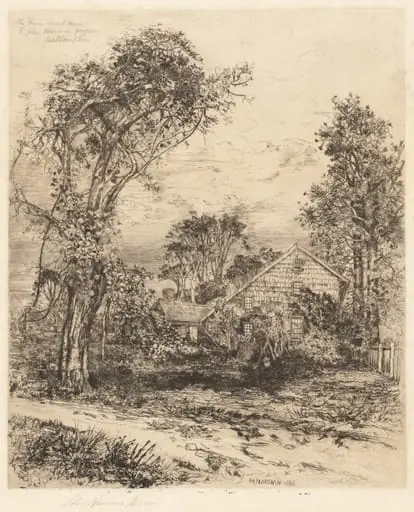 Home, Sweet Home
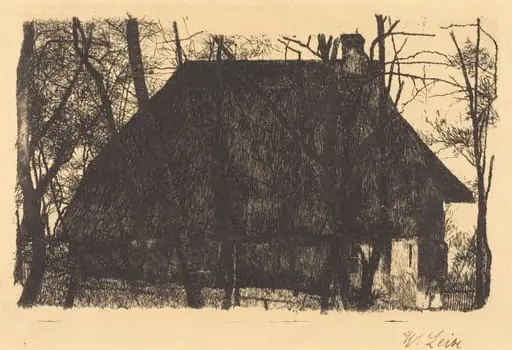 Farmhouse
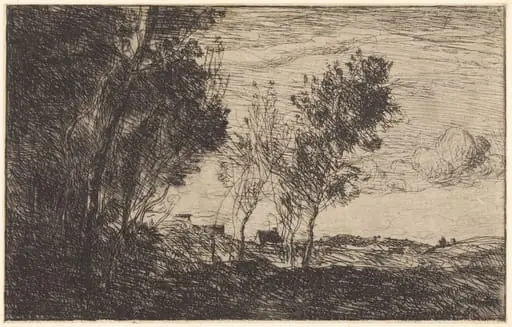 In the Dunes: Souvenir of The Hague (Dans les dunes: Souvenir du bois de La Haye)
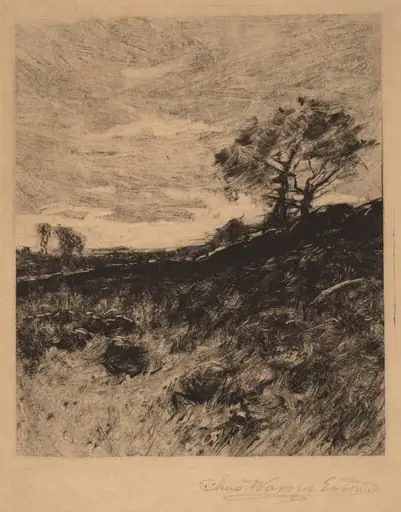 Landscape
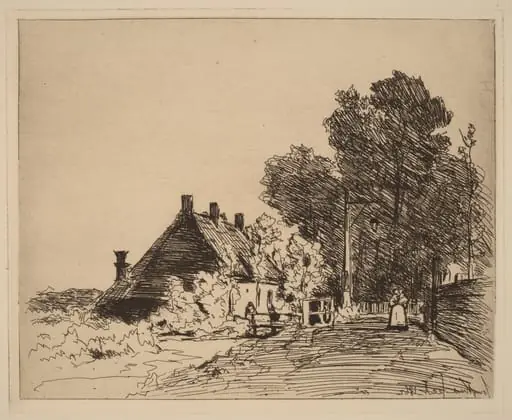 The Nurse (La Nourrice)
 Thatched Cottage (Chaumiere)
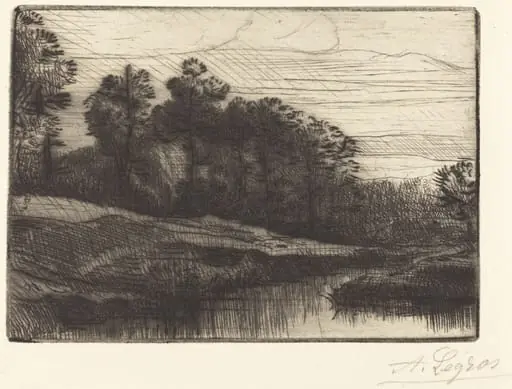 Sunset (Le soir (Coucher de soleil))
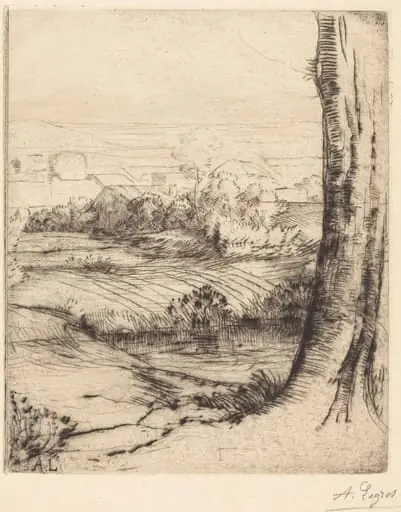 View of Reeds (Coin de roseau)