Artwork
Farmhouse
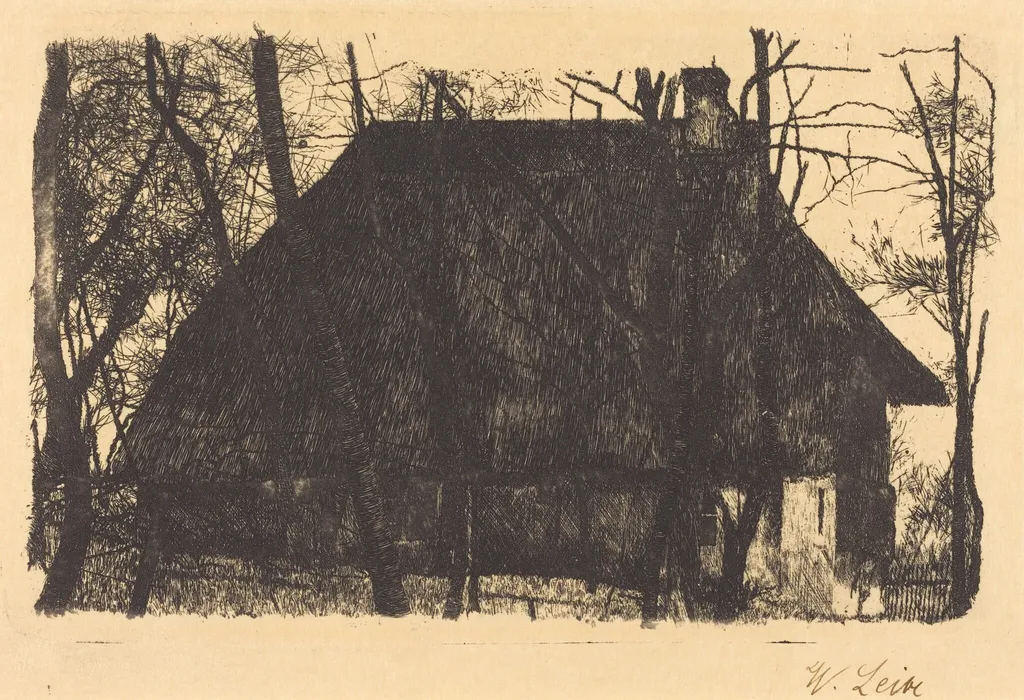
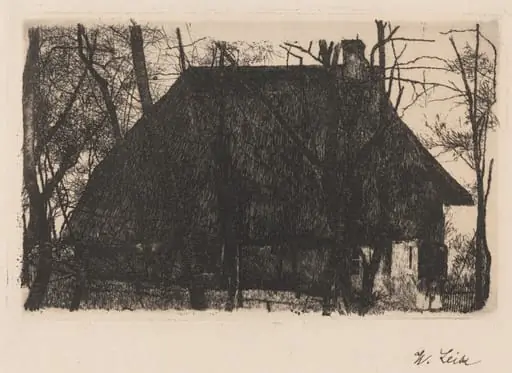
Farmhouse is an ink print by the Impressionist artist Wilhelm Leibl. It dates from 1876 and is held in the collection of the National Gallery of Art.
About this work
Overview
Leibl’s use of etching allowed for direct, expressive line work, resulting in a composition that feels immediate and observational rather than polished.
Farmhouse is an 1876 etching by Wilhelm Leibl, executed on buff Japan paper. The work captures a rural dwelling with a thatched roof, surrounded by bare, angular trees. The image conveys a quiet, unadorned landscape through a hand-drawn aesthetic, emphasizing texture over detail. Leibl’s use of etching allowed for direct, expressive line work, resulting in a composition that feels immediate and observational rather than polished.
Subject & Meaning
The subject is a modest farmhouse in a winter landscape, devoid of human figures or decorative elements. The emphasis on simplicity and isolation suggests a contemplative engagement with rural life. The stark trees and heavy shadows evoke a sense of stillness and endurance, reflecting Leibl’s interest in unidealized natural environments. The scene carries no narrative, inviting quiet reflection rather than dramatic interpretation.
Technique & Style
Leibl employed etching to incise lines into a metal plate, which were then inked and printed onto paper. The resulting marks are irregular and vigorous, mimicking the spontaneity of a sketch. Dark, dense areas contrast with sparse, scratchy lines that suggest branches and foliage. This technique prioritizes tactile immediacy over precision, giving the print a raw, almost unfinished quality that enhances its sense of presence.
History & Provenance
Created in 1876, Farmhouse belongs to a series of prints Leibl made during a period of intense focus on rural subjects. It was likely produced in Germany, where he maintained close ties to agrarian communities. The work was not widely exhibited in his lifetime, and early impressions remained in private collections. Its survival on delicate Japan paper underscores its status as a personal, experimental work rather than a commercial print.
Context
Leibl was part of a broader movement in late 19th-century German art that rejected academic idealism in favor of direct observation. Farmhouse aligns with his commitment to portraying everyday life with honesty. Contemporary artists like Courbet influenced his realism, while the etching medium allowed him to explore texture and tone beyond the constraints of painting. The work reflects a quiet resistance to urbanization and industrialization through its focus on enduring rural forms.
Legacy
Farmhouse remains a quiet example of Leibl’s printmaking, valued for its unembellished vision and technical restraint. While less known than his paintings, the etching illustrates his consistent pursuit of authenticity in representation. It influenced later generations of German realists who sought to capture the essence of place through direct, unmediated mark-making. The work endures as a testament to the expressive potential of the etched line.
Artist & collection


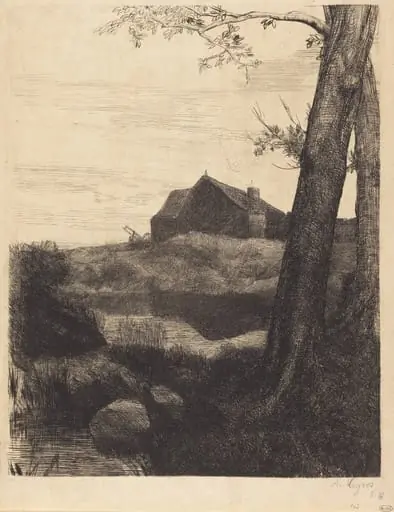 Farm with Large Tree (La ferme au grand arbre)
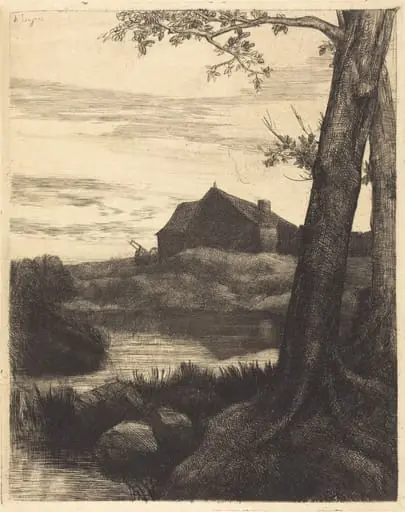 Farm with Large Tree (La ferme au grand arbre)
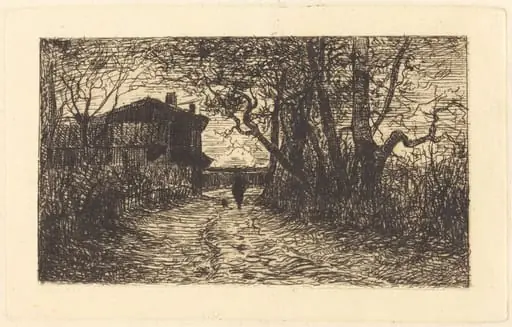 A Gorge de Loup
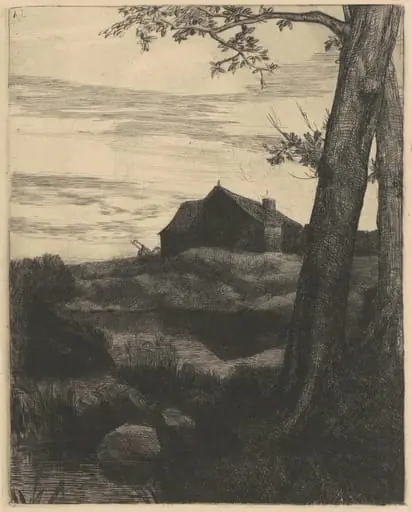 Farm with a Large Tree (La Ferme au Grand Arbre)
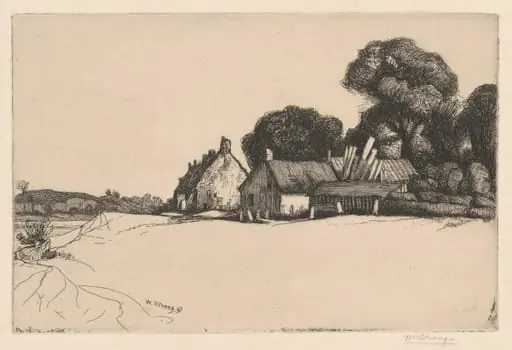 Kilcreggan
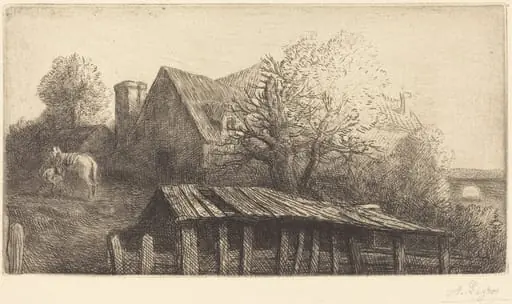 Old Inn (Une ancienne auberge)
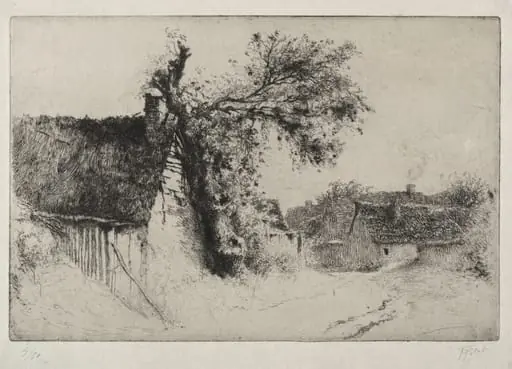 The Old Elm Tree
 Landscape (Paysage)
 Thatched Cottage (Chaumiere)
 The Unsafe Tenement
 Guardhouse (La maison du garde)