Artwork
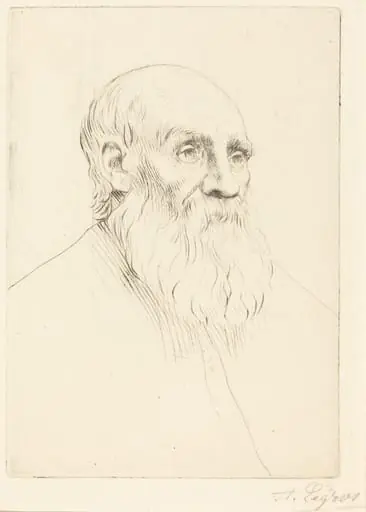
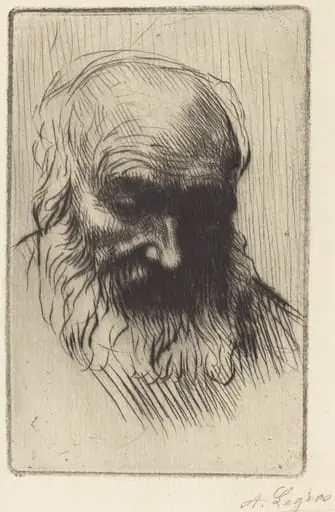
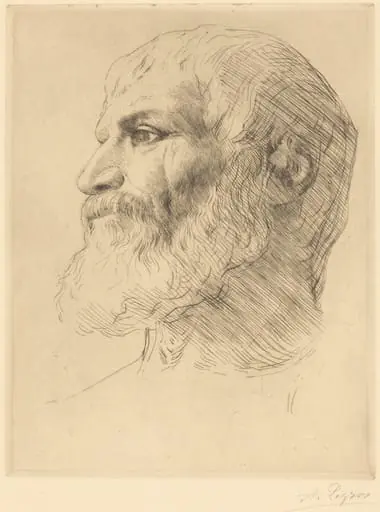
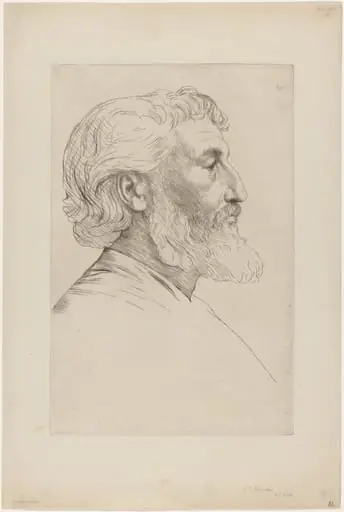
Head of a Man (Tete d'homme)
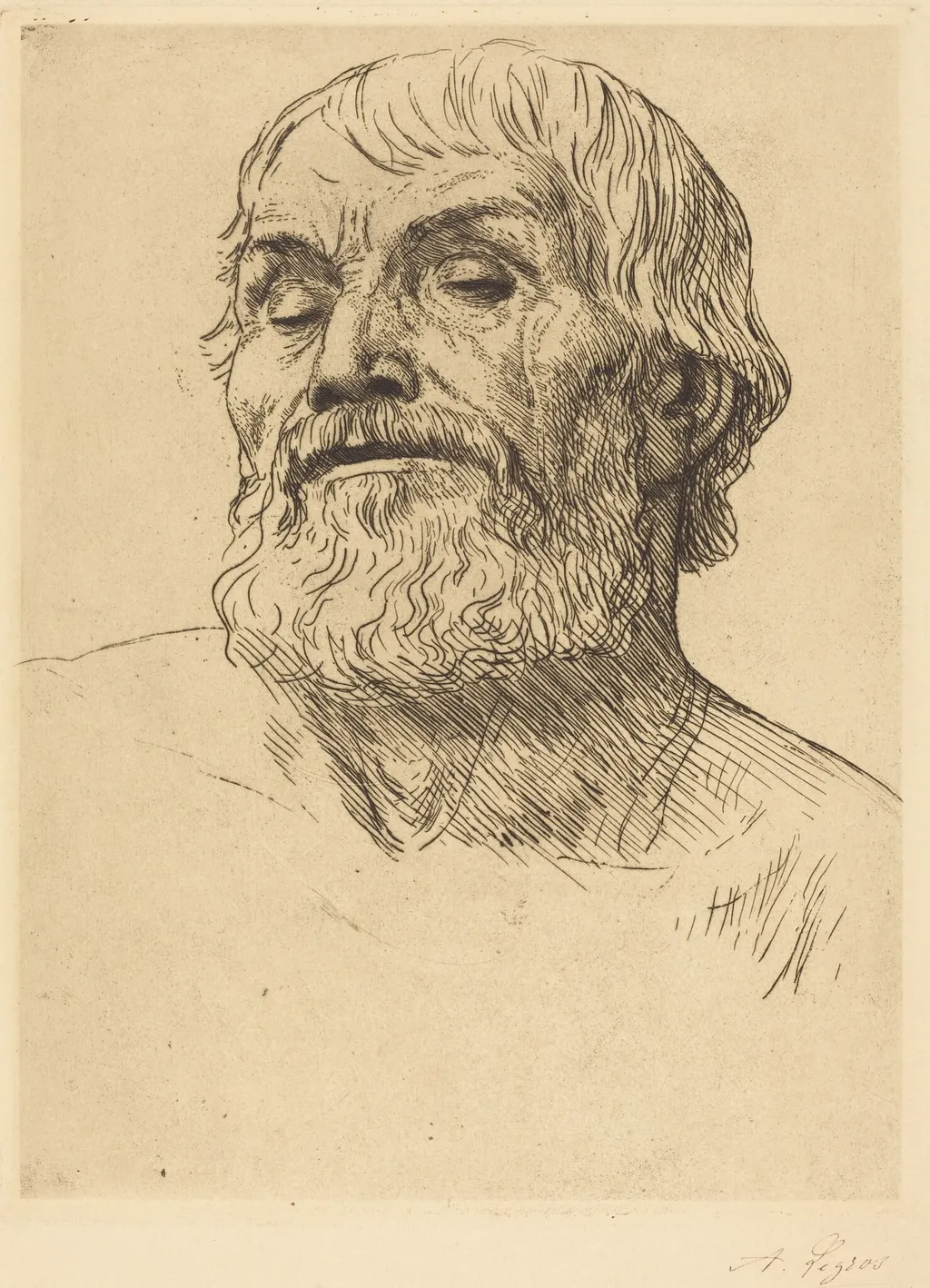
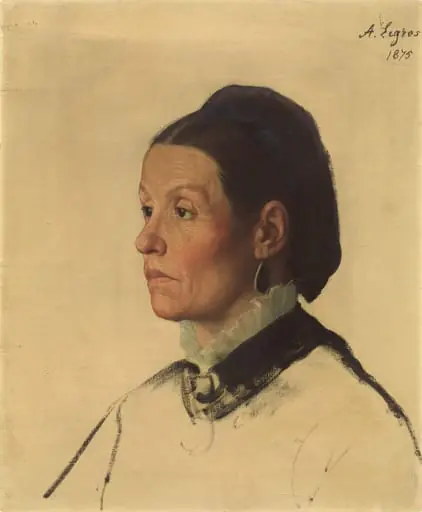
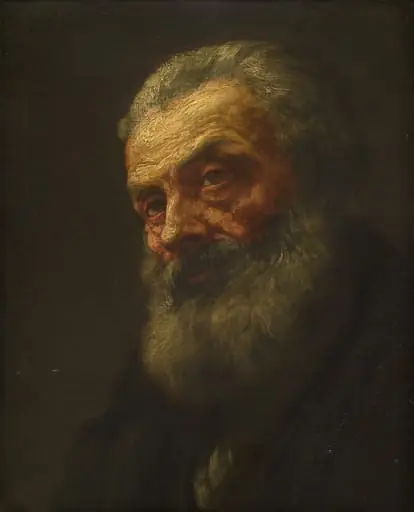
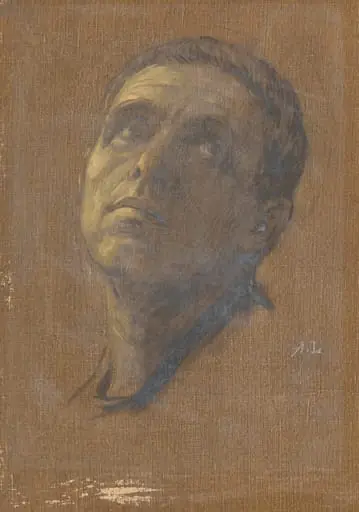
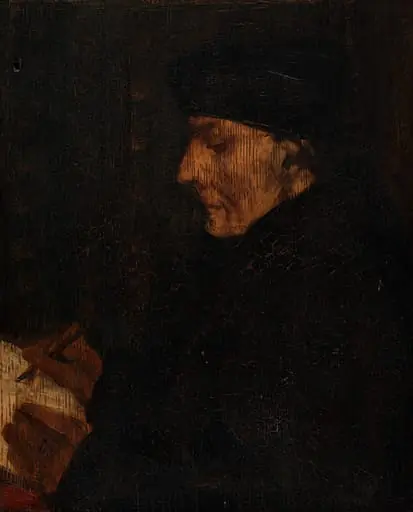
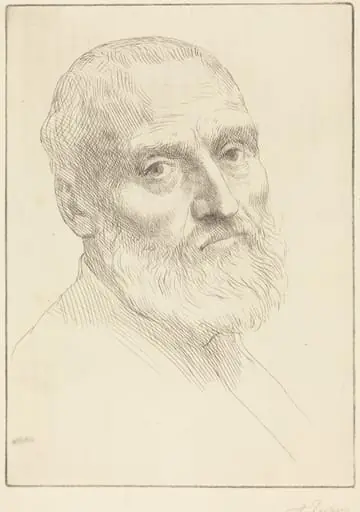
Head of a Man (Tete d'homme) is an ink print by the Romanticist artist Alphonse Legros. It dates from 1874 and is held in the collection of the National Gallery of Art.
About this work
Overview
Head of a Man (Tête d'homme) is an 1874 etching by Alphonse Legros, a French artist who relocated to Britain. This work exemplifies Legros' contribution to the revival of etching in Britain, a medium he championed alongside his practices in painting and sculpture.
Subject & Meaning
The etching presents a closely observed, restrained portrait of a male figure. His head is turned slightly left, eyes cast downward, conveying an atmosphere of quiet contemplation. The subject's wavy, unkempt hair frames his face, captured with meticulous attention to detail.
Technique & Style
Legros employed precise lines and nuanced shading to achieve depth and texture in the portrait. The interplay of these elements creates a sense of dimensionality, characteristic of Legros' meticulous approach to etching.
History & Provenance
Created in 1874, the etching is part of the collection at The National Gallery of Art, Washington, D.C., where it is preserved as part of the institution's holdings.
Context
While often associated with the broader European Romantic movement due to its expressive qualities, 'Head of a Man' specifically reflects Legros' role in Britain's etching revival of the late 19th century.
Legacy
As a key figure in revitalizing etching in Britain, Legros' works, including 'Head of a Man', continue to represent the artistic bridging of French and British practices during his time.
Artist & collection

Artist
Alphonse Legros (French pronunciation: ; 8 May 1837 – 8 December 1911) was a French, later British, painter, etcher, sculptor, and medallist.