Artwork
Head of a Man (Tete d'homme)
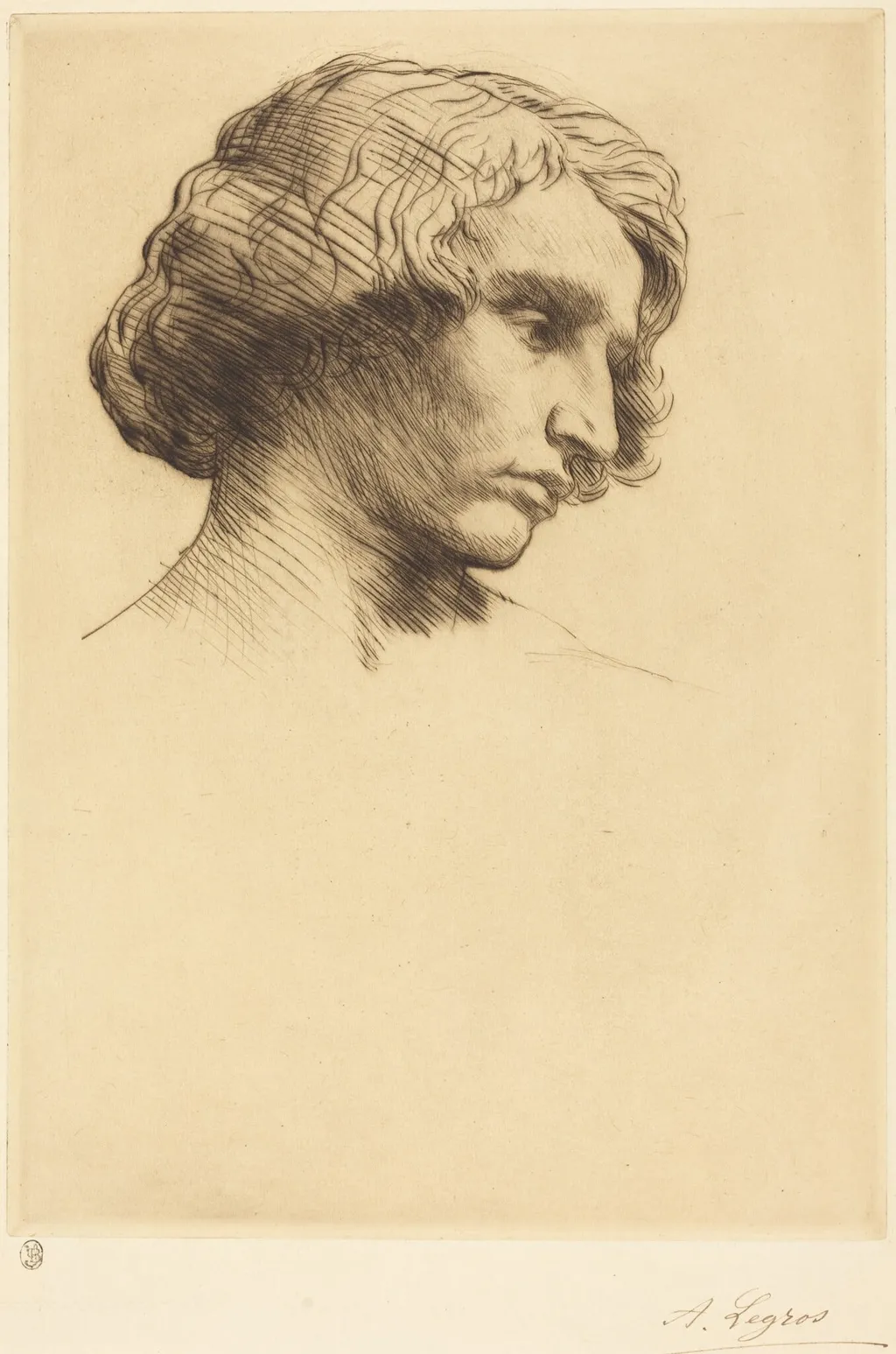
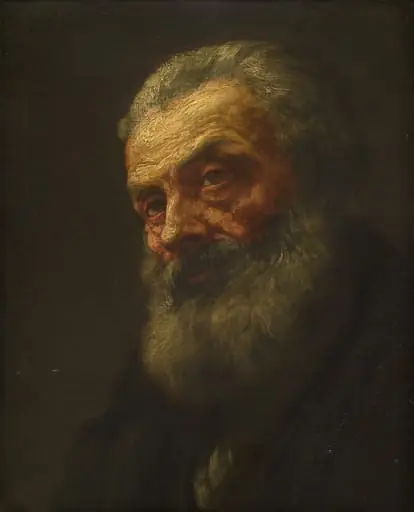
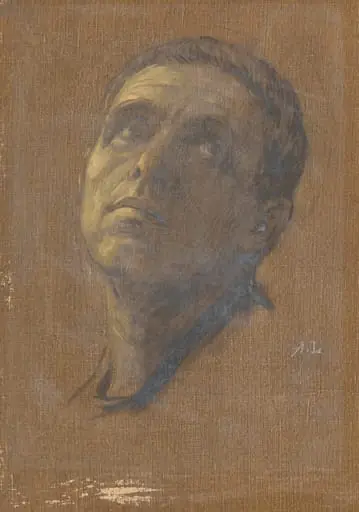
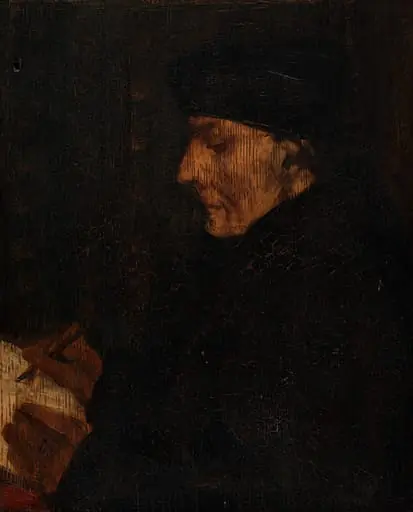
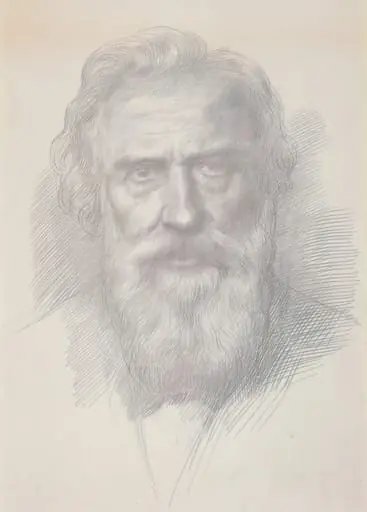
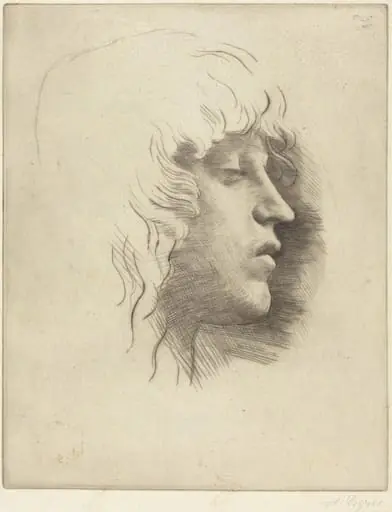
Head of a Man (Tete d'homme) is an ink print by the Impressionist artist Alphonse Legros. It dates from 1877 and is held in the collection of the National Gallery of Art.
About this work
Overview
Created in 1877, Head of a Man is a drypoint print by Alphonse Legros, a French artist who relocated to London in 1863 and eventually became a British citizen.
Created in 1877, Head of a Man is a drypoint print by Alphonse Legros, a French artist who relocated to London in 1863 and eventually became a British citizen. The work exemplifies Legros’s engagement with printmaking, particularly his commitment to reviving the drypoint technique in Britain. Unlike commercial reproductions, this piece emphasizes direct, hand-drawn mark-making, reflecting a return to intimate, tactile expression in graphic art.
Subject & Meaning
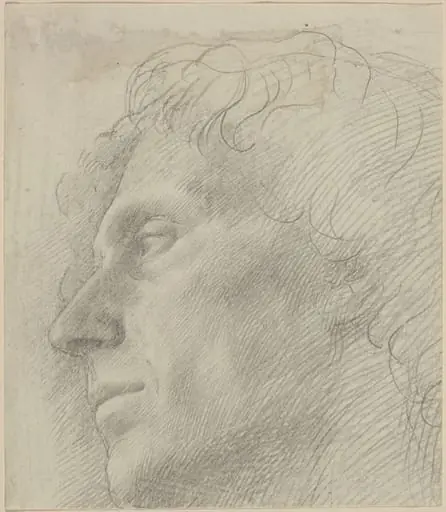
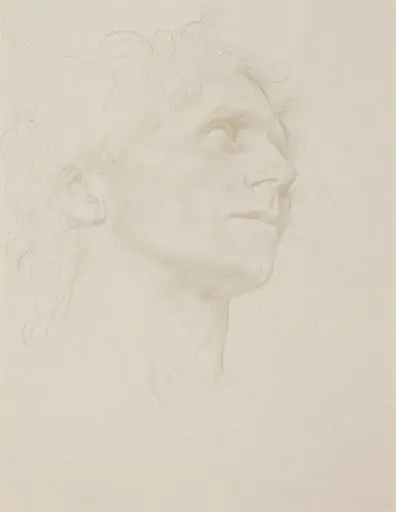
The portrait depicts a man facing right, his gaze inward and expression unguarded. There is no narrative context—no costume, setting, or identifier—only the quiet presence of a face rendered with restrained detail. The neutrality of the subject invites contemplation rather than interpretation, suggesting an interest in human presence as an end in itself, not as a symbol or stereotype.
Technique & Style
Legros employed drypoint, a method in which lines are incised directly into a metal plate with a sharp tool, producing a characteristic burr that holds ink and yields rich, velvety blacks. The fine, irregular strokes build form through texture rather than outline, emphasizing the grain of skin and the softness of hair. The absence of wash or tone heightens the tactile quality, grounding the image in physicality rather than illusion.
History & Provenance
Legros created this work during his early years in London, a period when he was actively teaching and influencing British artists through his role at the Slade School of Fine Art. While the specific provenance of this print is not widely documented, it aligns with his broader practice of producing small-scale, intimate prints meant for private collections rather than public display.
Context
In late 19th-century Britain, printmaking had declined in artistic prestige, overshadowed by painting and sculpture. Legros, trained in France’s academic tradition, championed etching and drypoint as serious artistic media. His work, including this portrait, contributed to a revival of interest in handcrafted prints among British artists and collectors seeking alternatives to industrial reproduction.
Legacy
Head of a Man reflects Legros’s lasting impact on British print culture. Through his teaching and practice, he helped reestablish drypoint as a medium capable of emotional depth and technical rigor. His focus on direct, unembellished portraiture influenced a generation of artists who valued the integrity of the hand-made line over academic idealization.
Artist & collection

Artist
Alphonse Legros (French pronunciation: ; 8 May 1837 – 8 December 1911) was a French, later British, painter, etcher, sculptor, and medallist.

![Head of a Man Facing Left [recto], by Alphonse Legros](https://artifactworldgallery.com/img/alphonse-legros--head-of-a-man-facing-left-recto--f7a024e42f6a9f0f-w320.webp)