Artwork
Head of a Man Facing Left [recto]
![Head of a Man Facing Left [recto], by Alphonse Legros, chalk, 1874](https://artifactworldgallery.com/img/alphonse-legros--head-of-a-man-facing-left-recto--f7a024e42f6a9f0f-w1024.webp)
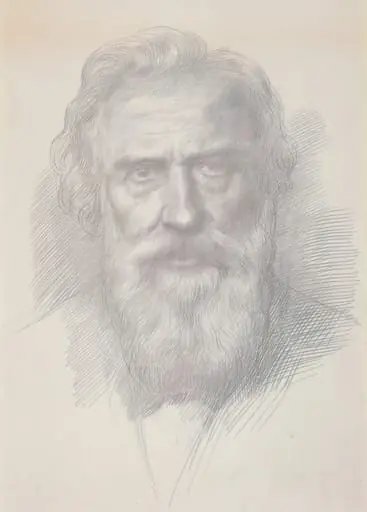
Head of a Man Facing Left [recto] is a chalk drawing by the Romanticist artist Alphonse Legros. It dates from 1874 and is held in the collection of the National Gallery of Art.
About this work
Overview
Created in 1874, this drawing by Alphonse Legros is a study in monochrome draftsmanship, executed in black chalk on thick laid paper.
Created in 1874, this drawing by Alphonse Legros is a study in monochrome draftsmanship, executed in black chalk on thick laid paper. Legros, originally French but later a British citizen, focused much of his career on graphic arts, particularly etching and drawing. This work exemplifies his disciplined approach to form, emphasizing structure over ornamentation. The medium and scale suggest it was intended as a preparatory or introspective exercise rather than a finished public piece.
Subject & Meaning
The portrait captures a man in left-facing profile, eyes lowered, expression neutral. There is no indication of identity, social status, or narrative context—only a quiet, inward presence. The absence of detail in clothing or background directs attention solely to the head and its subtle modeling. The downward gaze and stillness evoke a sense of private reflection, consistent with Legros’s interest in psychological restraint over theatrical expression.
Technique & Style
Legros employed soft, controlled lines of black chalk to define the contours of the face, using graded tonal shifts to suggest volume without heavy shading. The heavy laid paper provides a textured ground that enhances the chalk’s matte quality. Chiaroscuro is applied sparingly, concentrating shadow along the jawline and temple to model form subtly. The technique reflects a classical emphasis on line and structure, aligned with academic traditions but stripped of romantic embellishment.
History & Provenance
The drawing was made during Legros’s tenure in Britain, where he taught at the Slade School of Fine Art and influenced a generation of British draftsmen. While its exact provenance before institutional acquisition is undocumented, its preservation suggests it was retained within Legros’s personal archive or passed to a student or colleague. It reflects the period’s renewed interest in drawing as a serious artistic discipline, separate from painting or sculpture.
Context
In the 1870s, British art institutions were reevaluating the role of drawing, moving away from purely illustrative functions toward a focus on observation and form. Legros, trained in Paris and steeped in French academic methods, brought a rigorous approach to British art education. This drawing aligns with broader efforts to revive the study of the human figure through direct, unadorned observation, countering the dominance of historical or sentimental themes.
Legacy
Legros’s graphic works, including this drawing, helped redefine the status of drawing in 19th-century Britain. His emphasis on disciplined line and anatomical accuracy influenced pedagogical standards at the Slade and beyond. Though less known today than his etchings, this piece remains a quiet testament to his commitment to the integrity of the drawn line as a vehicle for psychological and formal inquiry.
Artist & collection

Artist
Alphonse Legros (French pronunciation: ; 8 May 1837 – 8 December 1911) was a French, later British, painter, etcher, sculptor, and medallist.

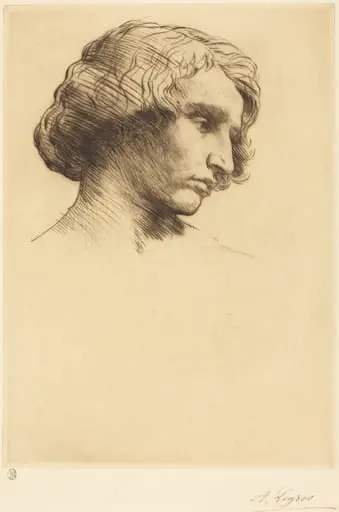 Head of a Man (Tete d'homme)
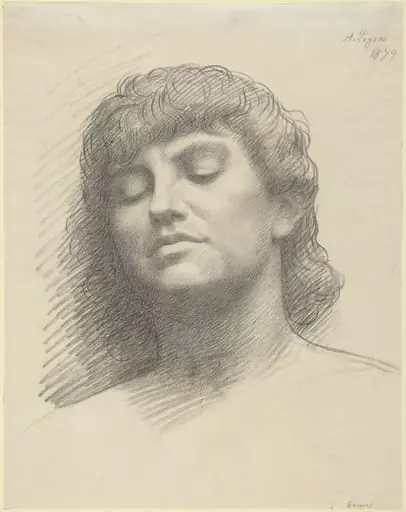 Head
Head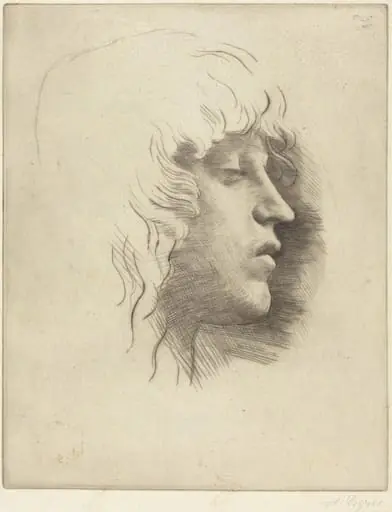 Head of a Young Girl (Tete de jeune fille)
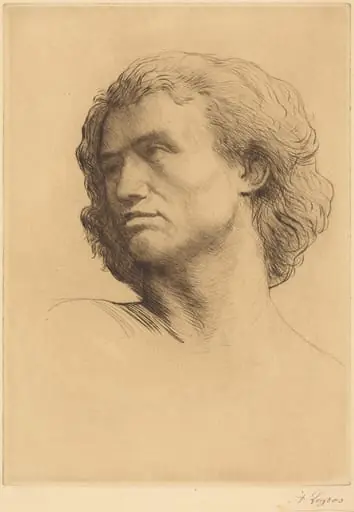 Head of a Man (Tete d'homme)
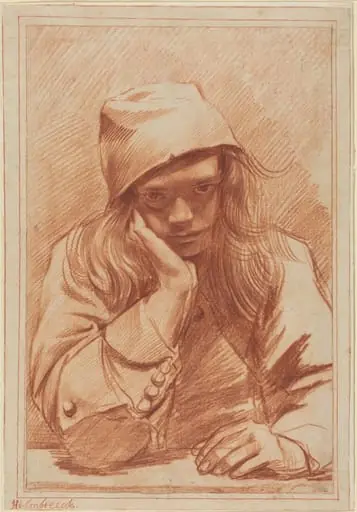 Self-Portrait
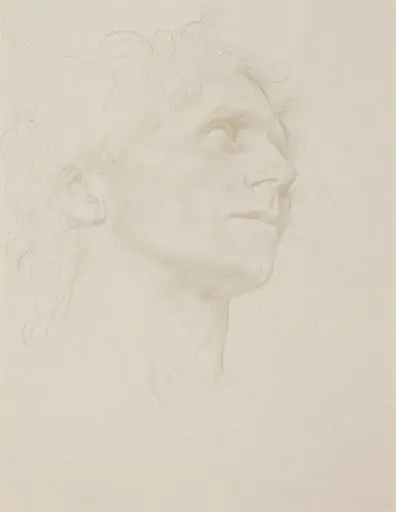 Study of Woman's Head, Turned Right
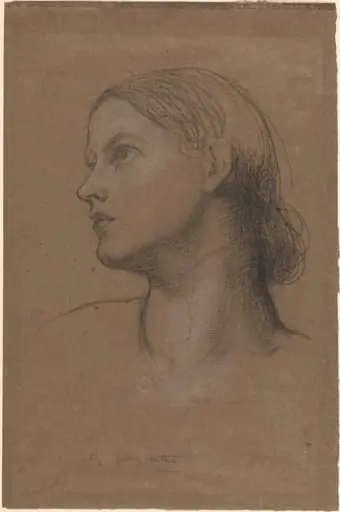 Head of a Young Woman
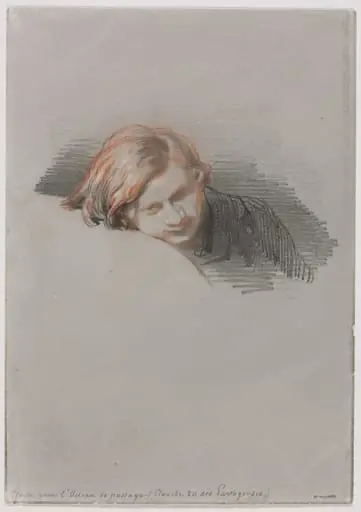 Head of a Young Man (Study for L'Oiseau de passage)
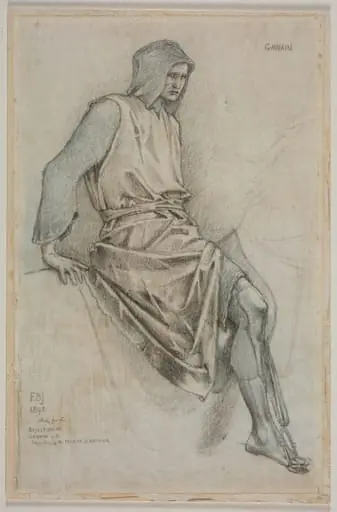 Study for the Failure of Gawain from the Holy Grail Tapestries
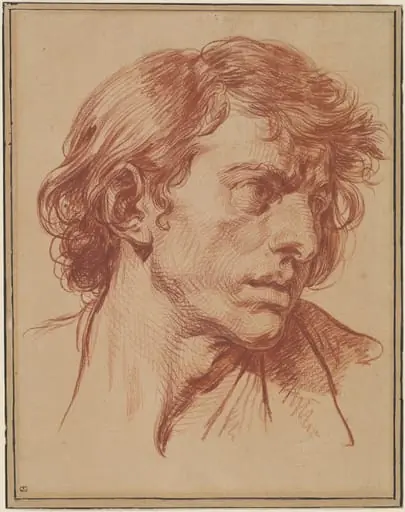 The Ungrateful Son