Artwork
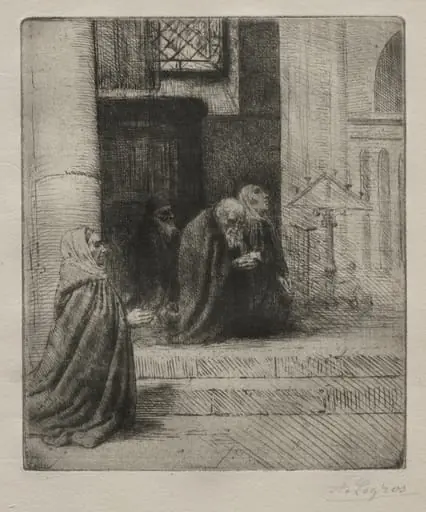
Interior of a Church (Interieur d'eglise)
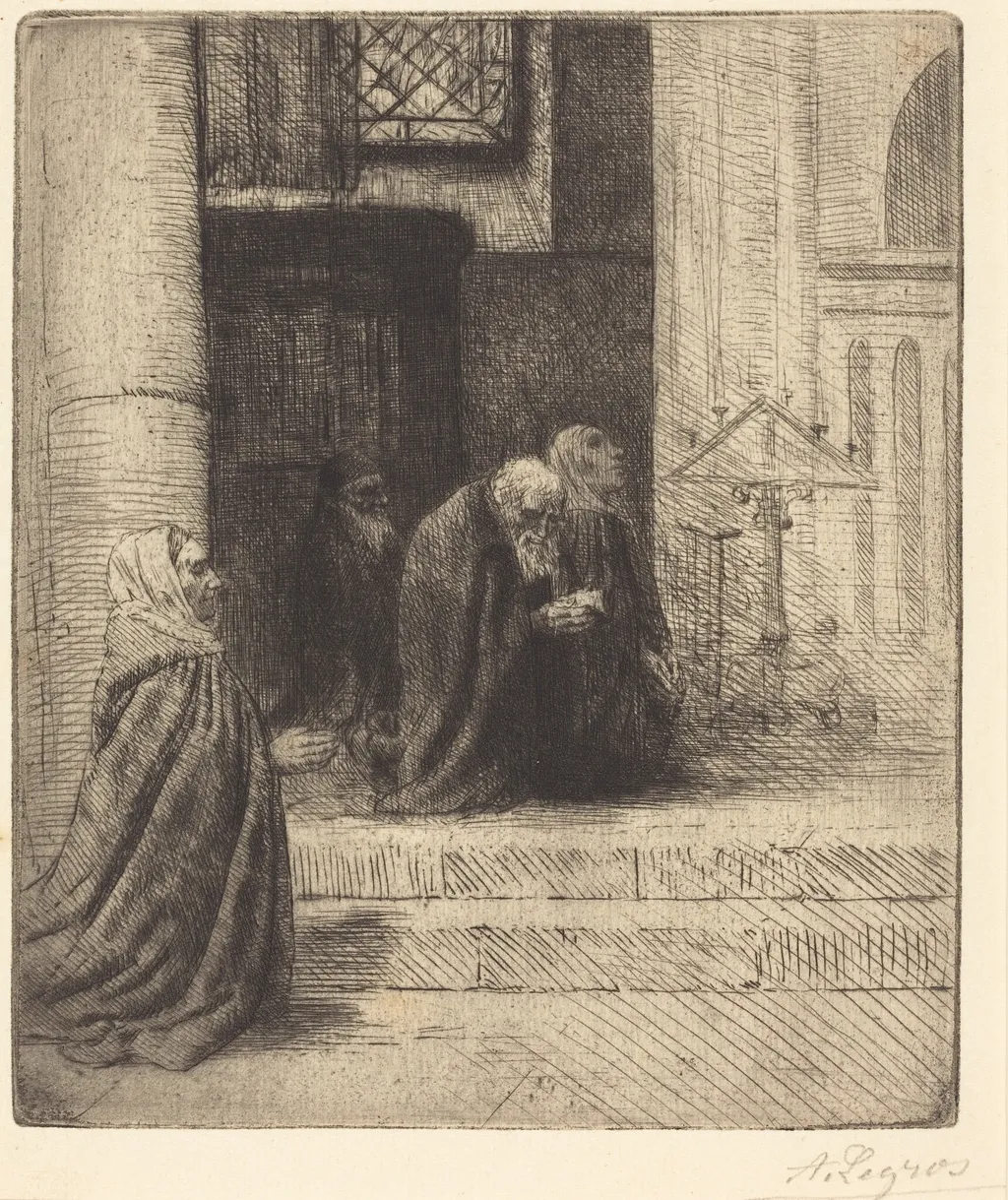
Interior of a Church (Interieur d'eglise) is an ink print by the Romanticist artist Alphonse Legros. It dates from 1874 and is held in the collection of the National Gallery of Art.
About this work
Overview
As part of the 19th-century revival of printmaking in Britain, Legros used etching not for decorative effect but to explore spatial depth and quiet atmosphere.
Alphonse Legros, a French artist who moved to London in 1863 and later became a British citizen, produced this etching in 1874. As part of the 19th-century revival of printmaking in Britain, Legros used etching not for decorative effect but to explore spatial depth and quiet atmosphere. The work belongs to a series of interior studies that reflect his interest in architectural form and the interplay of light and structure.
Subject & Meaning
The scene depicts a dimly lit church interior with a small group of figures, their forms rendered in simplified silhouettes. They are engaged in a quiet, reverent activity, likely worship or prayer, their presence subordinate to the architecture. The emphasis is not on narrative but on the solemnity of the space itself — a meditation on stillness, ritual, and the weight of sacred architecture.
Technique & Style
Legros employed fine, controlled etching lines to model the vaulted ceiling, columns, and floor, creating a sense of recession through tonal gradation rather than perspective alone. The contrast between deep shadows and faintly etched highlights enhances the atmosphere of quietude. His technique avoids theatricality, favoring restraint and precision, aligning with the realist tendencies of his time while retaining a poetic sensitivity to light.
History & Provenance
Created during Legros’s tenure at the Slade School of Art in London, this etching was made as part of his broader exploration of interior spaces. It circulated among collectors and artists interested in the revival of etching as a serious medium. The work remained in private hands in Britain for much of the 20th century before entering institutional collections, where it is now studied for its technical discipline and quiet aesthetic.
Context
In the 1870s, British artists were re-engaging with etching as a means of personal expression, moving away from mass reproduction toward artistic autonomy. Legros, influenced by Dutch and French print traditions, contributed to this movement by treating architectural interiors with the same gravity as landscape or portraiture. His work stood apart from Romantic drama, instead favoring understated observation and structural clarity.
Legacy
Legros’s etchings, including this church interior, helped redefine printmaking in Britain as a vehicle for serious artistic inquiry. His emphasis on tonal subtlety and spatial integrity influenced later generations of printmakers. Though not widely exhibited today, the work remains a key example of how 19th-century artists used etching to capture the quiet dignity of everyday sacred spaces.
Artist & collection

Artist
Alphonse Legros (French pronunciation: ; 8 May 1837 – 8 December 1911) was a French, later British, painter, etcher, sculptor, and medallist.

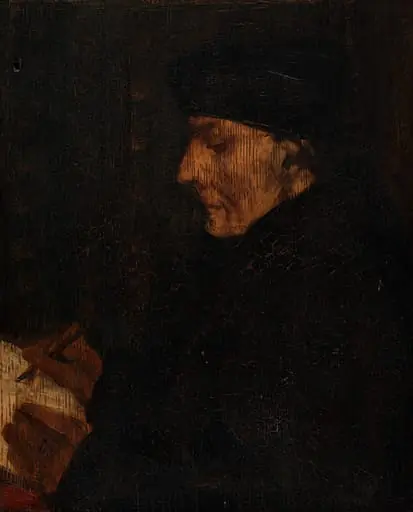
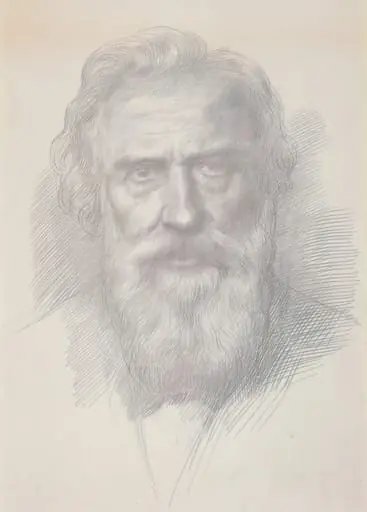
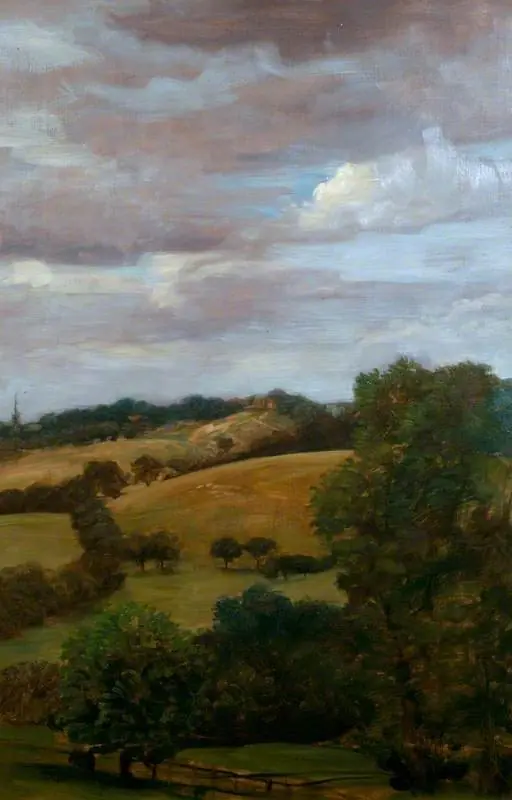
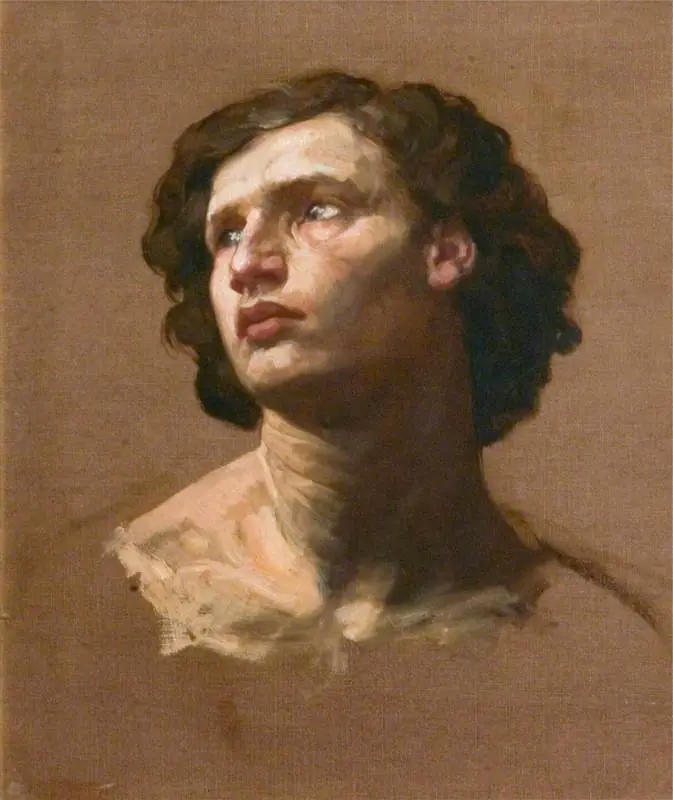
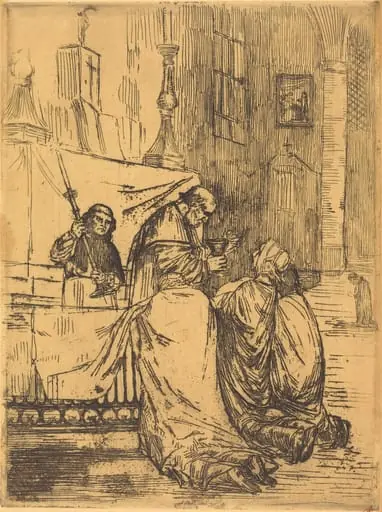 Communion in the Church of Saint Medard (La communion dans l'eglise St.-Medard)
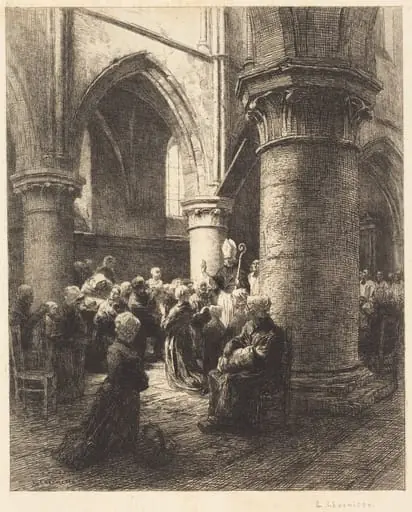 An Episcopal Visitation
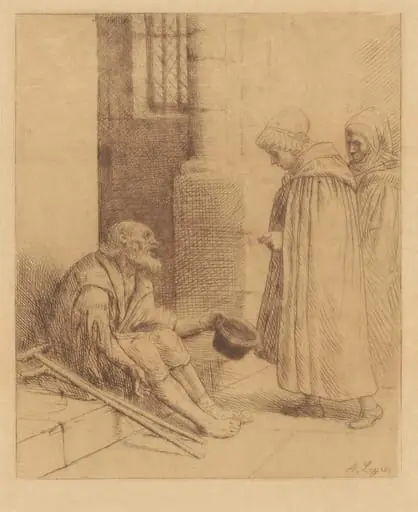 Charity (La Charité)
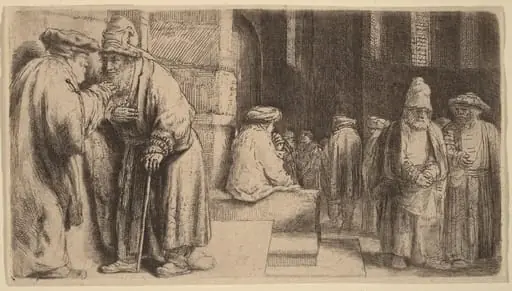 Jews in the Synagogue
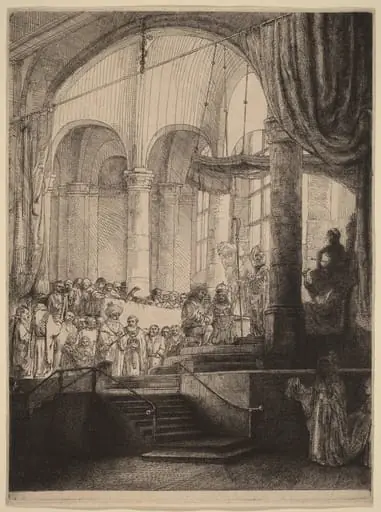 Medea, or the Marriage of Jason and Creusa
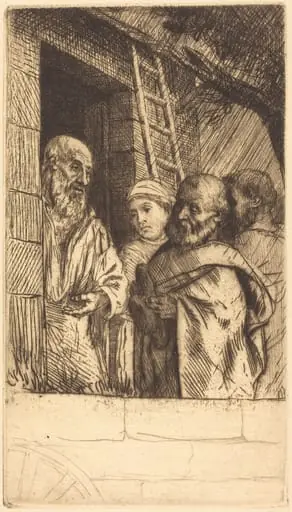 Saint Peter and Saint Paul at the Door of Bonhomme Misere (Saint Pierre et Saint Paula la port du Bonhomme Misere)
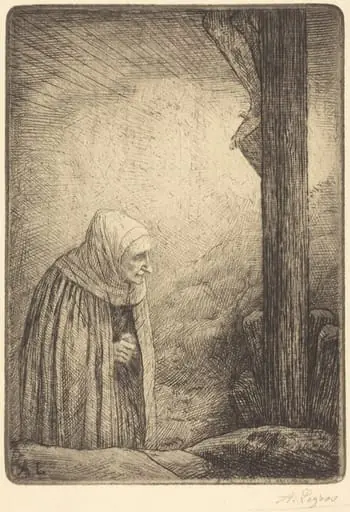 Woman at the Foot of the Cross (Femme au calvaire)
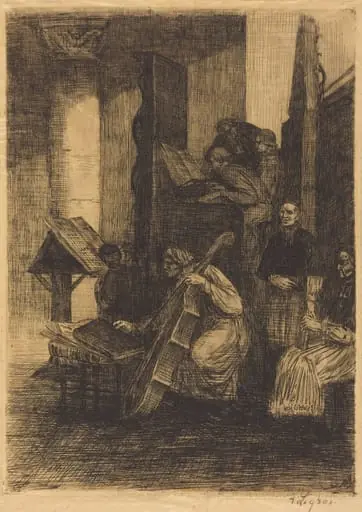 Choir in a Spanish Church (La choeur d'une eglise espagnole)
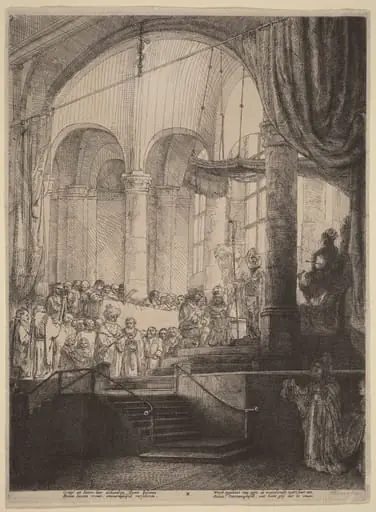 Medea, or the Marriage of Jason and Creusa
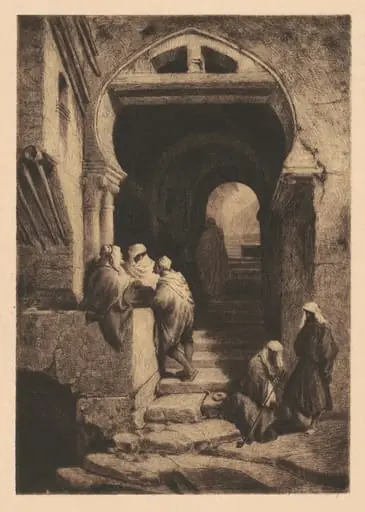 Devils Way, Algiers
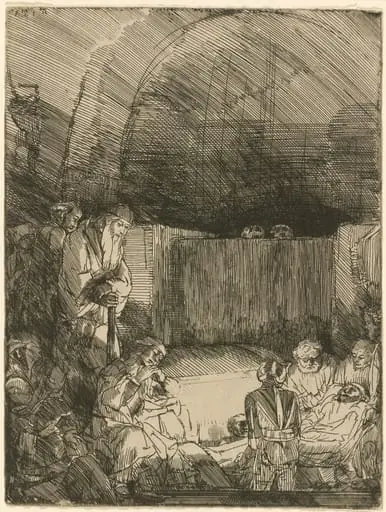 The Entombment
 Interior of a Church