Artwork
Jews in the Synagogue
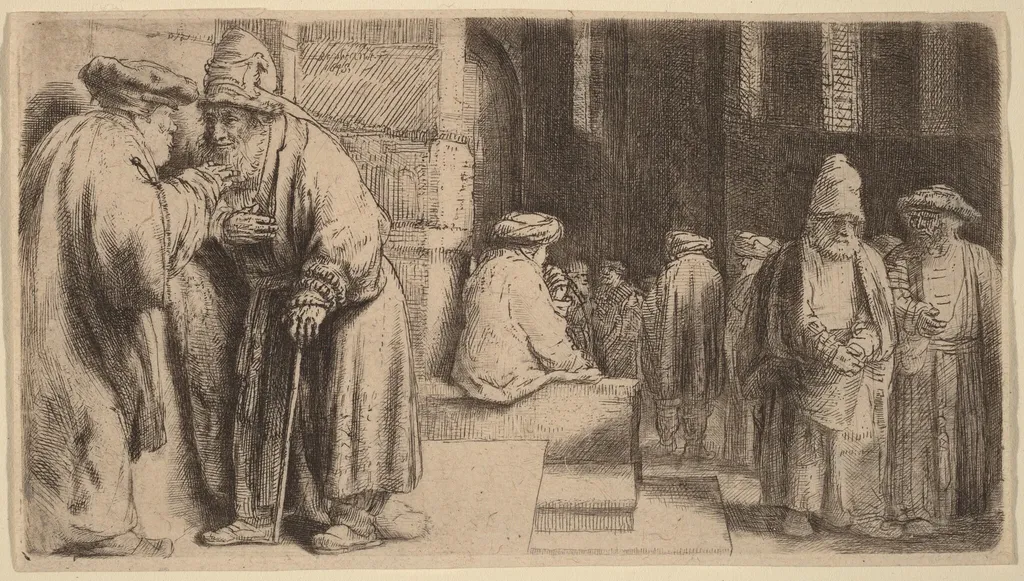
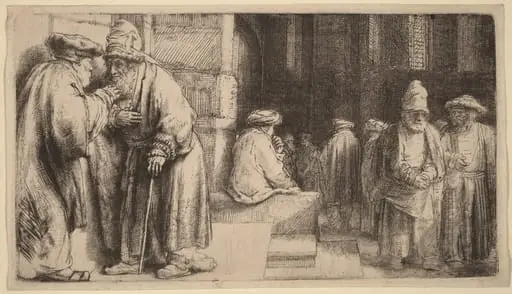
Jews in the Synagogue is an ink print by the Baroque artist Rembrandt. It dates from 1648 and is held in the collection of the National Gallery of Art.
About this work
Overview
The composition emphasizes texture and atmosphere over detail, using fine lines and deep shadows to suggest form and mood.
Created in 1648, 'Jews in the Synagogue' is a print by Rembrandt van Rijn, executed in etching and drypoint. It captures a quiet interior scene within a Jewish place of worship, rendered in monochrome tones. The composition emphasizes texture and atmosphere over detail, using fine lines and deep shadows to suggest form and mood. The work reflects Rembrandt’s interest in intimate, contemplative moments rather than grand narrative.
Subject & Meaning
The scene depicts a group of Jewish men gathered in a modest synagogue, their postures conveying solemnity and focus. A central figure, leaning on a companion while holding a book and cane, suggests a moment of study or prayer. The absence of ornamentation and the subdued lighting point to an emphasis on inner devotion. The figures’ expressions and gestures imply a shared, unspoken reverence, avoiding theatricality in favor of quiet dignity.
Technique & Style
Rembrandt employed etching and drypoint to achieve rich tonal variation, layering fine lines and burr to model light and fabric. The drypoint’s soft, fuzzy lines enhanced the texture of garments and skin, while the etched contours defined spatial depth. Minimal use of aquatint, if any, kept the palette restrained to blacks, grays, and paper white. The work’s sketchlike quality suggests spontaneity, yet each mark was carefully considered to convey weight and presence.
History & Provenance
The print was made during Rembrandt’s later years in Amsterdam, a period marked by his deep engagement with religious and humanist themes. It circulated among collectors and artists, admired for its emotional resonance and technical innovation. While its early ownership is not fully documented, it entered major museum collections in the 19th century, where it remains studied as an example of Rembrandt’s mastery of printmaking.
Context
In mid-17th century Amsterdam, Rembrandt lived among a significant Jewish community and was known to depict its members with uncommon empathy. Unlike many contemporaries who portrayed Jewish subjects through stereotype, he rendered them with individuality and dignity. This print aligns with his broader interest in religious life beyond Christian iconography, reflecting a culturally pluralistic urban environment.
Legacy
The print influenced later generations of printmakers through its expressive use of line and tone. It stands as a rare example of a non-Christian religious scene rendered with such psychological depth in European art of the period. Scholars continue to analyze it for its cultural sensitivity and technical innovation, affirming its place in the history of printmaking and interfaith representation.
Artist & collection
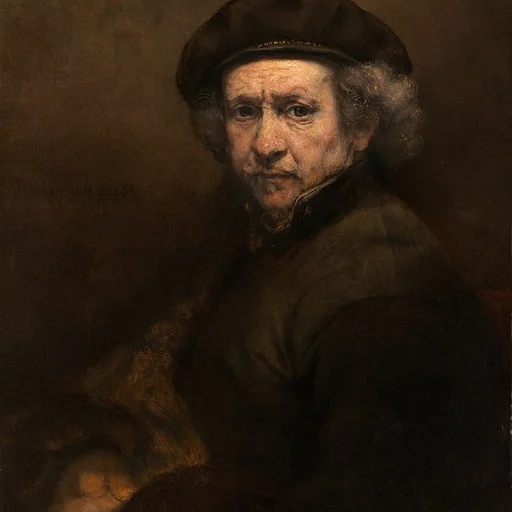
Artist
Rembrandt Harmenszoon van Rijn (15 July 1606 – 4 October 1669), known mononymously as Rembrandt, was a Dutch Golden Age painter, printmaker, and draughtsman.

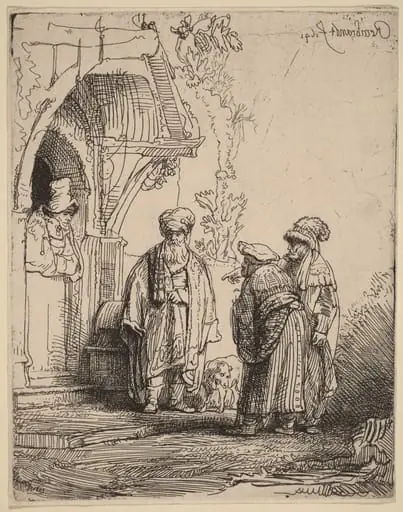 Three Oriental Figures (Jacob and Laban?)
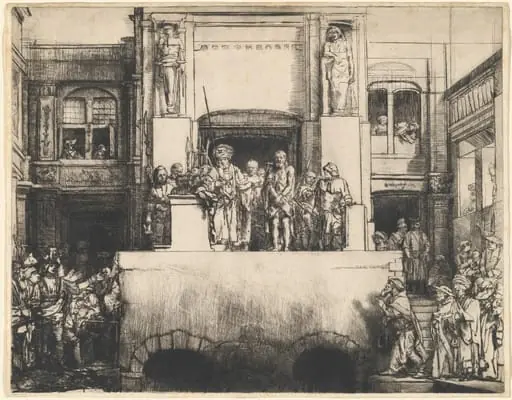 Christ Presented to the People: Oblong Plate
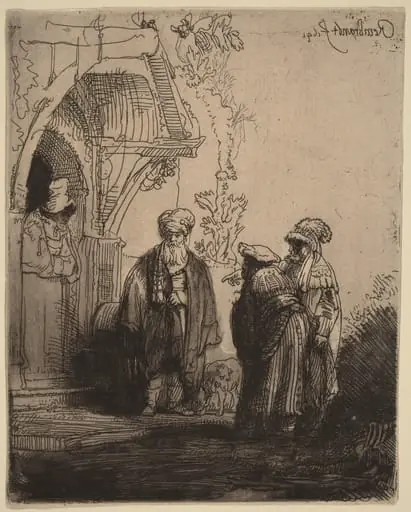 Three Oriental Figures (Jacob and Laban?)
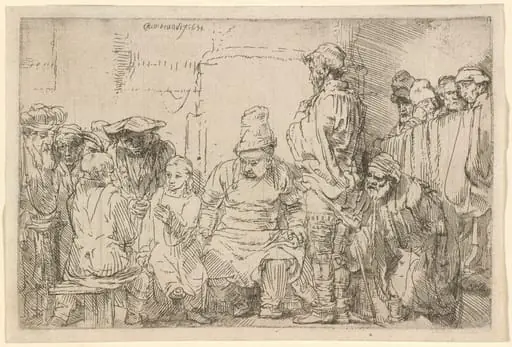 Christ Seated Disputing with the Doctors
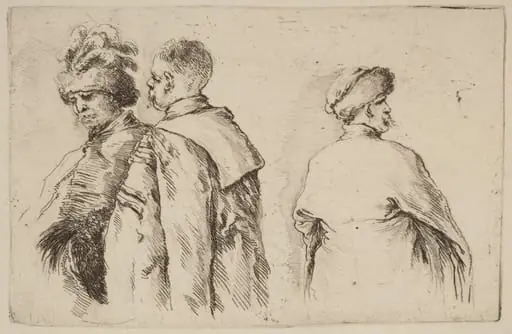 Three Hungarians
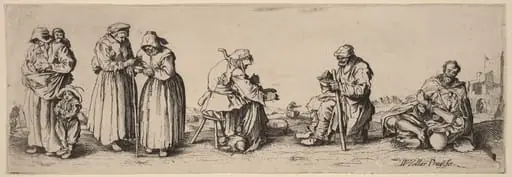 Six Men and Women Beggars
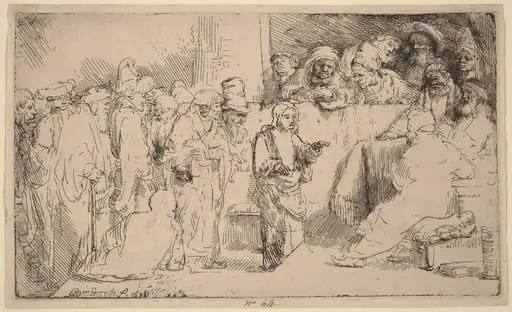 Christ Disputing with the Doctors: a Sketch
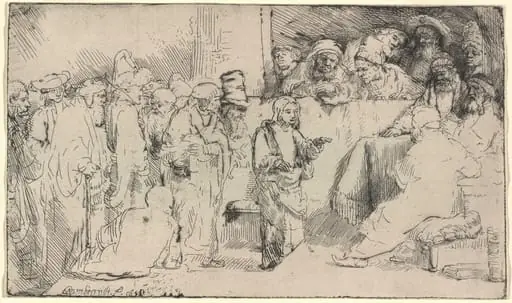 Christ Disputing with the Doctors: a Sketch
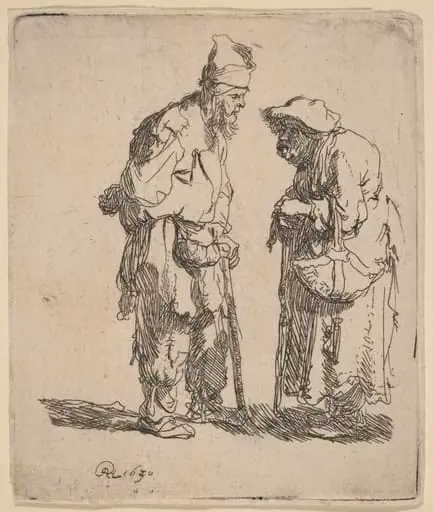 Beggar Man and Beggar Woman Conversing
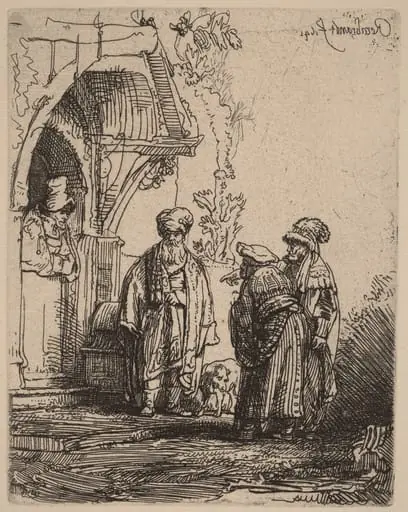 Three Oriental Figures (Jacob and Laban?)
 Three Oriental Figures (Jacob and Laban?)
 Jews in the Synagogue