Artwork
Landscape (Paysage)
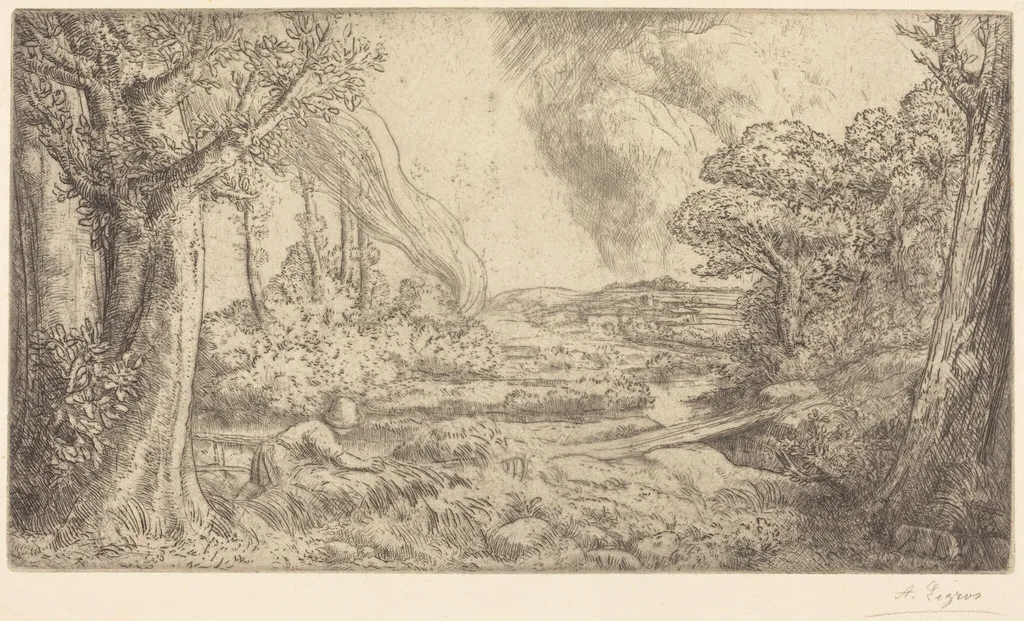
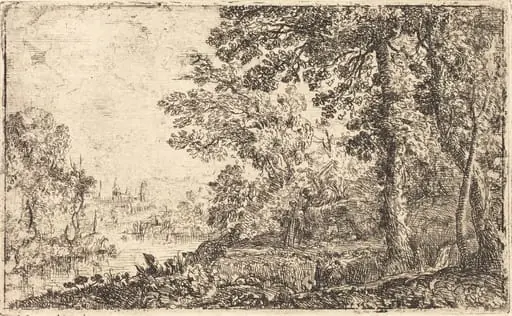
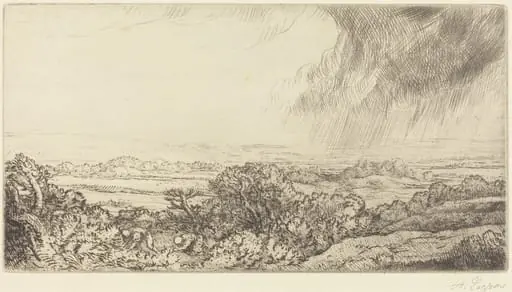
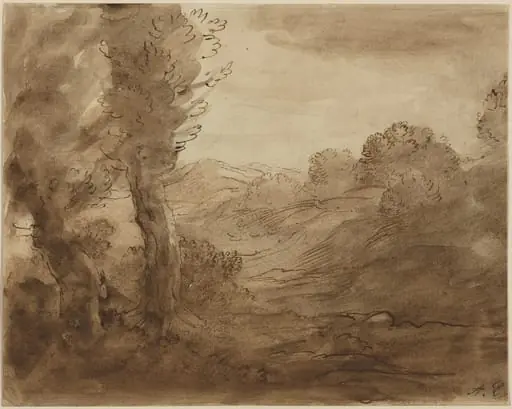
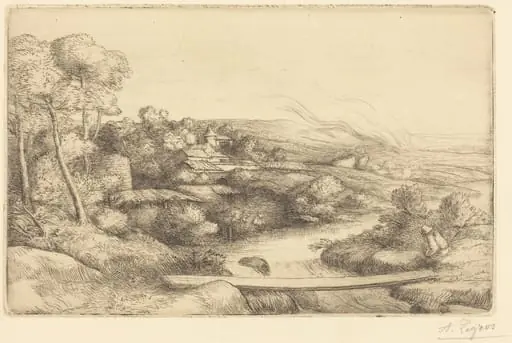
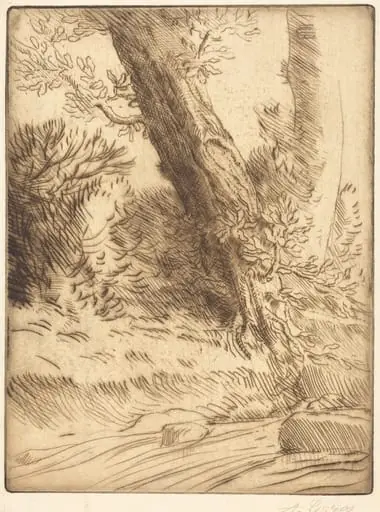
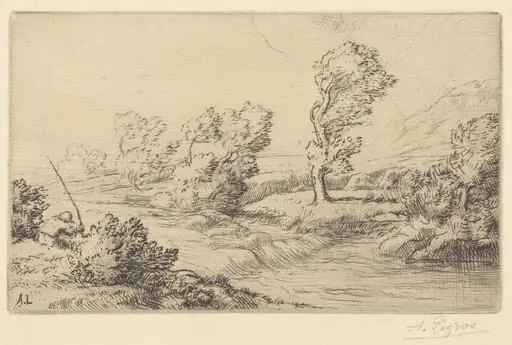
Landscape (Paysage) is an ink print by the Romanticist artist Alphonse Legros. It dates from 1874 and is held in the collection of the National Gallery of Art.
About this work
Overview
Created in 1874, *Landscape (Paysage)* is an intaglio print by Alphonse Legros, a French artist who moved to London in 1863 and later became a British citizen.
Created in 1874, *Landscape (Paysage)* is an intaglio print by Alphonse Legros, a French artist who moved to London in 1863 and later became a British citizen. Executed in etching and drypoint, the work reflects Legros’s dedication to printmaking as a serious artistic medium. His technical precision and commitment to revivalist practices helped reestablish etching as a respected form in 19th-century Britain.
Subject & Meaning
The print depicts a secluded forest path, flanked by dense trees and uneven terrain. No human figures appear, emphasizing solitude and the quiet rhythm of nature. The winding trail invites the viewer’s gaze inward, suggesting contemplation rather than narrative. The absence of overt symbolism aligns with a quiet realism, valuing atmosphere over dramatic event.
Technique & Style
Legros employed drypoint to carve fine, scratchy lines directly into the plate, creating rich, velvety shadows and textured bark. Etching provided finer control for distant foliage and atmospheric depth. The contrast between sharp, tactile marks and softer, bitten tones gives the scene a tactile immediacy. No aquatint was used; the tonal gradations arise from hand-worked lines and selective inking.
History & Provenance
Produced during Legros’s early years in England, the print emerged from his active engagement with the British art scene. He taught at the Slade School of Fine Art and influenced a generation of printmakers. While specific early ownership records are sparse, the work is documented in major institutional collections, reflecting its recognition within academic circles by the late 19th century.
Context
In the 1870s, British printmaking was undergoing a revival, moving away from reproductive engravings toward original, expressive etchings. Legros, trained in France’s academic tradition, brought continental rigor to this movement. His landscapes, like this one, responded to both Romantic ideals of nature and the growing interest in direct observation, aligning with broader European trends in realism.
Legacy
Legros’s *Landscape (Paysage)* exemplifies his role in elevating etching as an independent art form. His technical discipline and emphasis on handcrafted marks influenced British printmakers well into the 20th century. Though less widely known today, his prints remain touchstones in studies of Victorian print revival and the transition from academic to modernist approaches to the medium.
Own this work as a print
Artist & collection

Artist
Alphonse Legros (French pronunciation: ; 8 May 1837 – 8 December 1911) was a French, later British, painter, etcher, sculptor, and medallist.