Artwork
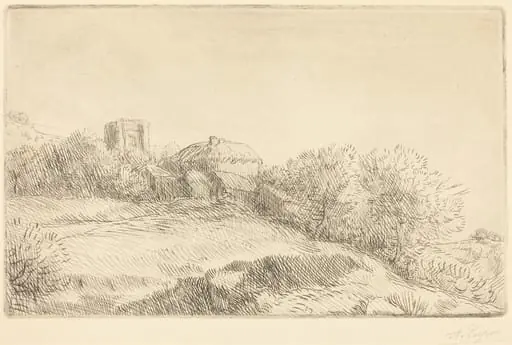
Farm on a Hillside in Sunlight (La ferme du coteau; Effet de soleil sur le coteau)
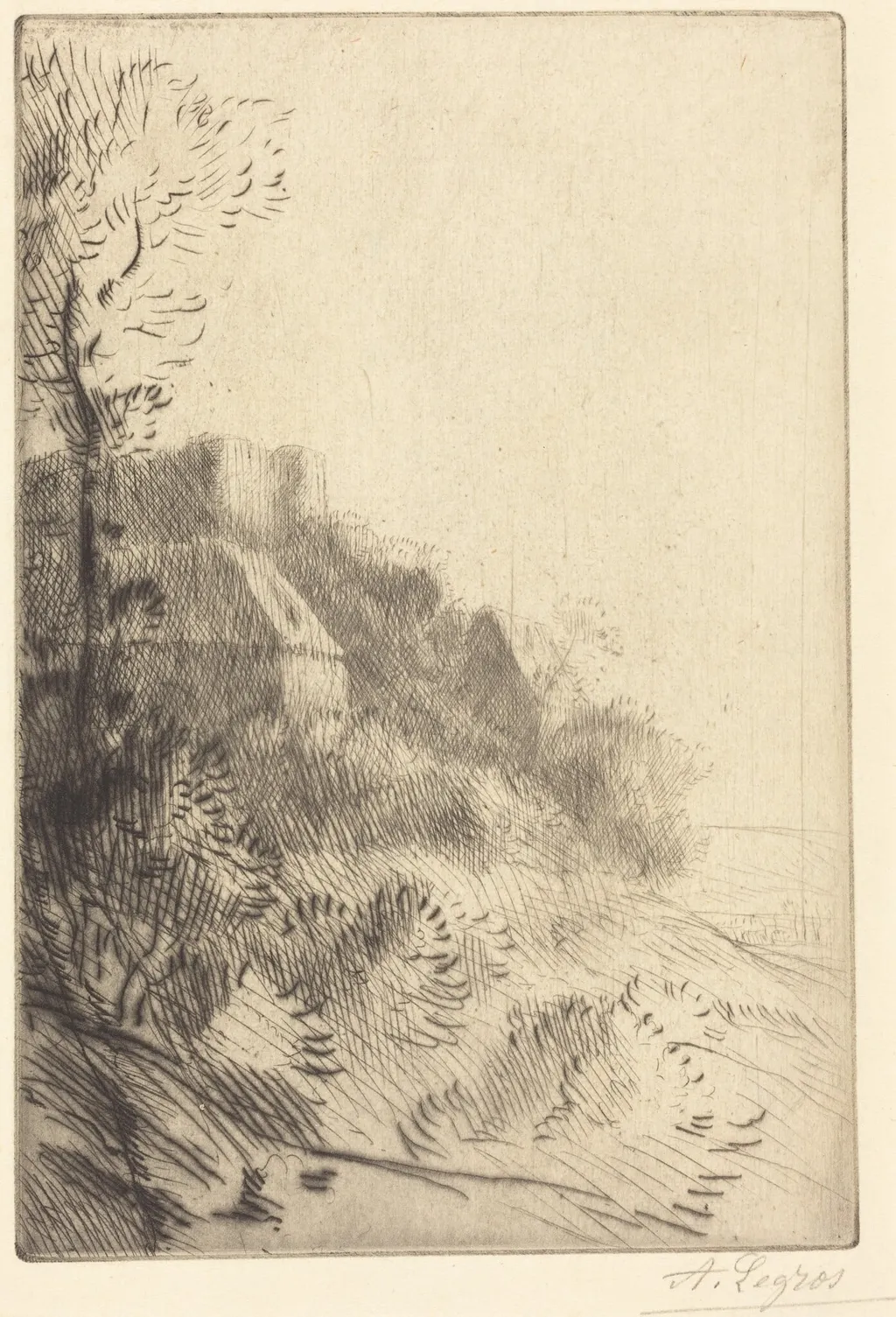
Farm on a Hillside in Sunlight (La ferme du coteau; Effet de soleil sur le coteau) is an ink print by the Romanticist artist Alphonse Legros. It dates from 1874 and is held in the collection of the National Gallery of Art.
About this work
Overview
Unlike oil painting, drypoint allowed for intimate, tactile renderings, and Legros used it to capture quiet rural life with precision and sensitivity.
Created in 1874, *Farm on a Hillside in Sunlight* is a drypoint print by Alphonse Legros, a French artist who moved to London in 1863. The work belongs to a broader revival of etching in Britain during the late nineteenth century, in which Legros was instrumental. Unlike oil painting, drypoint allowed for intimate, tactile renderings, and Legros used it to capture quiet rural life with precision and sensitivity.
Subject & Meaning
The scene portrays a modest farmstead nestled on a gently sloping hill, illuminated by direct sunlight. Buildings, trees, and fields are arranged to suggest depth without narrative drama. The absence of human figures emphasizes solitude and the quiet rhythm of agricultural life. The work reflects a contemplative engagement with the land, valuing observation over idealization.
Technique & Style
Legros employed drypoint to create dense, velvety lines that hold ink deeply, producing rich contrasts between light and shadow. The texture of grass and earth emerges through varied pressure and hatching, while the sunlit areas are suggested by sparse, deliberate marks. The technique’s immediacy lends the scene a sense of spontaneity, grounding its realism in the physicality of the plate.
History & Provenance
Legros produced this print during his early years in Britain, shortly after joining the Slade School of Fine Art. It was made at a time when he was shifting focus from sculpture to graphic arts, and it reflects his growing interest in landscape as a subject for printmaking. The work was likely circulated among artists and collectors in London, contributing to renewed appreciation for etching as a serious medium.
Context
In the 1870s, British art was increasingly drawn to rural subjects as industrialization reshaped the countryside. Legros’s print aligns with this trend but avoids sentimentality. His approach was influenced by French Realism and the Barbizon School, yet his technique remained rooted in the precision of academic printmaking, distinguishing his work from both romanticized and purely documentary depictions of rural life.
Legacy
Legros’s drypoints, including this one, helped redefine etching as a medium capable of nuanced expression beyond reproductive illustration. His emphasis on light, texture, and quiet observation influenced a generation of British printmakers. Though less known today, his work laid groundwork for the revival of original printmaking in the late Victorian era.
Artist & collection

Artist
Alphonse Legros (French pronunciation: ; 8 May 1837 – 8 December 1911) was a French, later British, painter, etcher, sculptor, and medallist.