Artwork
Landscape (Un paysage)
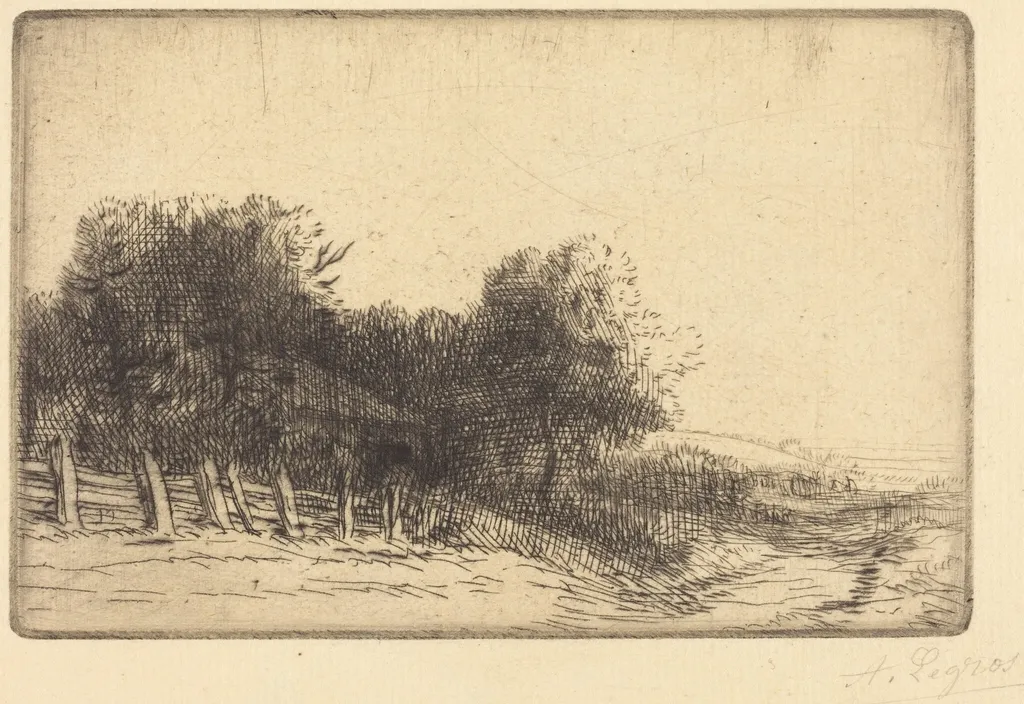
Landscape (Un paysage) is an ink print by the Romanticist artist Alphonse Legros. It dates from 1874 and is held in the collection of the National Gallery of Art.
About this work
Overview
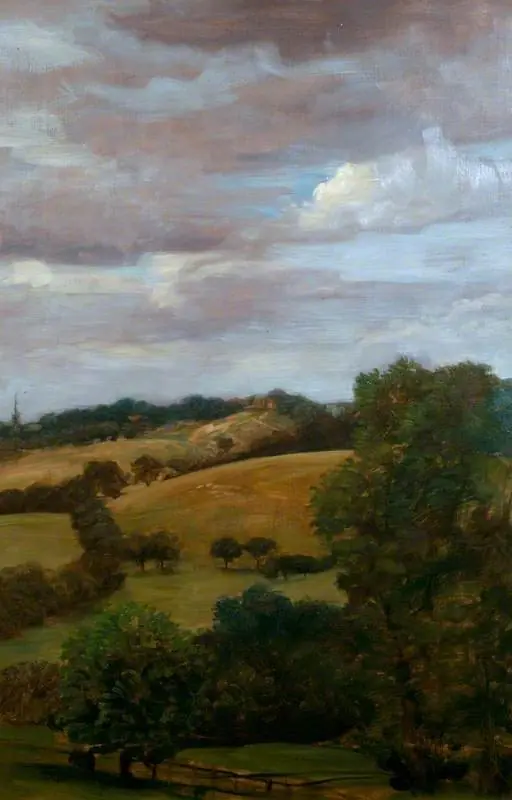
Created in 1874, *Landscape (Un paysage)* is an etching combined with drypoint that presents a quiet rural view. The composition centers on a stand of dark trees, a wooden fence in the foreground and a path that disappears toward the right, establishing a sense of depth through careful line work.
Subject & Meaning
The image captures a tranquil countryside scene, emphasizing the relationship between natural forms and human-made boundaries. The fence and winding path suggest a modest, cultivated landscape, inviting contemplation of the simple, everyday environment.
Technique & Style
Legros employed both etching and drypoint, allowing for fine, precise lines alongside richer, velvety strokes. The detailed rendering of foliage and texture reflects Romantic sensibilities, using meticulous line work to convey atmosphere and spatial recession.
History & Provenance
Alphonse Legros, born in France and resident in London from 1863, produced this print after establishing himself as a British citizen. His broader career spanned painting, sculpture and printmaking, and his teaching contributed significantly to the 19th‑century revival of etching in Britain.
Context
The work belongs to the Romantic tradition that valued emotive landscape and the sublime qualities of nature. Within this framework, Legros’s precise technique aligns with the period’s interest in detailed observation and the expressive potential of print media.
Artist & collection

Artist
Alphonse Legros (French pronunciation: ; 8 May 1837 – 8 December 1911) was a French, later British, painter, etcher, sculptor, and medallist.

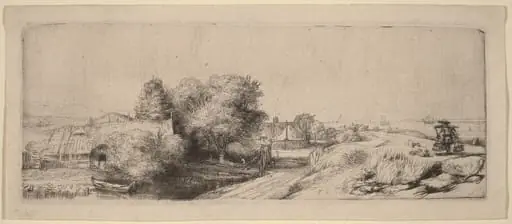 Landscape with a Milkman
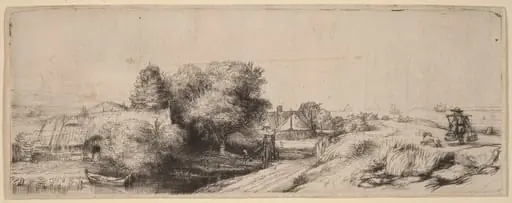 Landscape with a Milkman
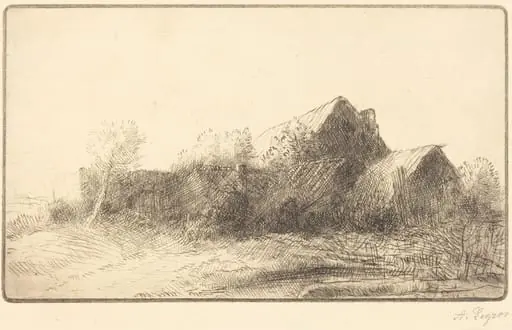 Farm (Une ferme)
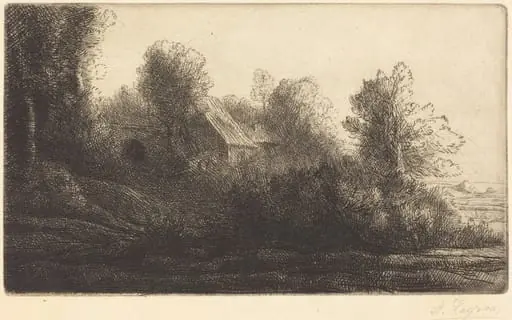 View of a Farm, 2nd plate (La ferme de Bienheureux)
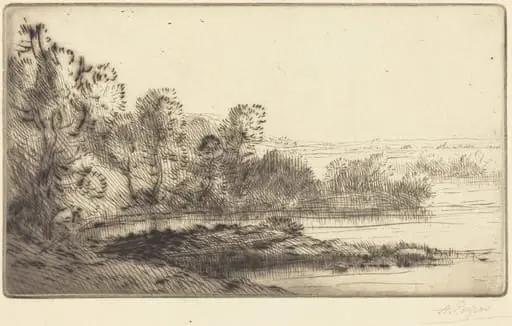 Along the Terne (Sur la terne)
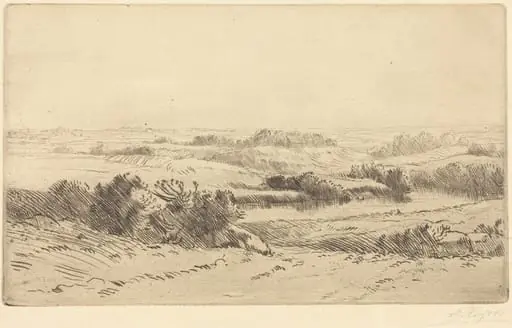 Banks of the Yanne (Les bords de la Yanne)
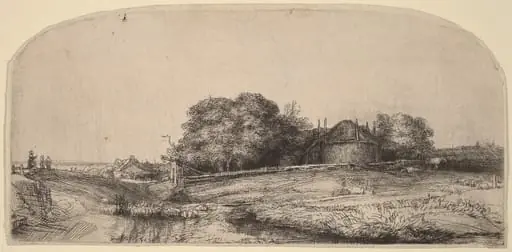 Landscape with a Hay Barn and a Flock of Sheep
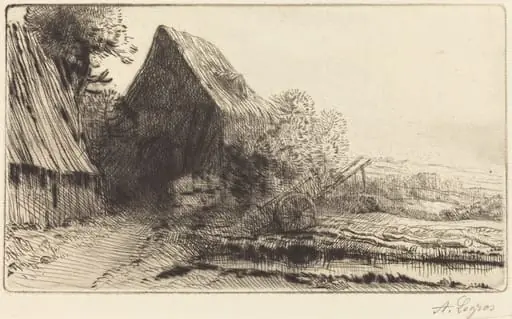 Wheelwright's Home (La maison du charron)
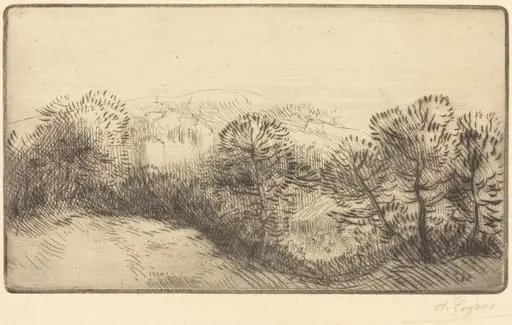 Near the Woods (Pres du bois)