Artwork
Peasant Woman of Boulogne (Paysanne des environs de Boulogne dite La femme au panier)
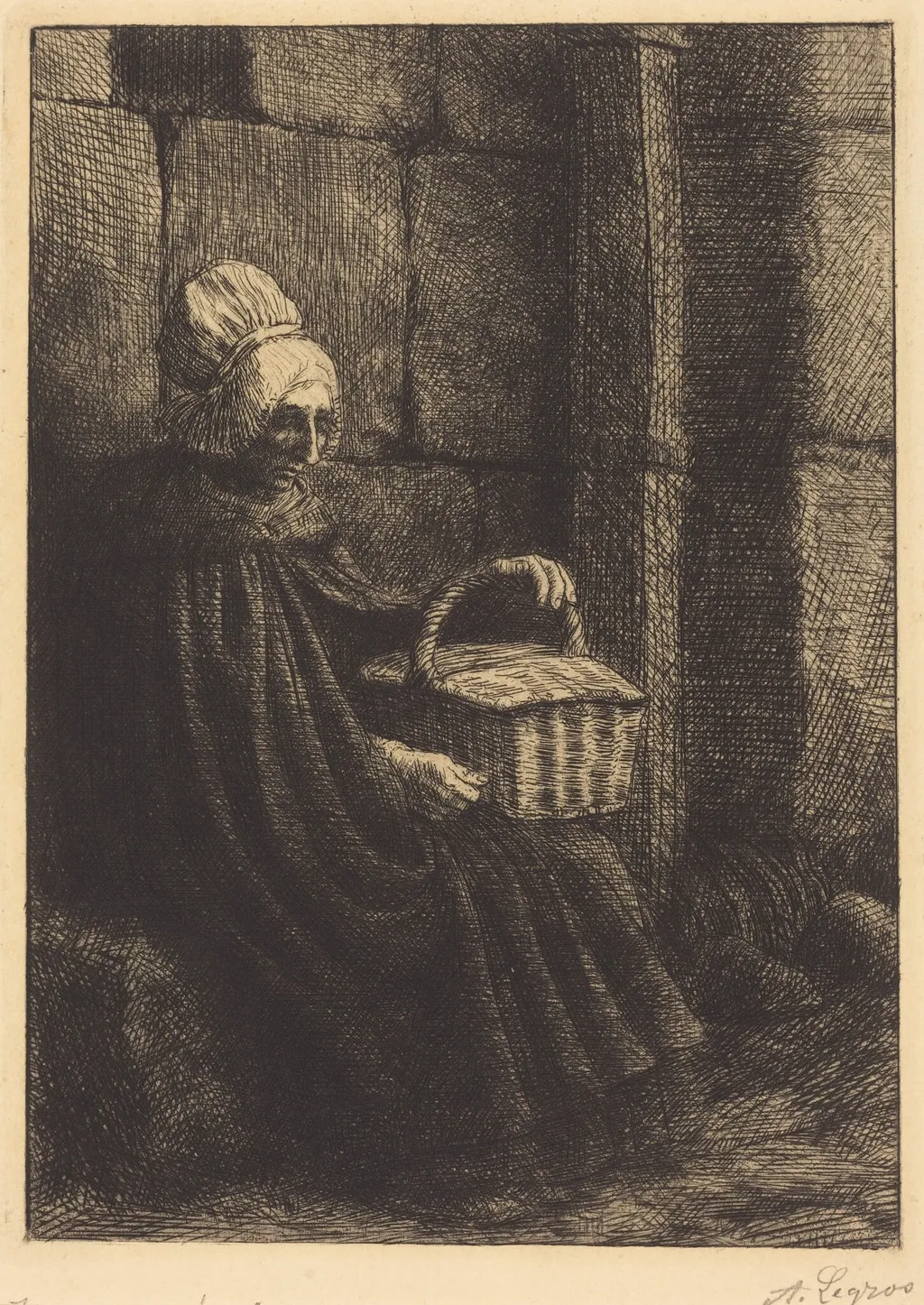
Peasant Woman of Boulogne (Paysanne des environs de Boulogne dite La femme au panier) is an ink print by the Romanticist artist Alphonse Legros. It dates from 1874 and is held in the collection of the National Gallery of Art.
About this work
Overview
Alphonse Legros produced the etching *Peasant Woman of Boulogne* in 1874. Executed after his relocation to London, the work exemplifies his involvement in the 19th‑century revival of printmaking, particularly etching, within the British art scene.
Subject & Meaning
The image portrays a modest woman from the countryside surrounding Boulogne, seated in a dim interior. Dressed in a dark gown and head covering, she holds a closed wicker basket, her gaze directed downward, suggesting a moment of quiet reflection or personal contemplation.
Technique & Style
Legros employed traditional copper‑plate etching, using fine lines to render the texture of stone walls, fabric folds, and the basket’s weave. The subdued tonal range and restrained composition align the work with Romantic sensibilities, emphasizing mood over narrative detail.
History & Provenance
Created shortly after Legros became a naturalised British citizen, the print was part of his broader effort to promote etching as a fine art medium. It circulated among his students and collectors interested in the renewed British interest in the medium during the 1870s.
Context
The piece reflects the 19th‑century fascination with rural life and the dignity of ordinary laborers, themes common in Romantic and realist circles. By focusing on a solitary peasant woman, Legros joins contemporaries who used genre subjects to explore interiority and social conditions.
Artist & collection

Artist
Alphonse Legros (French pronunciation: ; 8 May 1837 – 8 December 1911) was a French, later British, painter, etcher, sculptor, and medallist.

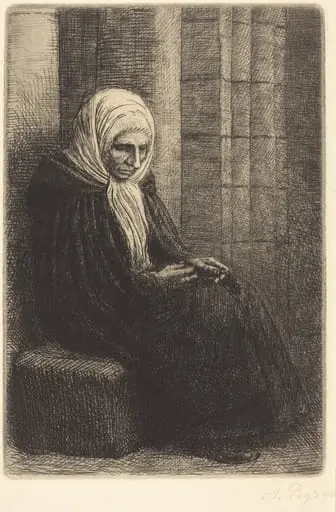 Woman Seated against a Wall, Child with His Head in Her Lap (Femme assis, muraille au fond, enfant la tete dans son giron)
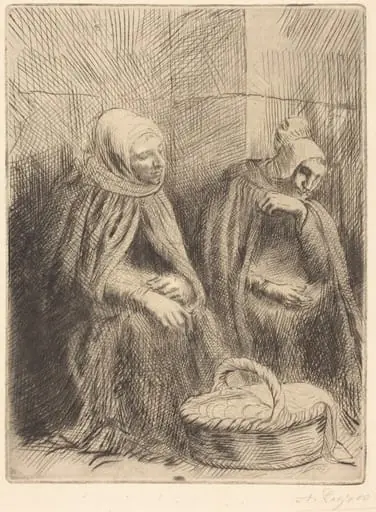 Egg-sellers, 1st plate (Les marchandes d'oeufs)
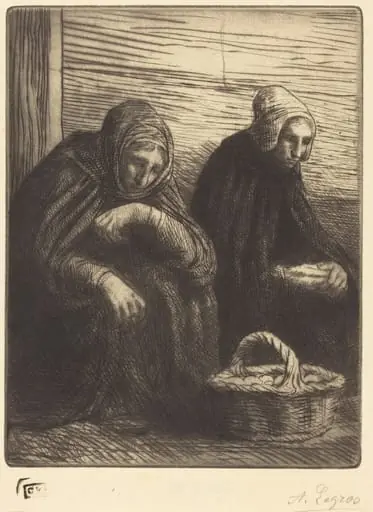 Egg-sellers, 2nd plate (Les marchandes d'oeufs)
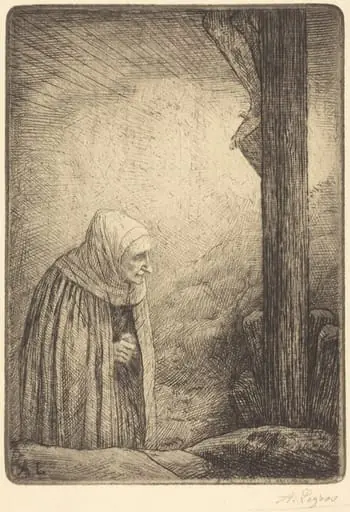 Woman at the Foot of the Cross (Femme au calvaire)
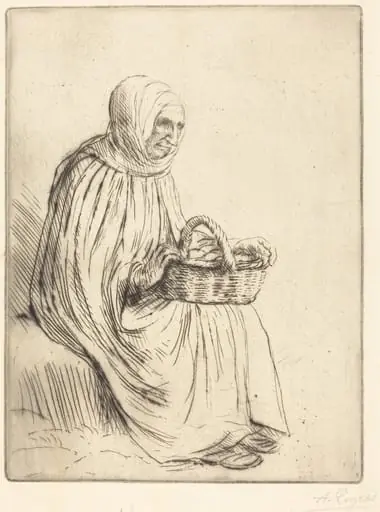 Woman of the Marketplace (Femme du marche)
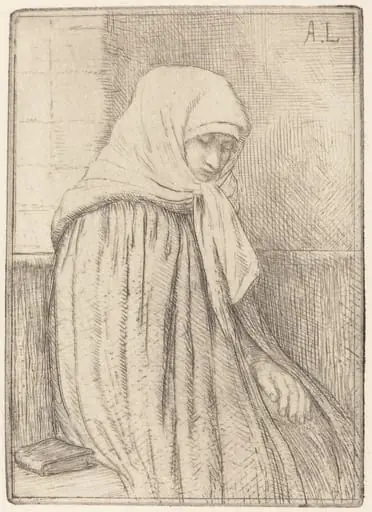 Young Peasant Seated in a Church (Jeune paysanne assise dans une eglise)
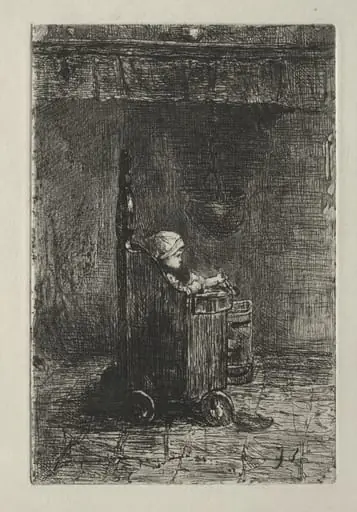 Baby in His Chair
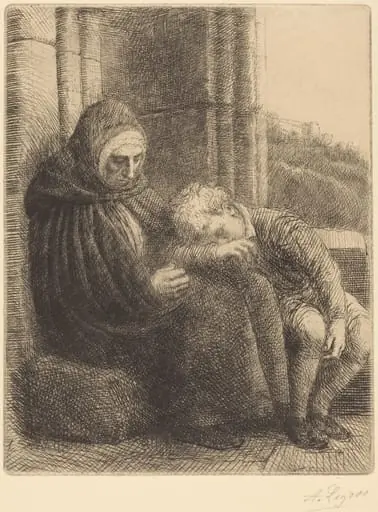 Woman Seated against a Wall, Child with His Head in Her Lap (Femme assise, muraille au fond, enfant la tete dans son giron
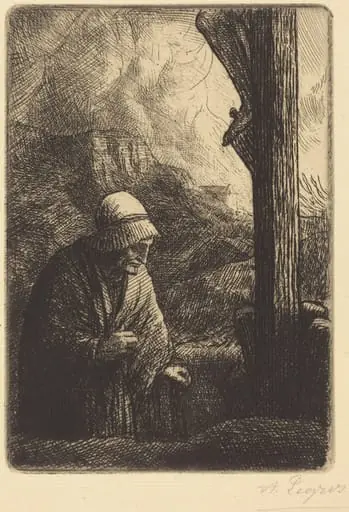 Woman at the Foot of the Cross (Femme au calvaire)