Artwork
Egg-sellers, 2nd plate (Les marchandes d'oeufs)
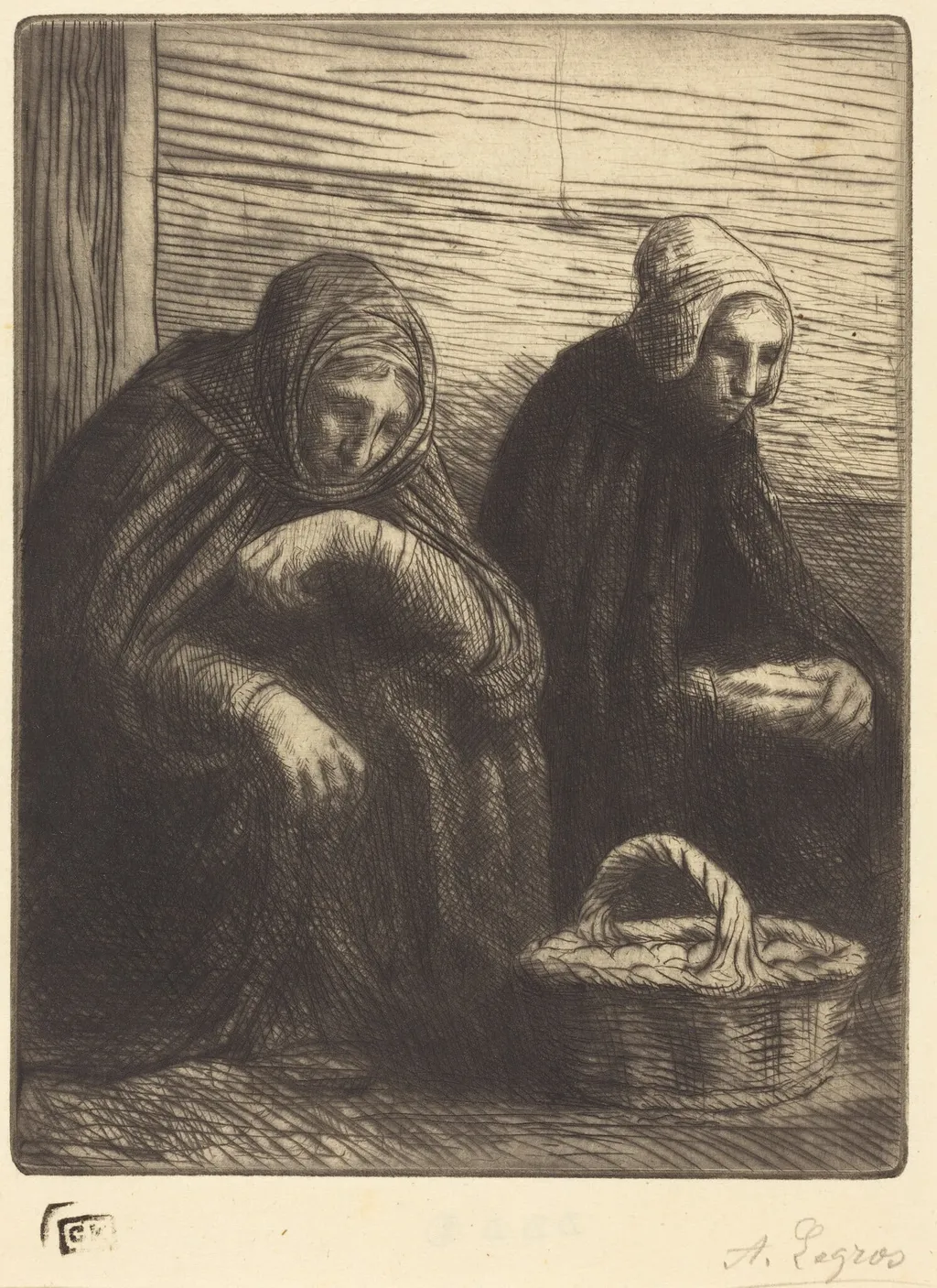
Egg-sellers, 2nd plate (Les marchandes d'oeufs) is an ink print by the Romanticist artist Alphonse Legros. It dates from 1874 and is held in the collection of the National Gallery of Art.
About this work
Overview
Egg-sellers, 2nd plate (Les marchandes d'oeufs) is a print created by Alphonse Legros in 1874 using etching and drypoint techniques.
Subject & Meaning
The print depicts two women in heavy cloaks selling eggs, their faces obscured by hoods. The scene focuses on the women's tired postures, set against a simple background of a rough wall with wooden planks.
Technique & Style
Legros employed sharp lines to convey the texture of the women's clothing and the eggshells, characteristic of his detailed and tonal graphic style. The use of etching and drypoint allowed for the creation of these precise lines and textures.
History & Provenance
Alphonse Legros, a French-born artist who became a British citizen, created this work after settling in London in 1863. He was influential in reviving etching in Britain through his teaching and practice across various mediums.
Artist & collection

Artist
Alphonse Legros (French pronunciation: ; 8 May 1837 – 8 December 1911) was a French, later British, painter, etcher, sculptor, and medallist.

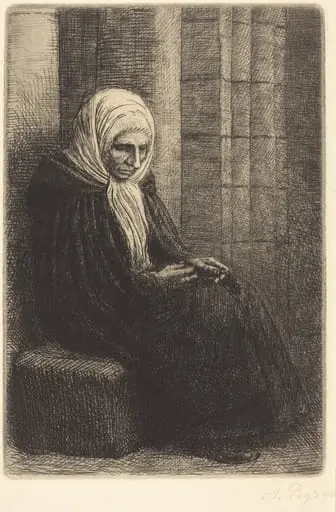 Woman Seated against a Wall, Child with His Head in Her Lap (Femme assis, muraille au fond, enfant la tete dans son giron)
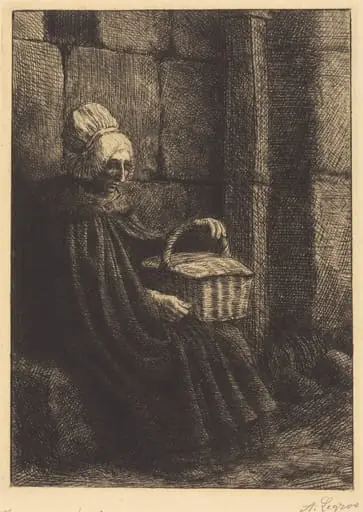 Peasant Woman of Boulogne (Paysanne des environs de Boulogne dite La femme au panier)
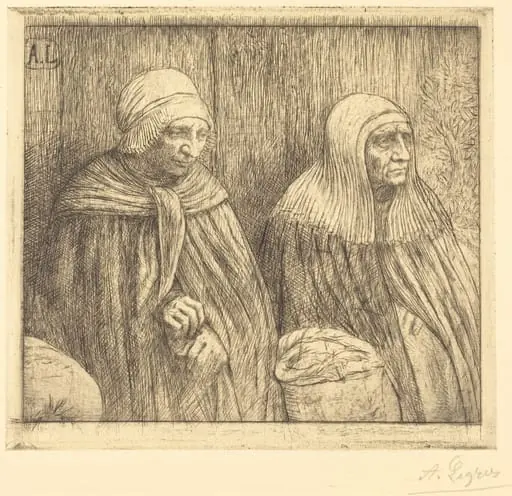 Peasants (Paysannes)
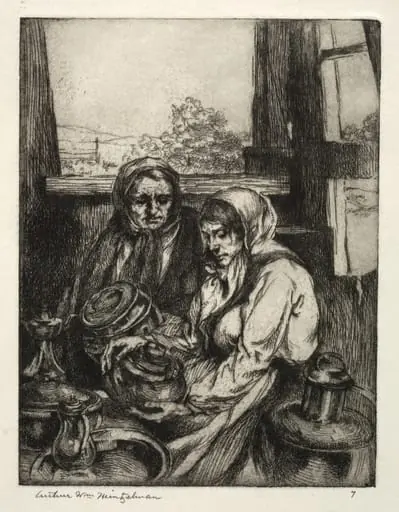 Old Brass
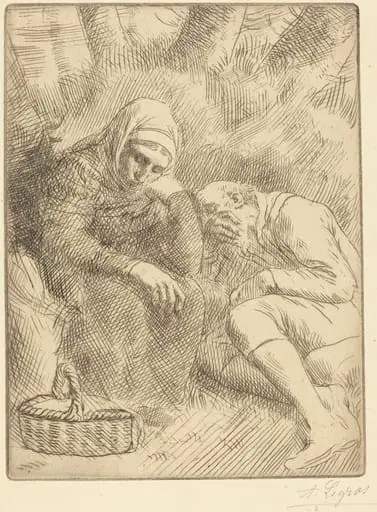 Man and Wife Seated by the Road with a Basket(Homme et femme assis au bord de la rou te aven un panier)
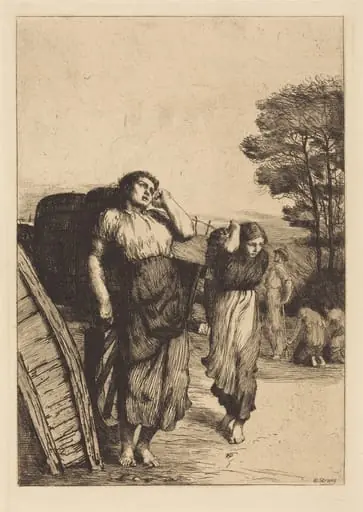 Potato Lifting
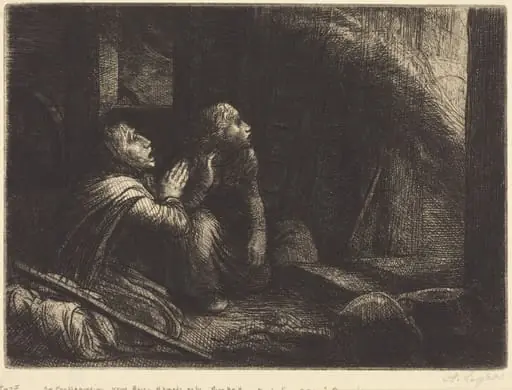 Fire, 3rd plate (L'incendie)
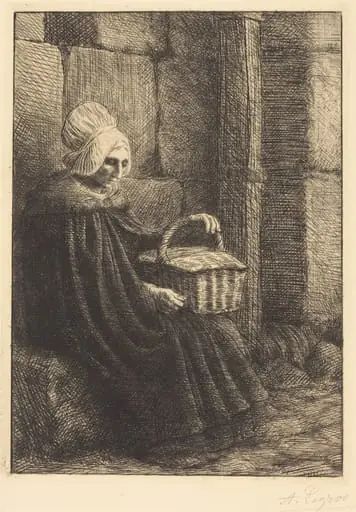 Peasant Woman of Boulogne (Paysanne des environs de Boulogne dite La femme au panier)