Artwork
Woman Seated against a Wall, Child with His Head in Her Lap (Femme assis, muraille au fond, enfant la tete dans son giron)
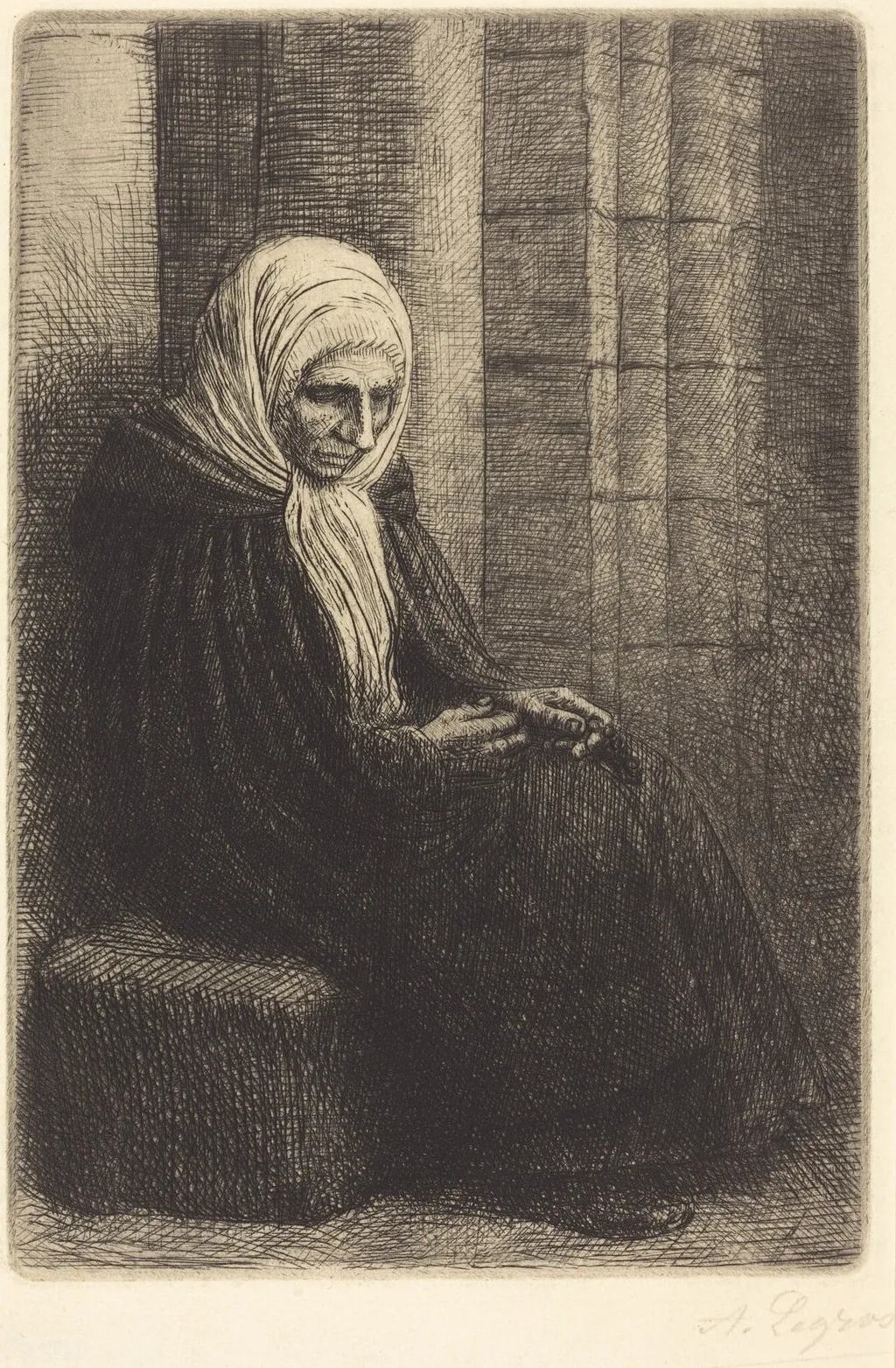
Woman Seated against a Wall, Child with His Head in Her Lap (Femme assis, muraille au fond, enfant la tete dans son giron) is an ink print by the Romanticist artist Alphonse Legros. It dates from 1874 and is held in the collection of the National Gallery of Art.
About this work
Overview
Woman Seated against a Wall, Child with His Head in Her Lap (1874) is an etching and drypoint print by Alphonse Legros, a French-born British artist. The work captures a serene, intimate moment between a woman and a child.
Subject & Meaning
The print portrays a seated woman with a child resting their head in her lap against a simple, rough-hewn wall backdrop. The scene conveys quiet domesticity and maternal care, characterized by the woman's folded hands and the child's trusting pose.
Technique & Style
Legros employed etching and drypoint to achieve a textured, expressive quality. The scratchy, uneven lines and deep shadows, facilitated by pressing ink into metal plate grooves, imbue the image with a dynamic, almost carved appearance.
History & Provenance
Created in 1874, this print reflects Legros's role in the British etching revival. As a versatile artist and educator, he influenced the medium's resurgence through his teaching in London after 1863.
Artist & collection

Artist
Alphonse Legros (French pronunciation: ; 8 May 1837 – 8 December 1911) was a French, later British, painter, etcher, sculptor, and medallist.

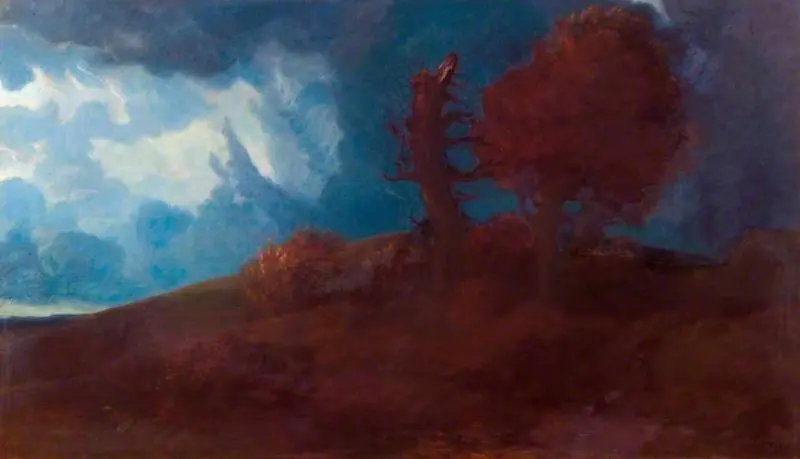
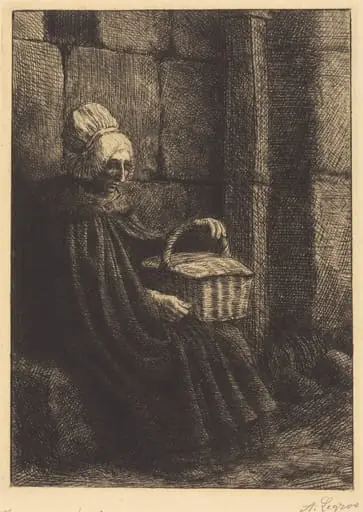 Peasant Woman of Boulogne (Paysanne des environs de Boulogne dite La femme au panier)
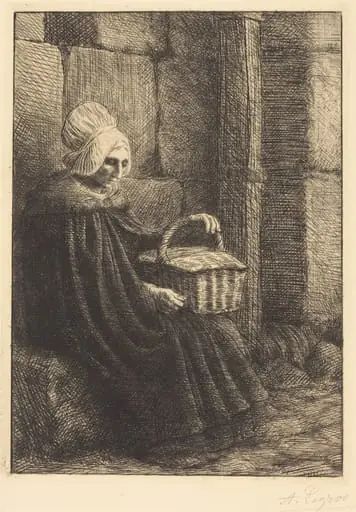 Peasant Woman of Boulogne (Paysanne des environs de Boulogne dite La femme au panier)
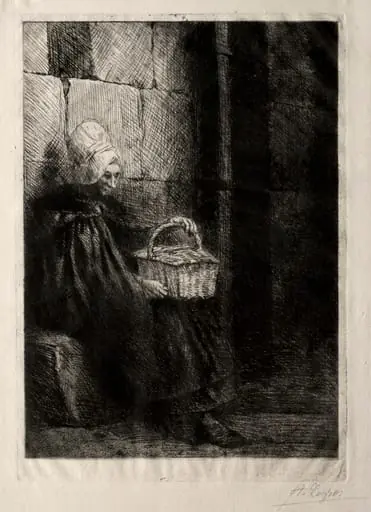 Landscape in the Vicinity of Boulogne, called Woman with a Basket
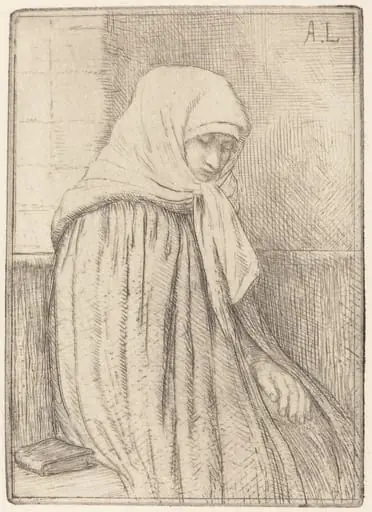 Young Peasant Seated in a Church (Jeune paysanne assise dans une eglise)
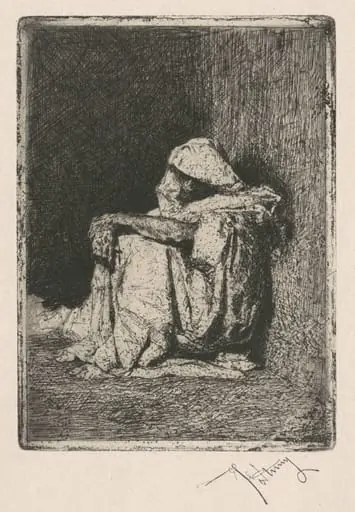 Arabe assis (Seated Arab)
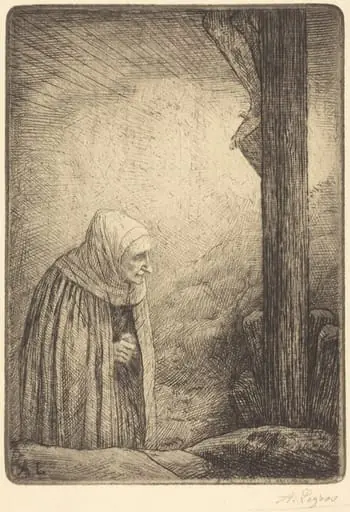 Woman at the Foot of the Cross (Femme au calvaire)
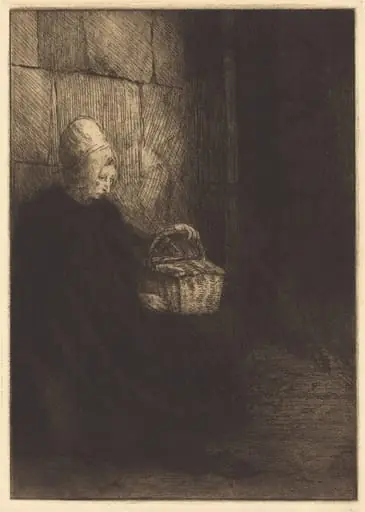 Peasant Woman of Boulogne (Paysanne des environs de Boulogne dite La femme au panier)
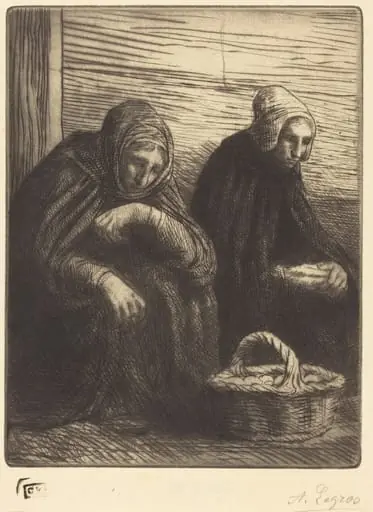 Egg-sellers, 2nd plate (Les marchandes d'oeufs)
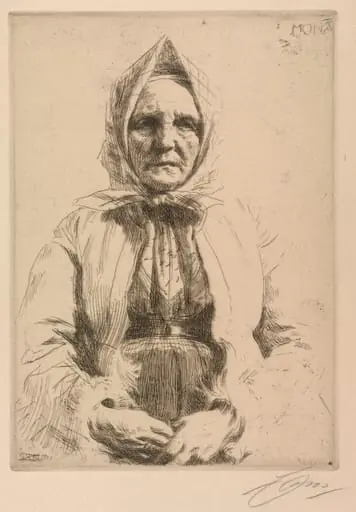 Mona
Mona