Artwork
Peasant Woman of Boulogne (Paysanne des environs de Boulogne dite La femme au panier)
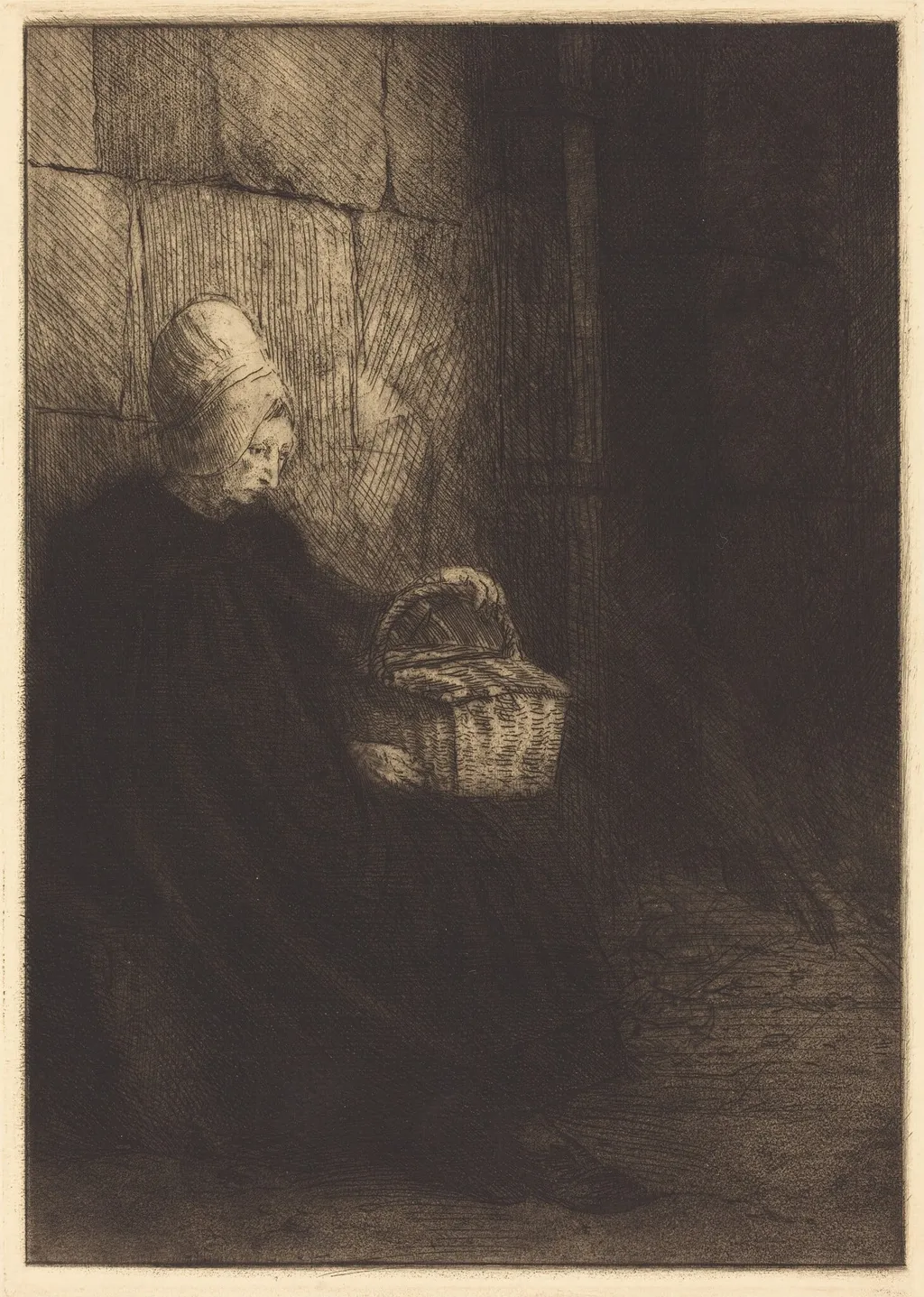
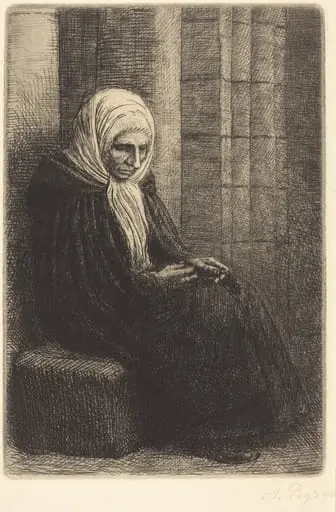
Peasant Woman of Boulogne (Paysanne des environs de Boulogne dite La femme au panier) is an ink print by the Romanticist artist Alphonse Legros. It dates from 1874 and is held in the collection of the National Gallery of Art.
About this work
Overview
Though Legros was French by birth, he spent much of his career in Britain, where he helped renew interest in printmaking.
Created in 1874 by Alphonse Legros, this print combines etching and aquatint to capture a quiet moment in rural France. Though Legros was French by birth, he spent much of his career in Britain, where he helped renew interest in printmaking. The work belongs to a series of intimate studies of peasant life, rendered with a restrained palette and subtle tonal gradations that emphasize stillness over narrative.
Subject & Meaning
The figure is a woman from the countryside near Boulogne, seated in a modest interior with a basket resting on her lap. Her face is obscured by a head covering, and her grip on the basket suggests quiet vigilance rather than action. The anonymity of the subject invites contemplation of labor and solitude, avoiding sentimentality in favor of a dignified, unembellished presence.
Technique & Style
Legros employed etching for fine lines and aquatint for soft, atmospheric tones, creating a range of grays that deepen the sense of shadow. The rough walls and faint window light are suggested through layered washes, not detailed rendering. The composition is tightly framed, focusing attention on the woman’s posture and the weight of the basket, enhancing the mood of quiet introspection.
History & Provenance
The print was made during Legros’s early years in London, following his 1863 move from France. It reflects his ongoing engagement with French rural subjects even after relocating. Though not widely exhibited at the time, it was part of a broader revival of etching among British artists, and later entered institutional collections as interest in 19th-century printmaking grew.
Context
In the 1870s, artists across Europe turned to everyday rural life as a subject, rejecting academic idealism. Legros’s work aligns with this trend, echoing the realism of Millet but with a more subdued, introspective approach. His choice of printmaking over painting emphasized accessibility and the artist’s hand, resonating with contemporary movements that valued craft and direct expression.
Legacy
Legros’s prints, including this one, influenced a generation of British etchers who sought to elevate printmaking beyond reproduction. His use of tone and restraint became a model for artists exploring psychological depth in simple scenes. Though less known today than his contemporaries, his contributions helped secure etching’s place in modern art practice.
Artist & collection

Artist
Alphonse Legros (French pronunciation: ; 8 May 1837 – 8 December 1911) was a French, later British, painter, etcher, sculptor, and medallist.

 Woman Seated against a Wall, Child with His Head in Her Lap (Femme assis, muraille au fond, enfant la tete dans son giron)
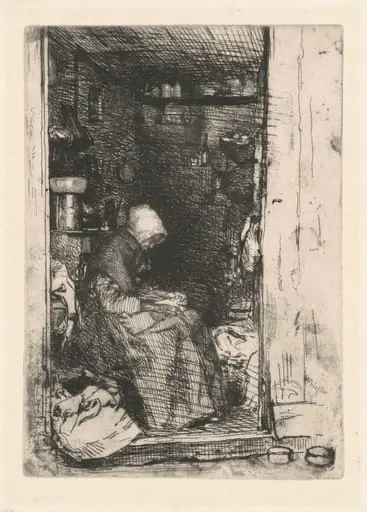
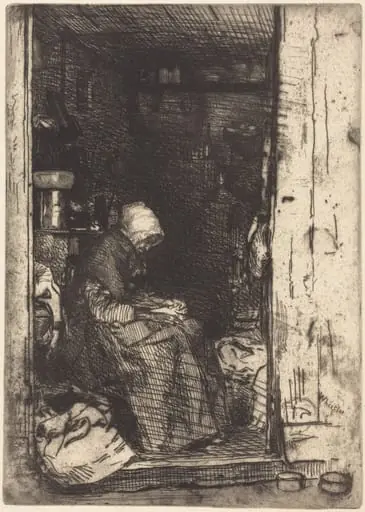 La Vieille aux Loques
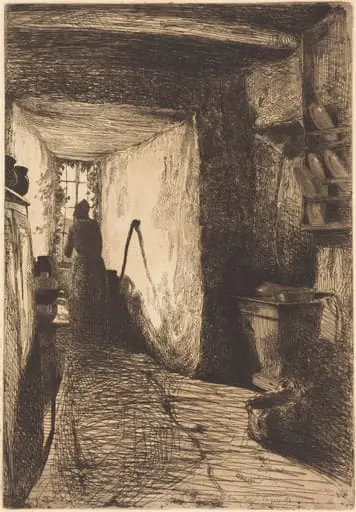 The Kitchen
 Baby in His Chair
 La Vieille aux Loques
 Monday Morning, Holland
 Egg-sellers, 1st plate (Les marchandes d'oeufs)
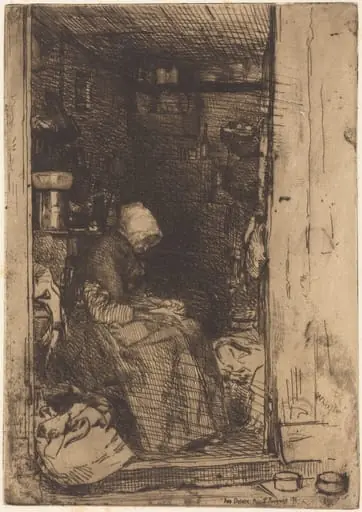 La Vieille aux Loques
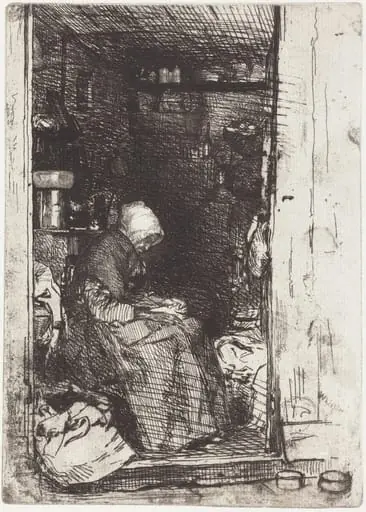 La Vieille aux Loques