Artwork
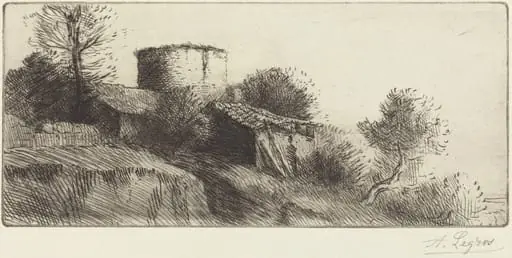
Pigeon Tower (La tour aux pigeons)
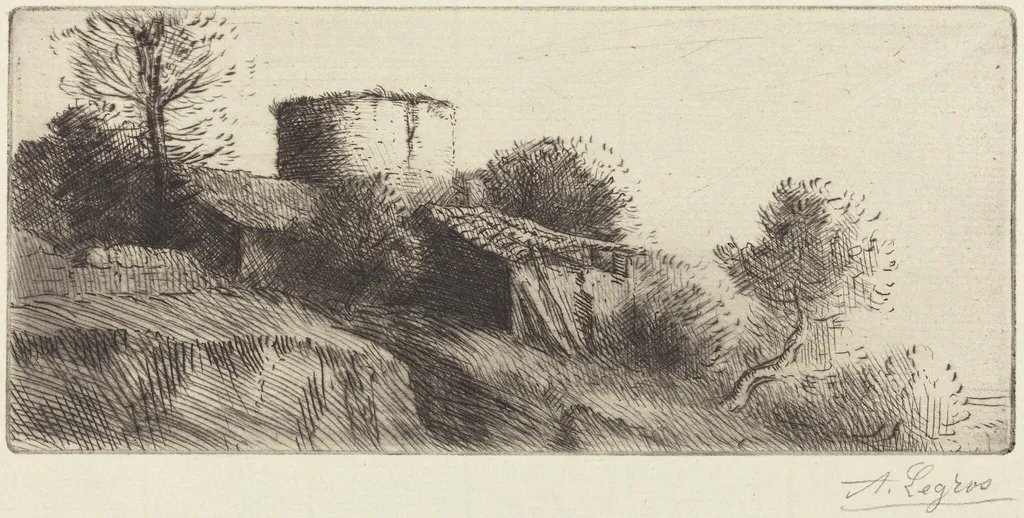
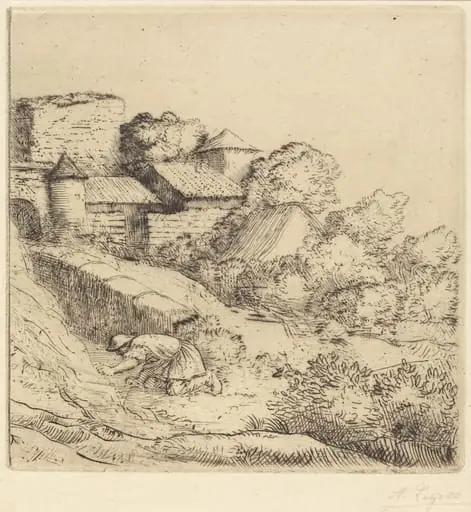
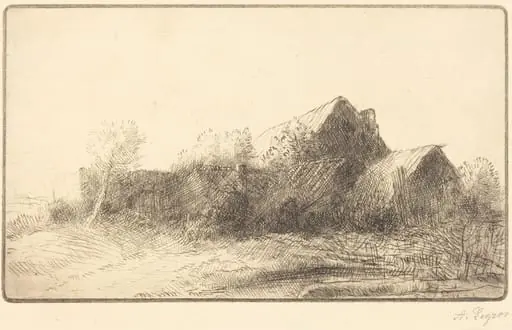
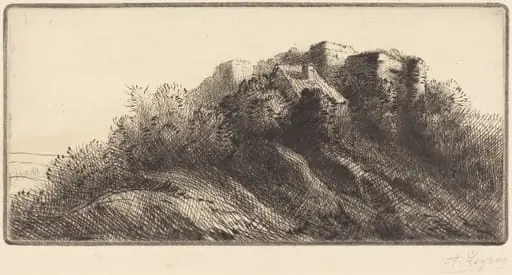
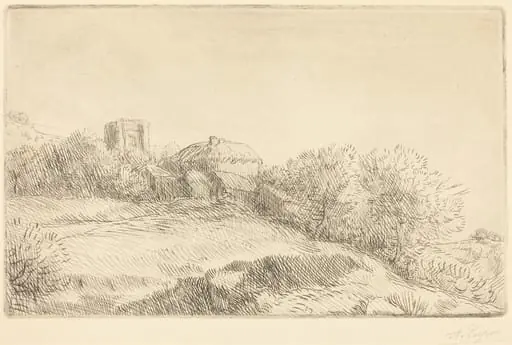
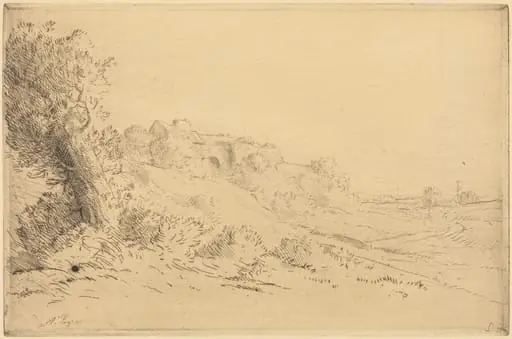
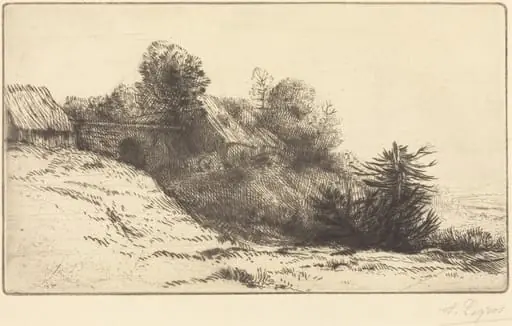
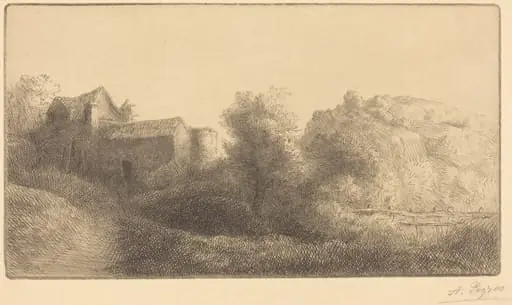
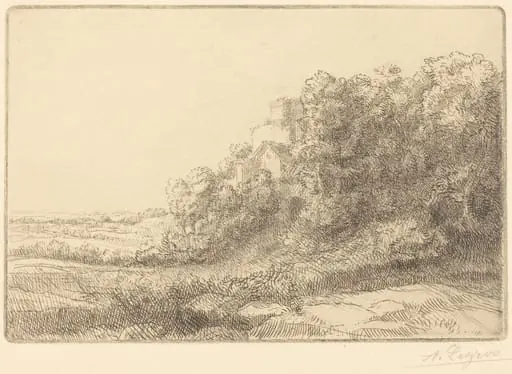
Pigeon Tower (La tour aux pigeons) is an ink print by the Romanticist artist Alphonse Legros. It dates from 1874 and is held in the collection of the National Gallery of Art.
About this work
Overview
Created in 1874, *Pigeon Tower (La tour aux pigeons)* is an etching and drypoint by Alphonse Legros, a French artist who moved to London in 1863.
Created in 1874, *Pigeon Tower (La tour aux pigeons)* is an etching and drypoint by Alphonse Legros, a French artist who moved to London in 1863. The work belongs to a period when Legros was actively engaged in reviving the art of printmaking in Britain. His technical precision and interest in everyday architectural forms are evident in this small-scale print, which captures a modest rural structure surrounded by natural elements.
Subject & Meaning
The print portrays a narrow, cylindrical tower with a slanted roof, its ledges and summit occupied by pigeons. The structure, likely a dovecote, reflects rural life in 19th-century France or Britain. The birds, neither idealized nor symbolic, are integrated into the scene as natural inhabitants. The surrounding vegetation and uneven ground suggest a place shaped by time and use, not grandeur.
Technique & Style
Legros employed etching and drypoint to achieve varied line quality: deep, rough strokes define the tower’s surface, while faint, scratchy marks suggest foliage and uneven terrain. The drypoint’s burr creates soft, velvety textures, contrasting with the sharper etched contours. The composition avoids detail, favoring suggestive marks that imply structure and atmosphere without literal representation.
History & Provenance
Made during Legros’s early years in London, the print emerged from his broader engagement with printmaking as both art and craft. He taught at the Slade School and influenced a generation of British artists through his emphasis on direct, hand-made techniques. While the print’s early ownership is undocumented, it aligns with his efforts to elevate etching beyond reproductive work.
Context
In the 1870s, European artists were re-examining traditional print methods amid industrialization’s rise. Legros’s focus on humble subjects—like this tower—reflected a broader interest in authenticity and the overlooked details of daily life. His work stood apart from academic painting, offering a quiet, tactile alternative rooted in manual skill and observation.
Legacy
Legros’s prints, including *Pigeon Tower*, contributed to the revival of original etching in Britain. His emphasis on expressive line and material presence influenced later printmakers who valued process over polish. Though not widely exhibited in his time, his technical rigor helped establish printmaking as a legitimate medium for personal expression.
Artist & collection

Artist
Alphonse Legros (French pronunciation: ; 8 May 1837 – 8 December 1911) was a French, later British, painter, etcher, sculptor, and medallist.