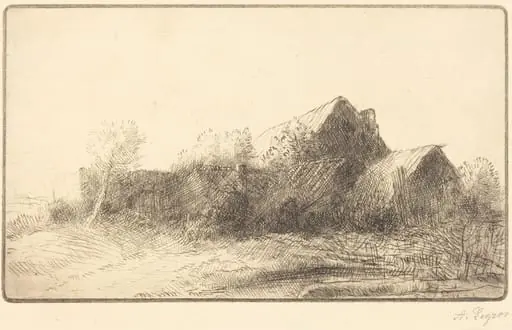
Artwork
Little Burner of Grass (Le petit bruleur d'herbe)
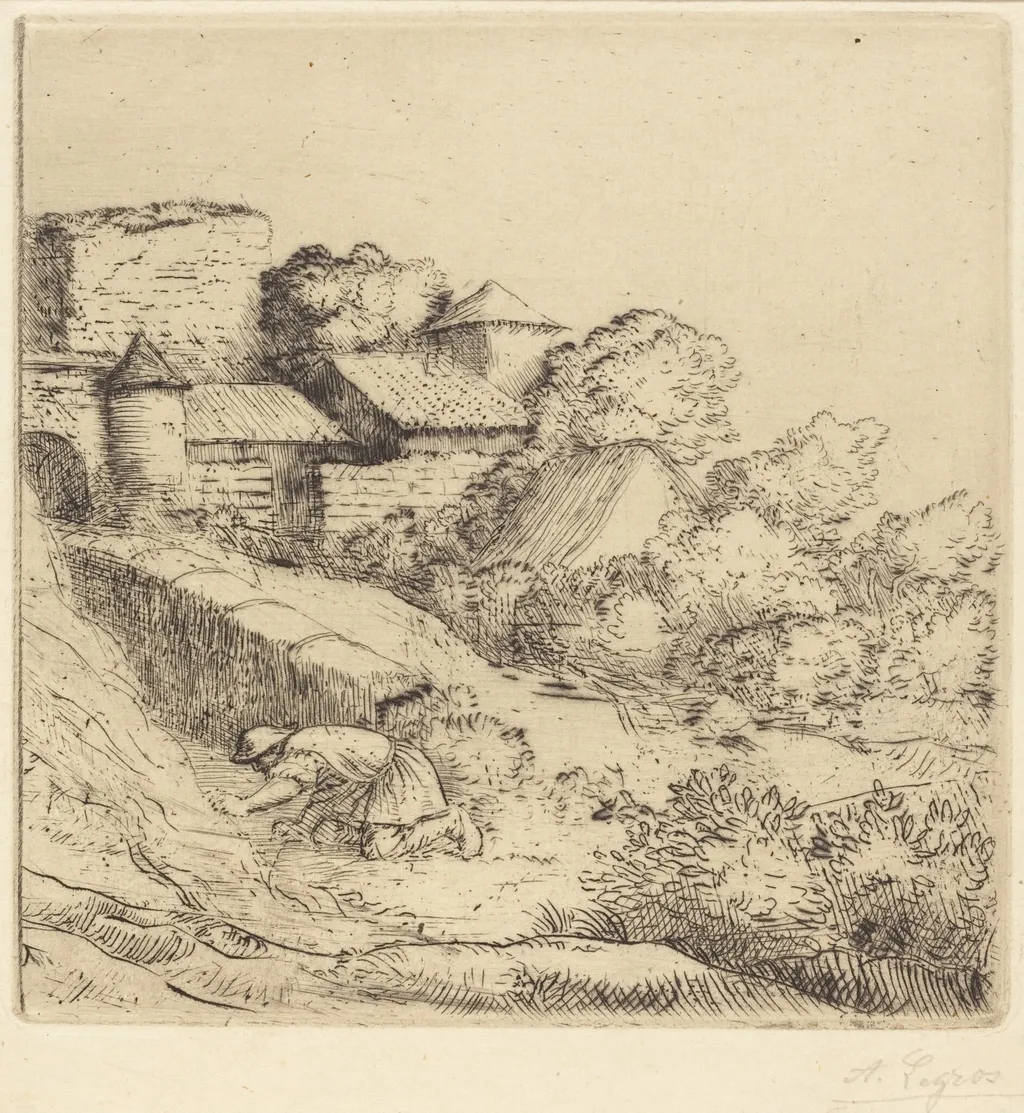
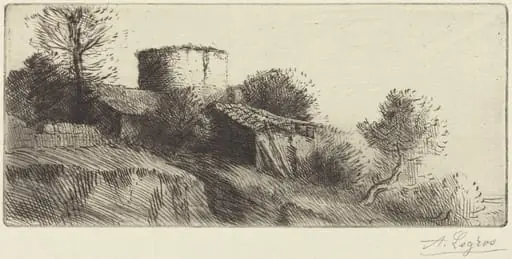
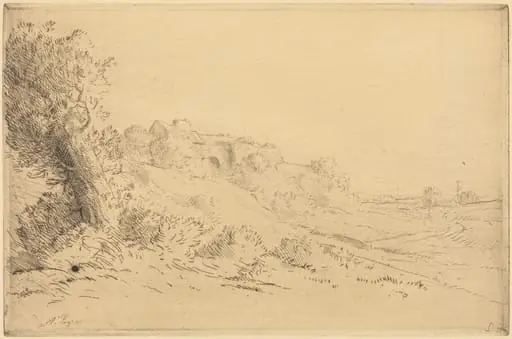
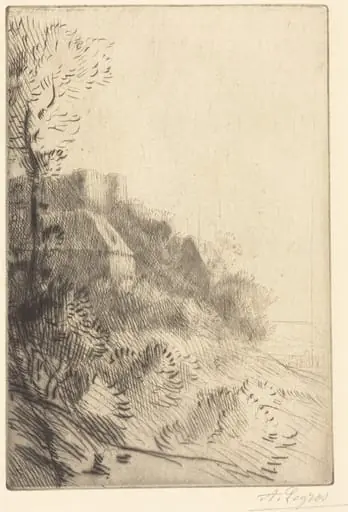
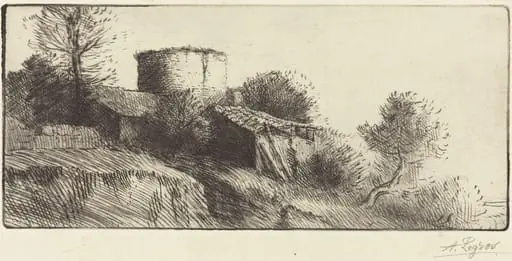
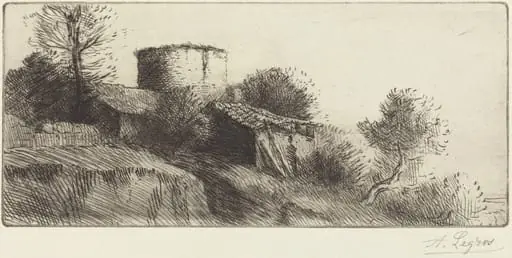
Little Burner of Grass (Le petit bruleur d'herbe) is an ink print by the Romanticist artist Alphonse Legros. It dates from 1874 and is held in the collection of the National Gallery of Art.
About this work
Overview
Legros, known for his multidisciplinary practice, used these techniques to explore quiet, rural moments with precision and emotional restraint.
Created in 1874, *Little Burner of Grass* is an etching and drypoint by Alphonse Legros, a French artist who settled in London in 1863 and later became a British citizen. The work belongs to a body of prints that helped reinvigorate the medium in Britain during the late nineteenth century. Legros, known for his multidisciplinary practice, used these techniques to explore quiet, rural moments with precision and emotional restraint.
Subject & Meaning
The image shows a solitary figure, seen from behind, crouching beside a small fire in a grassy field. A stone wall and distant building frame the scene, while trees rise softly in the background. The figure’s focused, unremarkable act—tending a flame—suggests a rhythm of daily life, free from drama. The composition invites stillness, emphasizing solitude and the quiet dignity of labor in a rural setting.
Technique & Style
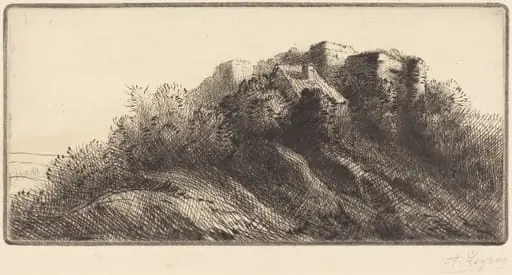
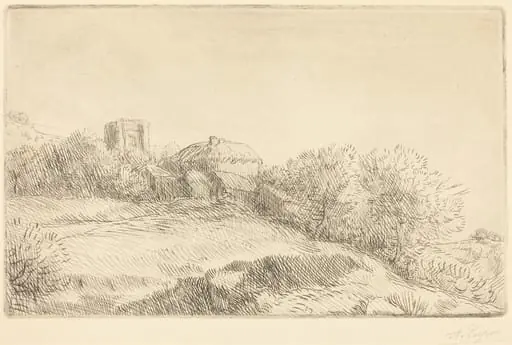
Legros combined etching’s fine lines with drypoint’s rich, fuzzy burr to create contrast between delicate detail and tactile texture. The grasses and foliage are rendered with subtle, layered strokes, while the fire and shadows gain depth through dense, hand-drawn marks. The absence of bold outlines and the muted tonal range reinforce a sense of intimacy, grounding the scene in quiet realism rather than theatricality.
History & Provenance
The print emerged during Legros’s tenure at the Slade School of Fine Art, where he influenced a generation of British printmakers. Though produced in England, the subject reflects Legros’s French rural sensibilities. It was likely circulated among collectors and students, contributing to the revival of etching as a serious artistic medium in Victorian Britain, though its early ownership records remain undocumented.
Context
In the 1870s, British art was shifting toward realism and domestic scenes, away from grand historical narratives. Legros’s work aligned with this trend, echoing the quiet ruralism of Millet and the Barbizon painters. His prints, often depicting laborers and landscapes, offered a counterpoint to industrial urbanization, emphasizing continuity with agrarian life and the meditative value of simple acts.
Legacy
Legros’s prints, including *Little Burner of Grass*, helped establish etching as a legitimate medium for artistic expression in Britain. His teaching at the Slade elevated technical standards and inspired artists to value handcrafted printmaking over mechanical reproduction. Though less widely known today, his influence endured in the sustained interest in tonal etching among early 20th-century British artists.
Own this work as a print
Artist & collection

Artist
Alphonse Legros (French pronunciation: ; 8 May 1837 – 8 December 1911) was a French, later British, painter, etcher, sculptor, and medallist.