Artwork
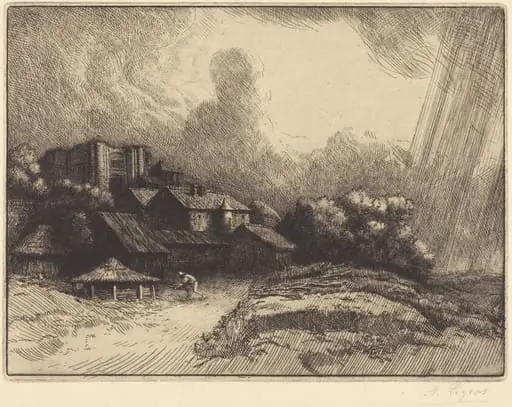
Ruins of a Chateau (Les ruines du chateau)
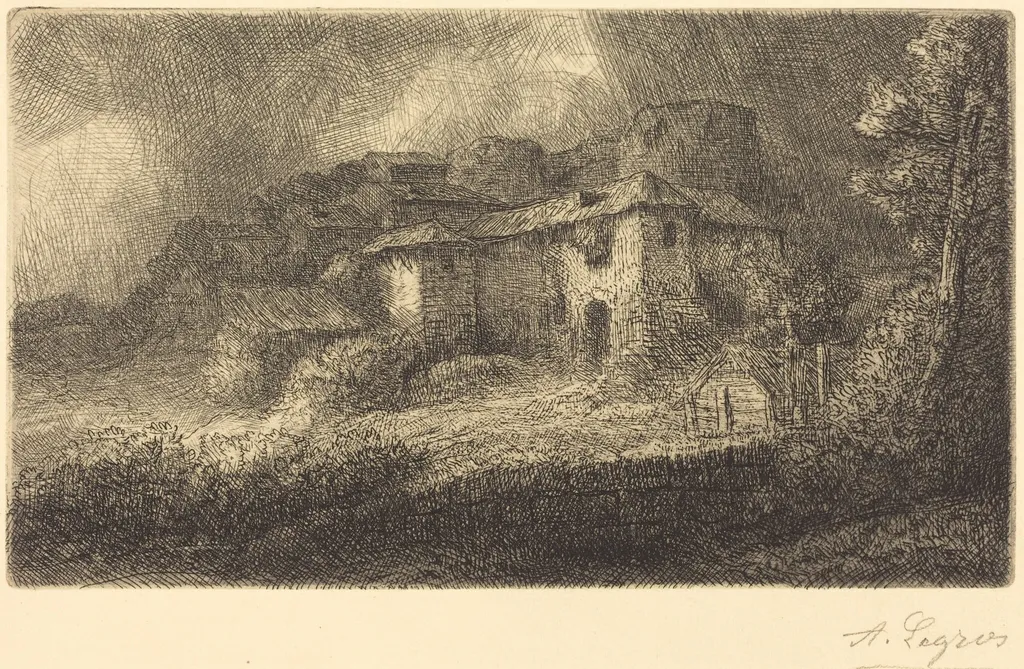
Ruins of a Chateau (Les ruines du chateau) is an ink print by the Romanticist artist Alphonse Legros. It dates from 1874 and is held in the collection of the National Gallery of Art.
About this work
Overview
Alphonse Legros, a French artist who moved to London in 1863 and later became a British citizen, produced the etching Ruins of a Chateau in 1874.
Alphonse Legros, a French artist who moved to London in 1863 and later became a British citizen, produced the etching Ruins of a Chateau in 1874. Known for his work across multiple media, Legros was instrumental in revitalizing the art of etching in Britain during the late 19th century. This print stands as one of his notable contributions to the medium, reflecting his interest in architectural decay and atmospheric landscape.
Subject & Meaning
The image portrays the fragmented remains of a rural chateau, its roofline and chimney barely rising from overgrown vegetation. The structure, neither grand nor intact, suggests abandonment and the passage of time. Rather than celebrating historical grandeur, the scene evokes quiet solitude and the quiet persistence of nature reclaiming human constructs, inviting reflection on impermanence.
Technique & Style
Legros employed fine, controlled etching lines to model the crumbling stonework and dense foliage, using varying densities of ink to suggest depth and texture. The composition avoids dramatic contrasts, favoring a muted tonal range that enhances the somber mood. Loose, deliberate strokes in the foreground trees create a sense of movement, while the central ruin is rendered with greater precision, anchoring the viewer’s attention.
History & Provenance
Created during Legros’s tenure at the Slade School of Fine Art, the etching was likely made for private circulation or exhibition among London’s artistic circles. It reflects his broader engagement with printmaking as a serious art form, distinct from reproductive engraving. The work entered public collections in the early 20th century, preserved as an example of British etching revival.
Context
In the 1870s, British artists were re-engaging with etching as a medium for personal expression, moving away from commercial reproduction. Legros, trained in France and influenced by the Barbizon school, brought a continental sensibility to this movement. Ruins of a Chateau aligns with broader European interests in romanticized decay and the sublime in nature, resonating with contemporary literary and philosophical themes of memory and loss.
Legacy
The print contributed to Legros’s reputation as a teacher and printmaker who elevated etching’s status in Britain. His emphasis on direct, expressive line work influenced a generation of students at the Slade. Though less widely known today, Ruins of a Chateau remains a quiet testament to his ability to convey emotional resonance through restrained, carefully observed detail.
Own this work as a print
Artist & collection

Artist
Alphonse Legros (French pronunciation: ; 8 May 1837 – 8 December 1911) was a French, later British, painter, etcher, sculptor, and medallist.

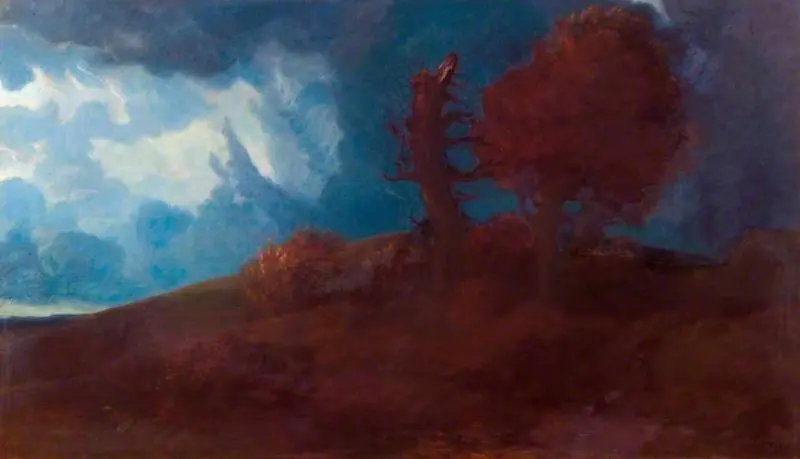
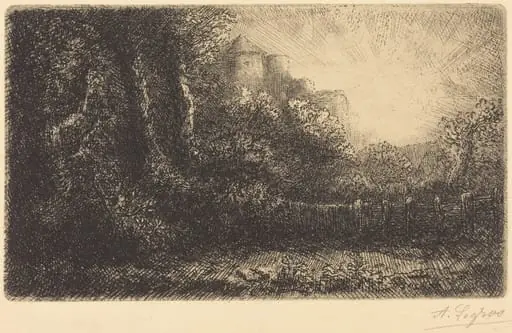 View of a Chateau (Chateau de Poillet)
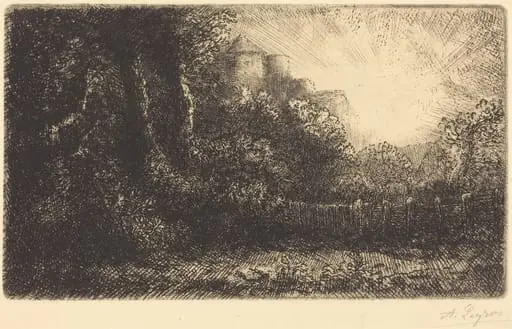 View of a Chateau (Chateau de Poillet)
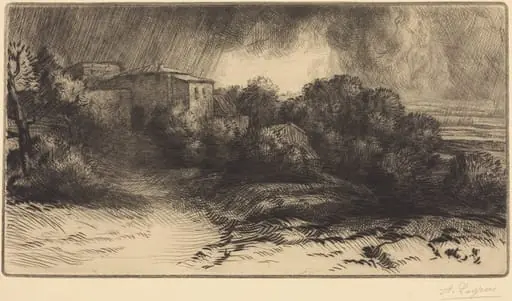 View of a Farm Seen in a Storm (La ferme de Brieux (Effet d'orage))
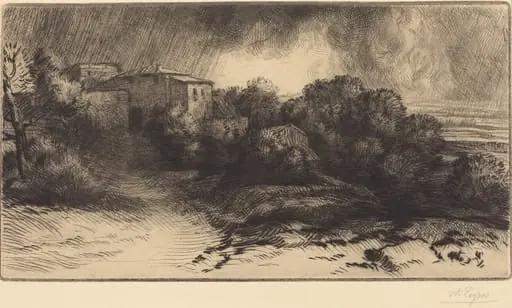 View of a Farm Seen in a Storm (La ferme de Brieux (Effet d'orage))
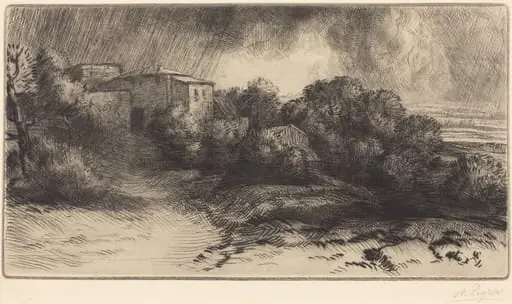 La Ferme de Brieux (Effect d'orage) (Farm at Brieux in a Storm)
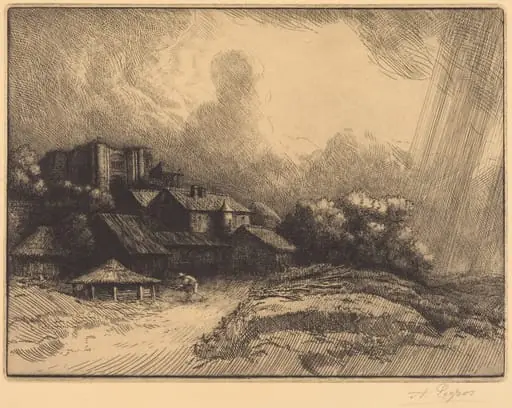 Farm at the Monastery (La ferme de l'abbaye)
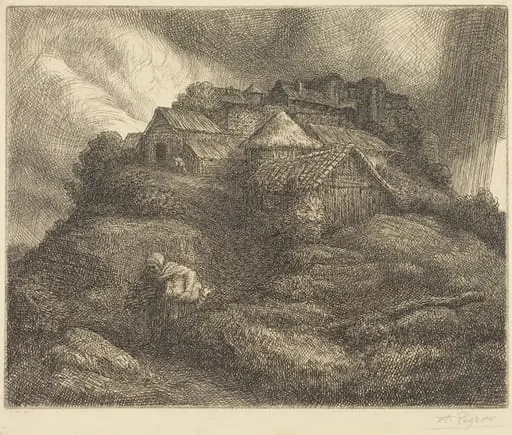 Village of Saint-Pierre during a Storm (Village de Saint-Pierre; Effet d'orage)
 Farm at the Monastery (La ferme de l'abbaye)
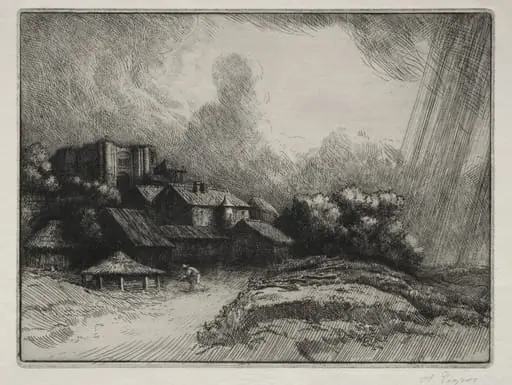 The Abbey Farm
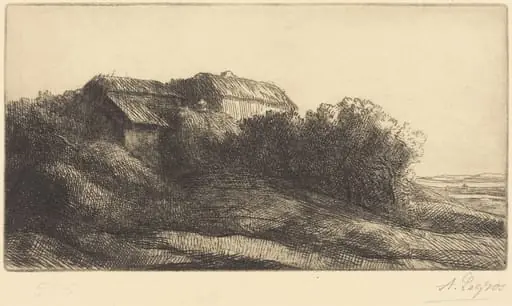 Cottage on a Hillside (Chaumiere sur le coteau)