Artwork
Self-Portrait
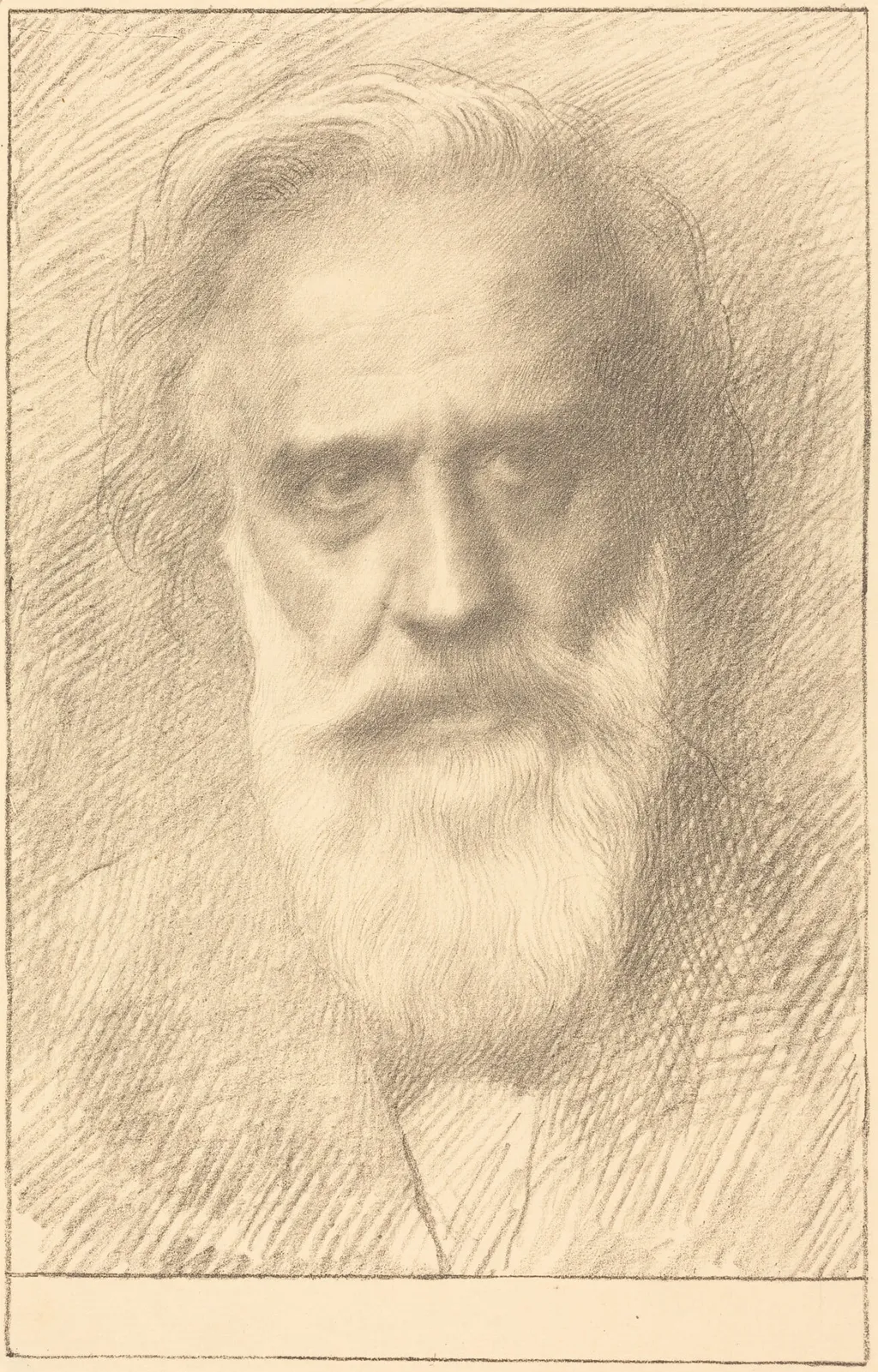
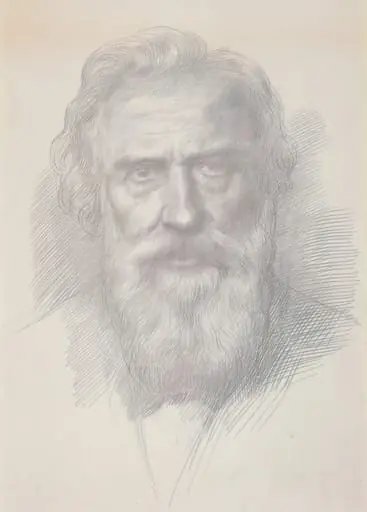
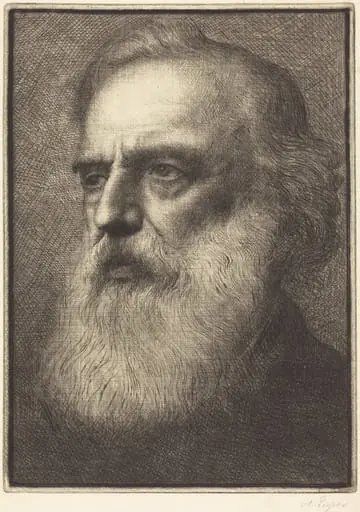
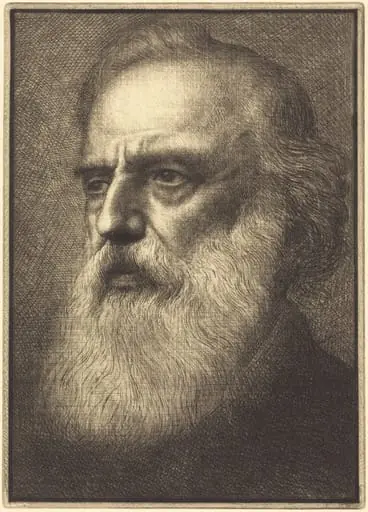
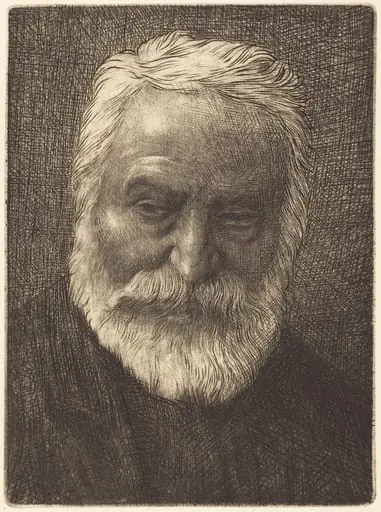
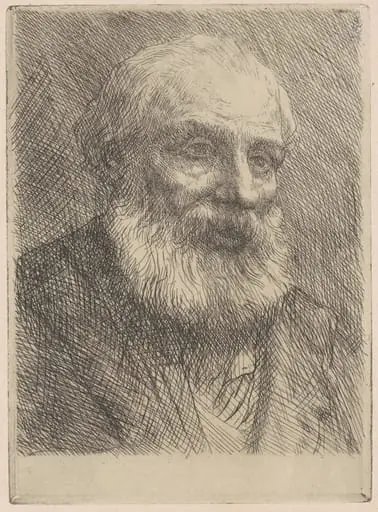
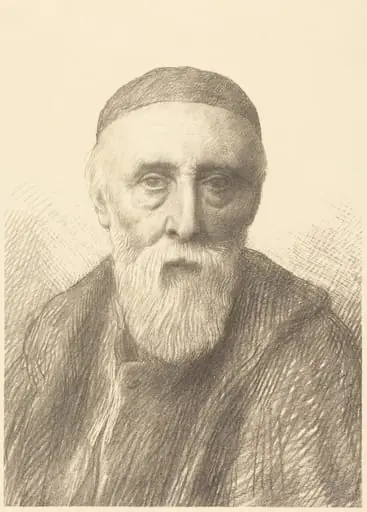
Self-Portrait is an ink print by the Romanticist artist Alphonse Legros. It dates from 1874 and is held in the collection of the National Gallery of Art.
About this work
Overview
Alphonse Legros produced this self‑portrait in 1874 using the lithographic process. Executed on a smooth stone, the work presents the artist’s own likeness in a straightforward, unembellished manner, emphasizing the immediacy of the medium.
Subject & Meaning
The image shows a bearded man, presumably Legros himself, gazing downward. The direct, unidealised portrayal suggests a personal, introspective study rather than a formal, decorative portrait.
Technique & Style
Legros employed a simple drawing tool—likely soot or a graphite pencil—to render the composition. Quick, rough lines define the facial features, while the hair and beard are rendered with scratchy, textured strokes. The minimal background isolates the figure, a common characteristic of lithographic sketches that rely on tonal contrast rather than elaborate scenery.
History & Provenance
Born in France, Legros settled in London in 1863 and later naturalised as a British citizen. By the 1870s he was active in multiple media, and his teaching contributed significantly to the revival of etching in Britain. This lithograph reflects his broader engagement with printmaking during that period.
Context
Legros’s career spanned painting, sculpture, etching, and medal work, positioning him as a versatile figure in late‑19th‑century art. His self‑portrait aligns with contemporary interests in realism and the artist’s own identity, echoing the broader European trend toward candid, self‑reflective portraiture.
Own this work as a print
Artist & collection

Artist
Alphonse Legros (French pronunciation: ; 8 May 1837 – 8 December 1911) was a French, later British, painter, etcher, sculptor, and medallist.