Artwork
Head of an Old Man (Tête de vieillard)
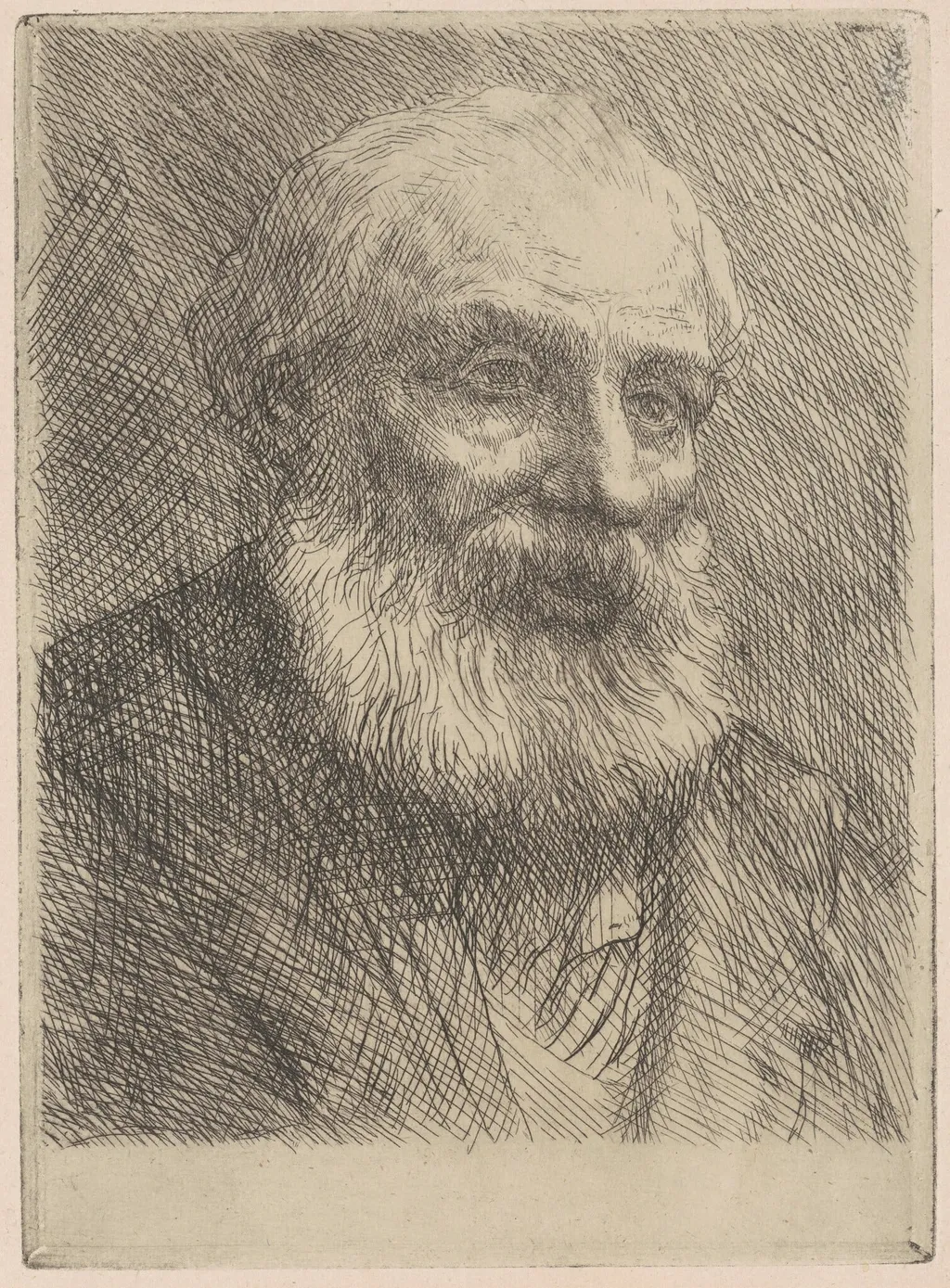
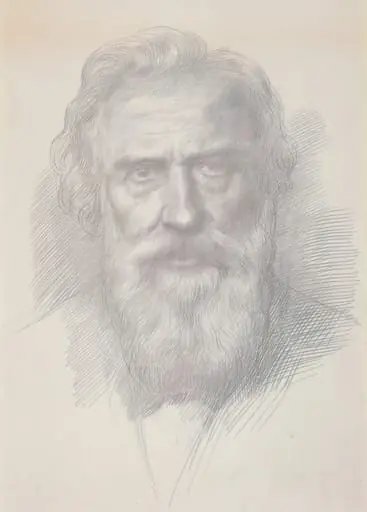
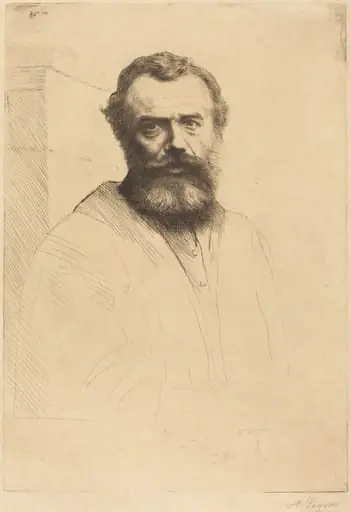
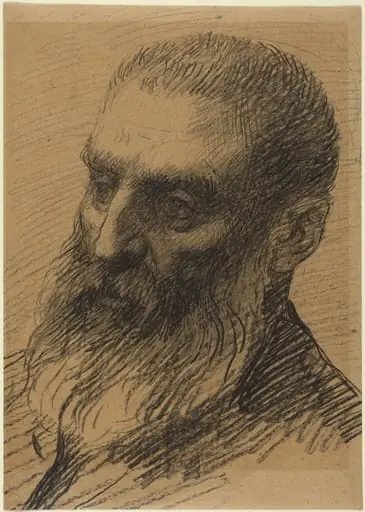
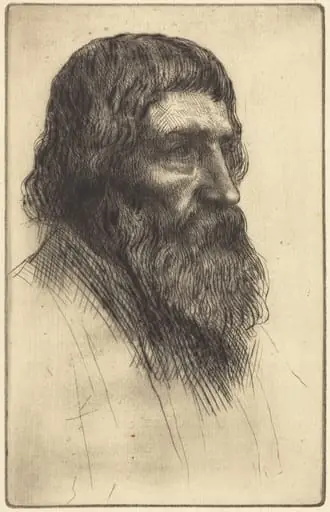
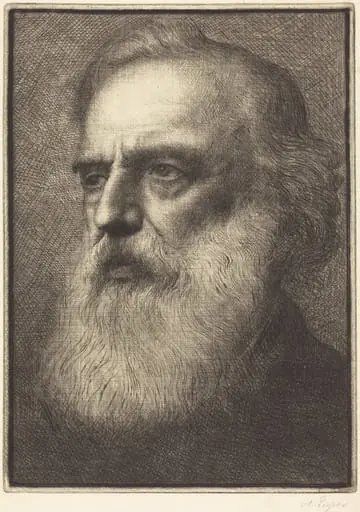
Head of an Old Man (Tête de vieillard) is an ink print by the Impressionist artist Alphonse Legros. It dates from 1888 and is held in the collection of the National Gallery of Art.
About this work
Overview
Head of an Old Man (Tête de vieillard), created by Alphonse Legros in 1888, is an etching, possibly incorporating aquatint, depicting the weathered face of an elderly man with remarkable textural depth.
Subject & Meaning
The print focuses on the intense, aged features of its subject, whose face is partially obscured by a thick beard and curly hair, leaving only the eyes and nose discernible. This emphasis on capturing the raw, unpolished aspect of the old man's appearance reflects the late 19th-century aesthetic of portraying real, unvarnished moments.
Technique & Style
Executed in intaglio, the work features scratchy, uneven lines suggestive of rapid execution or the use of a coarse tool. The technique, which involves etching into metal plates (often with acid), results in a distinctive, controlled scribble-like texture, characteristic of the period's printmaking.
History & Provenance
Alphonse Legros, a French artist naturalized in Britain, produced this work in 1888. As a pivotal figure in the British etching revival, Legros taught and influenced the medium's resurgence. The piece is now part of the National Gallery of Art's collection in Washington.
Artist & collection

Artist
Alphonse Legros (French pronunciation: ; 8 May 1837 – 8 December 1911) was a French, later British, painter, etcher, sculptor, and medallist.