Artwork
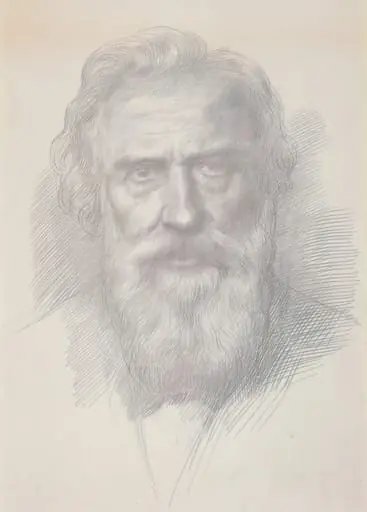
Victor Hugo, 2nd plate
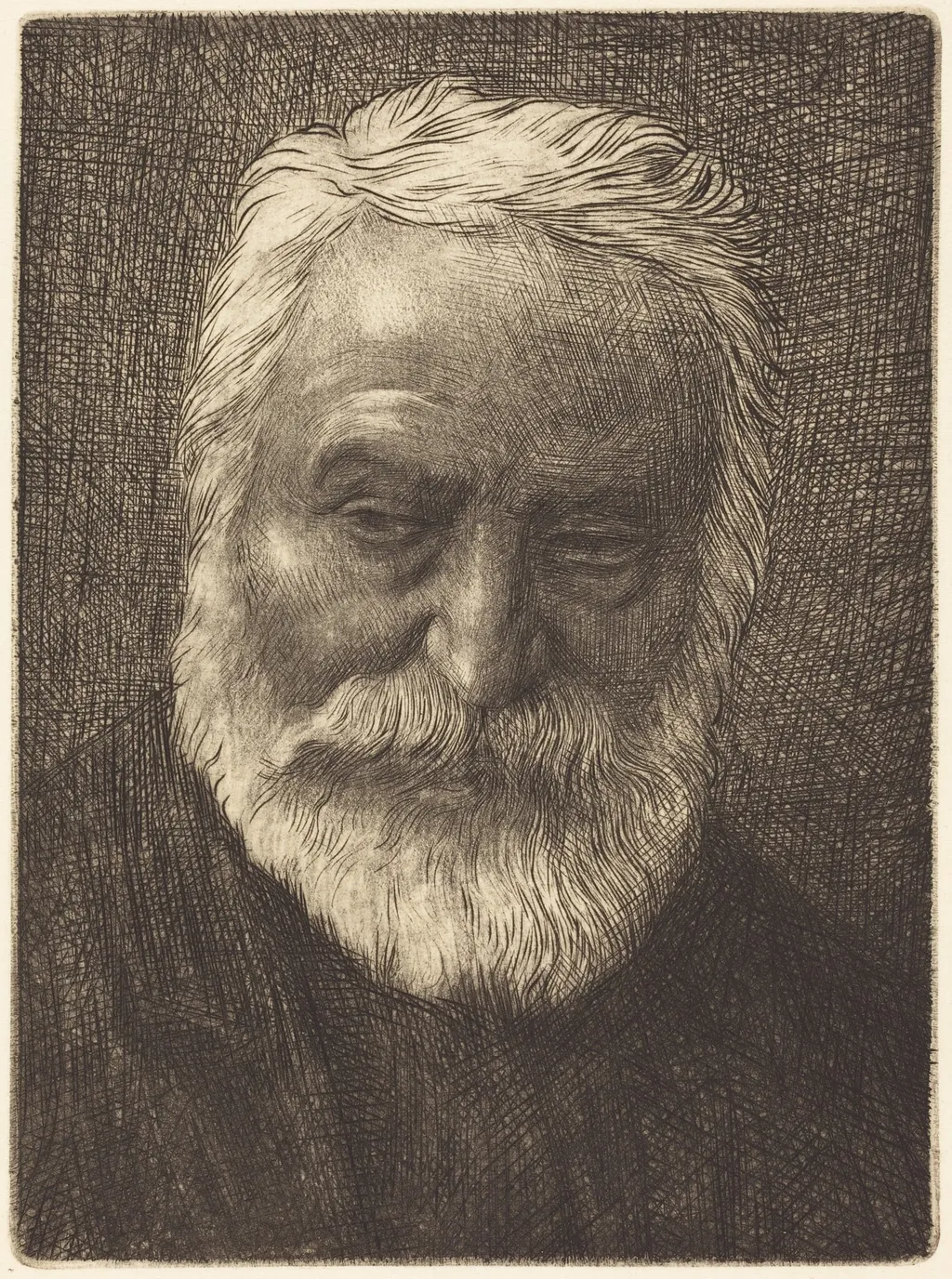
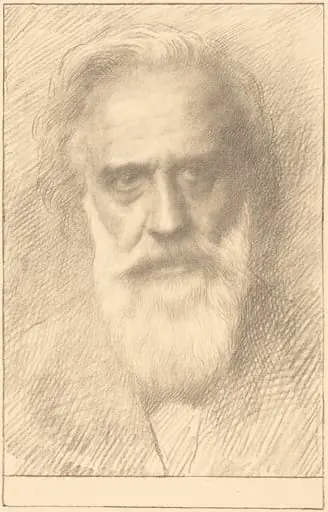
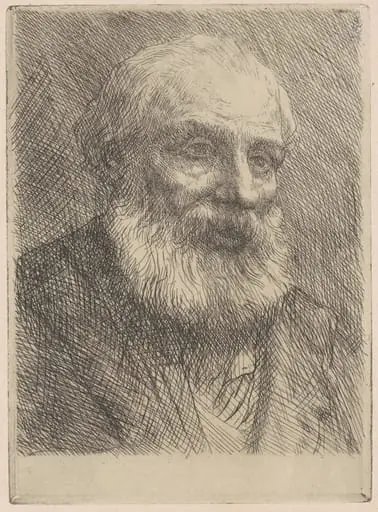
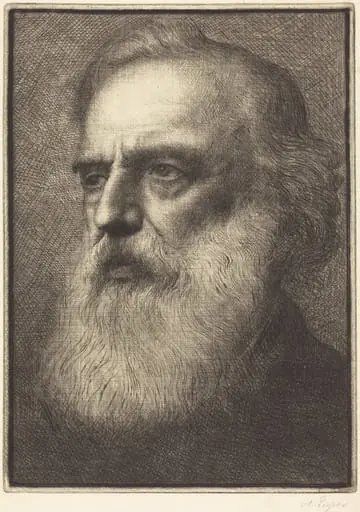
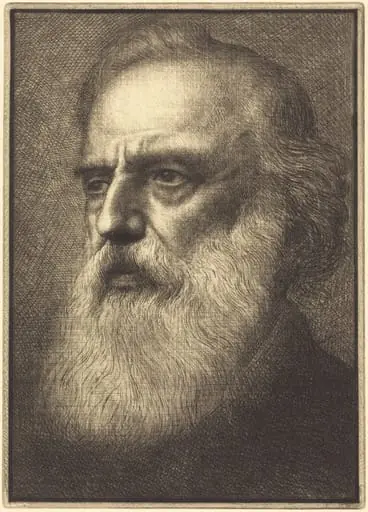
Victor Hugo, 2nd plate is an ink print by the Romanticist artist Alphonse Legros. It dates from 1874 and is held in the collection of the National Gallery of Art.
About this work
Overview
Victor Hugo, 2nd plate is an 1874 etching and aquatint print by Alphonse Legros, depicting a close-up portrait of the renowned writer Victor Hugo in later life.
Subject & Meaning
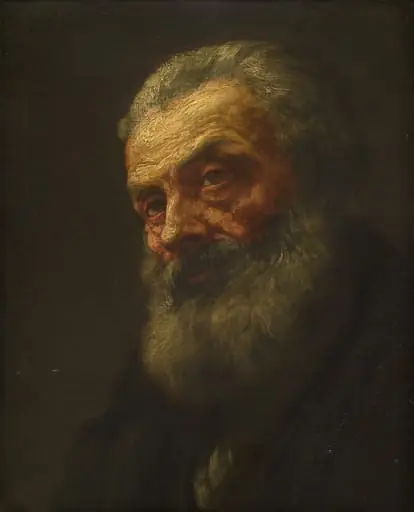
The portrait captures Victor Hugo as an older man, distinguished by a long white beard and wavy hair. The composition focuses attention on the subject's face, set against a predominantly dark background to enhance visibility.
Technique & Style
Legros employed a combination of fine lines and nuanced shading to achieve depth, particularly in the textures of Hugo's hair and skin. This approach was characteristic of 19th-century portrait etchings aiming for realism.
History & Provenance
Created in 1874, this work reflects Legros's dual expertise in portraiture and printmaking. As a pivotal figure in the British etching revival, Legros's teachings influenced the medium's resurgence.
Context
The piece exemplifies the artistic exchanges of the late 19th century, with a French-born, British-naturalized artist (Legros) portraying a celebrated French literary figure (Hugo).
Own this work as a print
Artist & collection

Artist
Alphonse Legros (French pronunciation: ; 8 May 1837 – 8 December 1911) was a French, later British, painter, etcher, sculptor, and medallist.