Artwork
Allegory of Spring
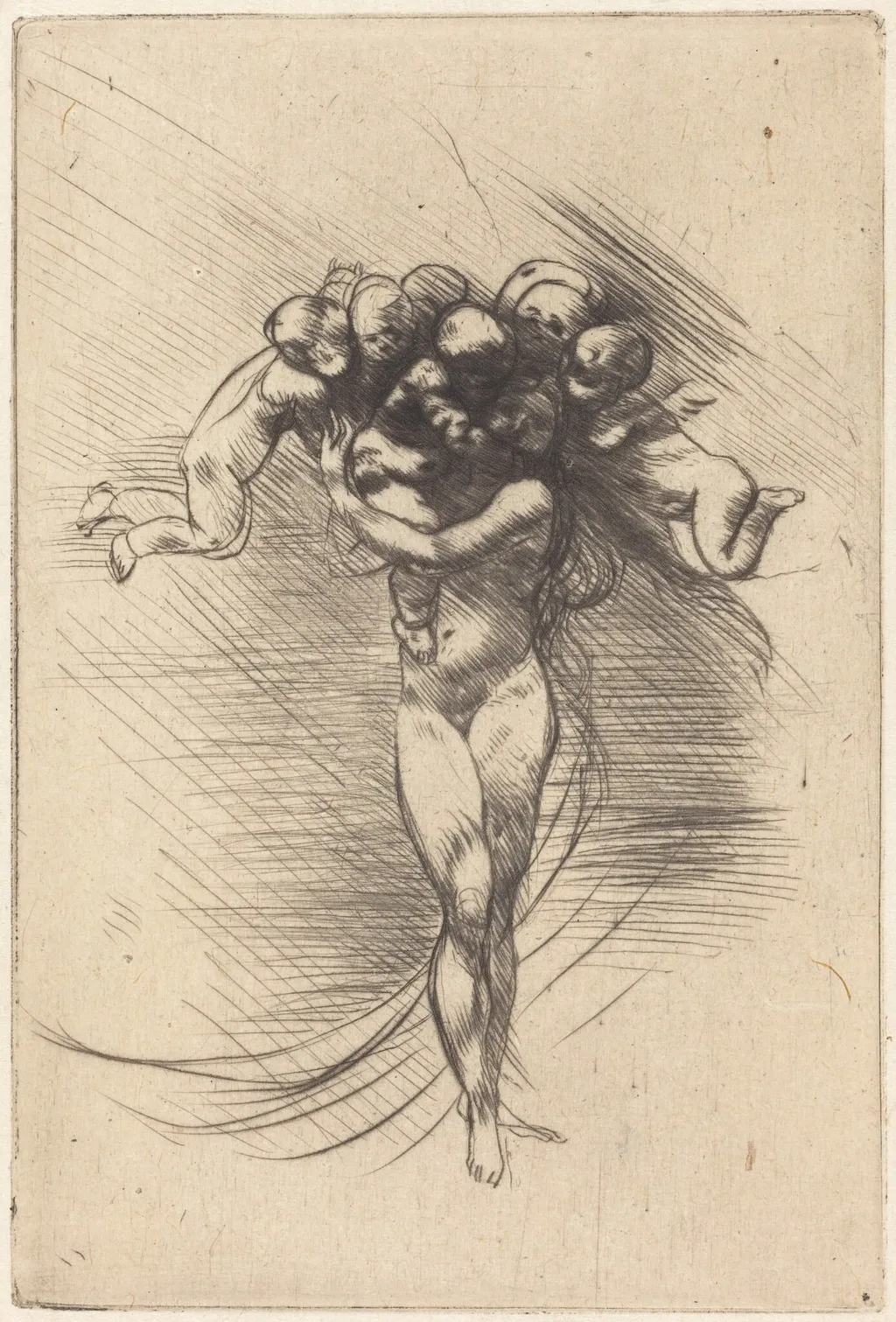
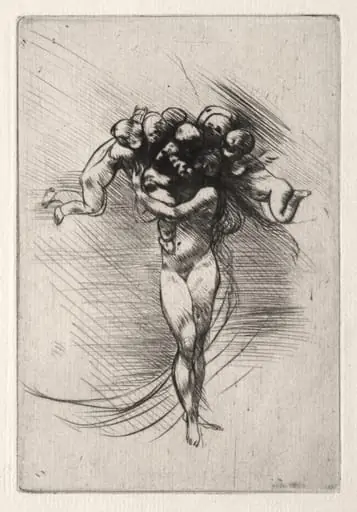
Allegory of Spring is an ink print by the Romanticist artist Auguste Rodin. It dates from 1885 and is held in the collection of the National Gallery of Art.
About this work
Overview
Allegory of Spring is a 1885 drypoint print by French sculptor Auguste Rodin, featuring a nude female figure surrounded by six cherubs in a dynamic composition.
Subject & Meaning
The print depicts a nude woman with long hair, arms clasped around her body and legs crossed, encircled by six cherubs around her head and shoulders. This allegorical scene aligns with Rodin's practice of reinterpreting traditional themes through expressive forms.
Technique & Style
Executed in drypoint on paper, the work showcases Rodin's expressive use of black ink on a beige background, with visible cross-hatching and shading techniques that convey a sense of movement and energy.
History & Provenance
Created in 1885, the print reflects Rodin's experimental approach to two-dimensional media, paralleling his innovative sculptural work.
Context
While primarily a sculptor, Rodin's prints like Allegory of Spring demonstrate his exploration of allegory and expressive figural representation across media, characteristic of his broader artistic philosophy.
Legacy
Allegory of Spring, though a lesser-known aspect of Rodin's oeuvre, highlights his versatility and influence on modern artistic expression, both in sculpture and printmaking.
Artist & collection
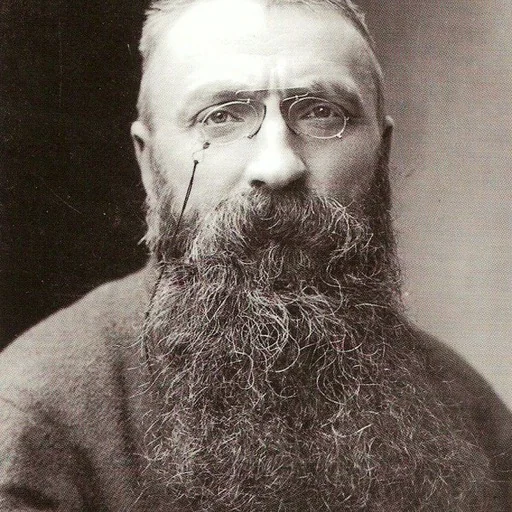
Artist
François Auguste René Rodin (; French: ; 12 November 1840 – 17 November 1917) was a French sculptor generally considered the founder of modern sculpture.

 Le Printemps
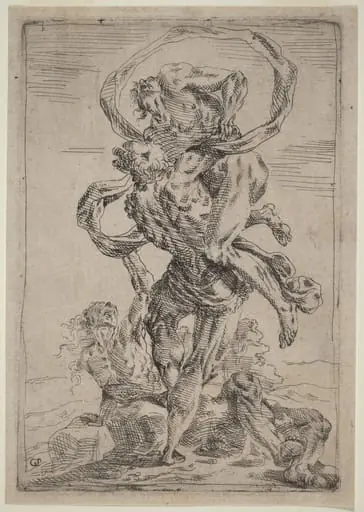 Hercules and Antaeus
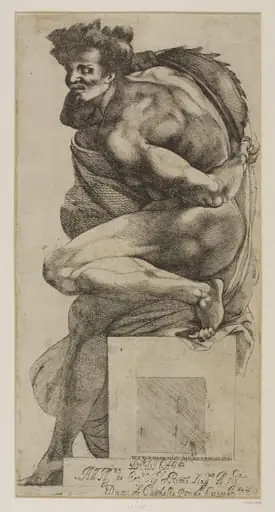 Untitled
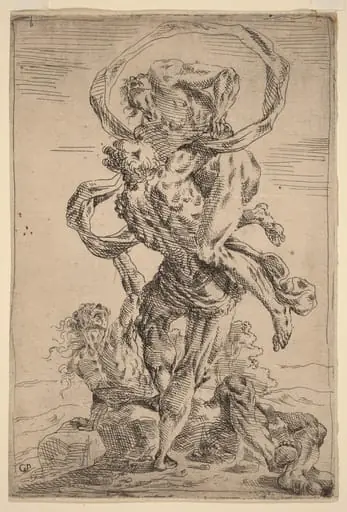 Hercules and Antaeus
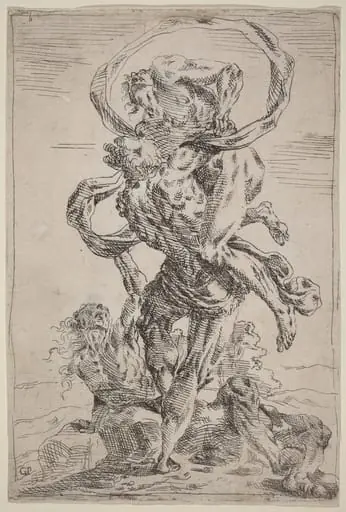 Hercules and Antaeus
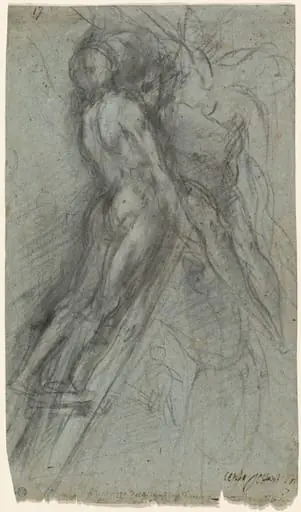 The Descent from the Cross
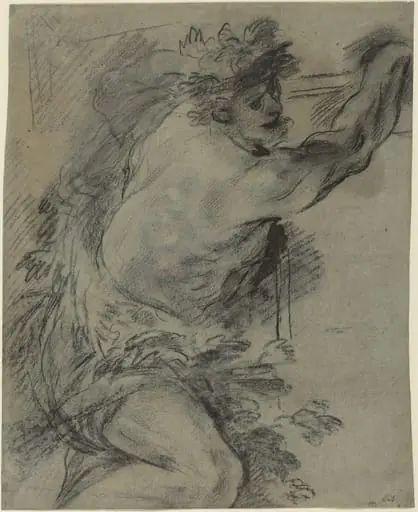 Bacchus
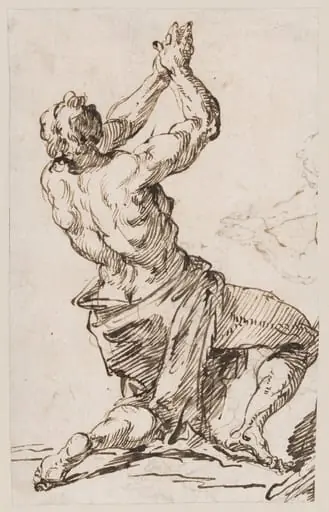 a) Study of a Man Kneeling, Looking Upward (recto); b) Studies of the Same Figure (verso)
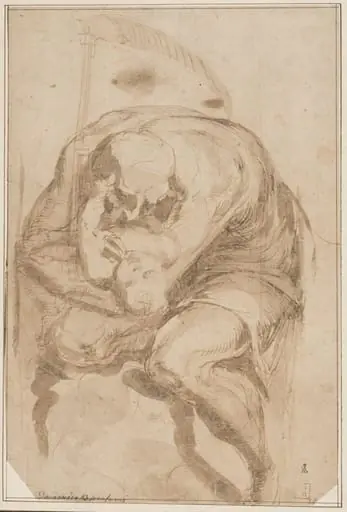 Saturn Devouring his Child
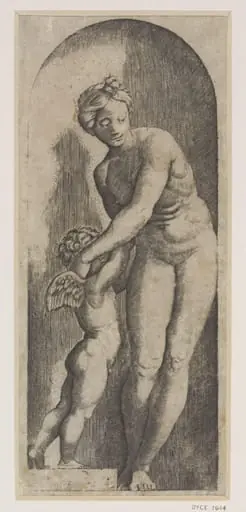 Untitled
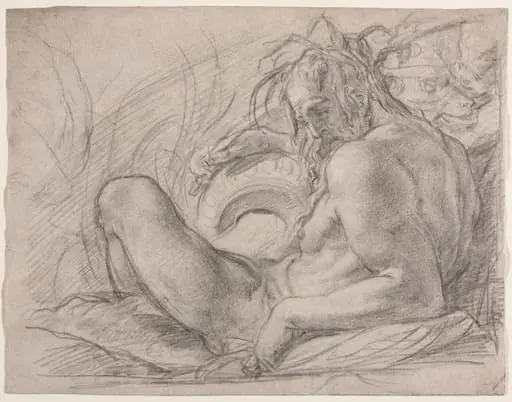 The River God Tiber (Study for a fresco, Miracle of the Snow, or the Foundation of Santa Maria Maggiore, Rome in the Canigiani chapel of S. Felicita, Florence)
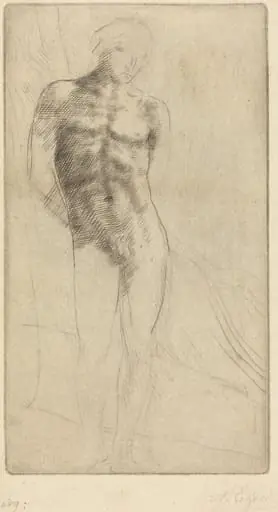 Study of a Nude Figure (Etude de figure nue)