Artwork
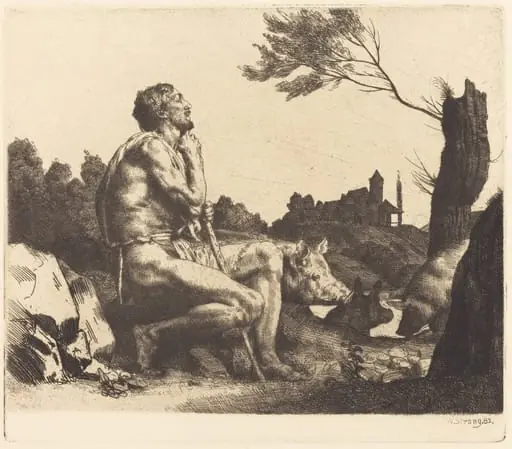
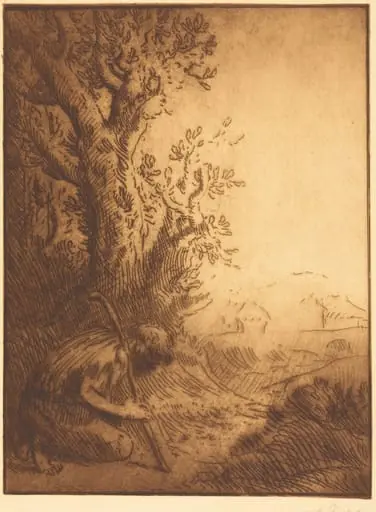
The Prodigal Son, 3rd plate (L'enfant prodigue)
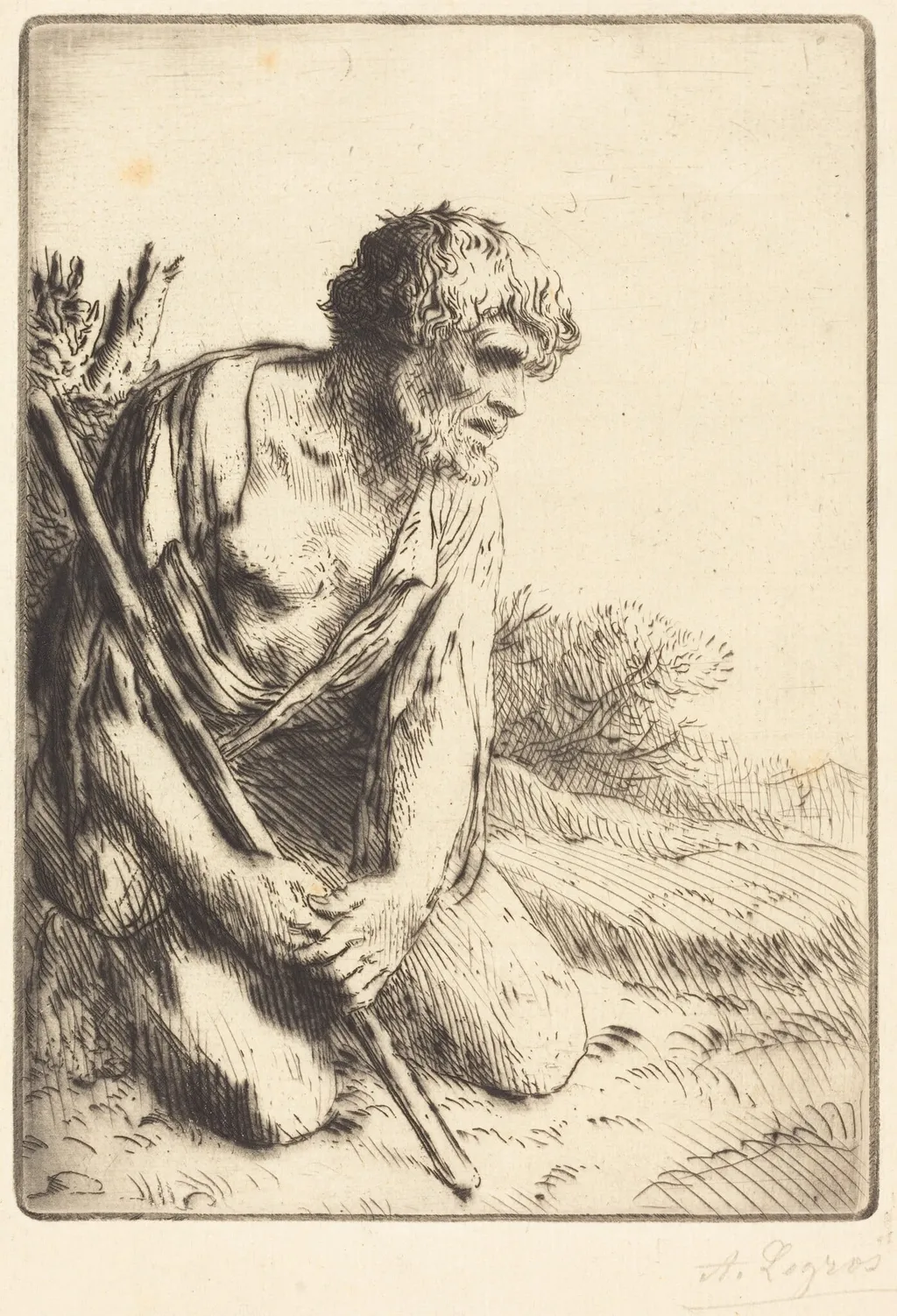
The Prodigal Son, 3rd plate (L'enfant prodigue) is an ink print by the Romanticist artist Alphonse Legros. It dates from 1874 and is held in the collection of the National Gallery of Art.
About this work
Overview
The Prodigal Son, 3rd plate (L'enfant prodigue), created by Alphonse Legros in 1874, is an etching and drypoint print. Produced during Legros' tenure as a prominent educator in London, this work exemplifies his technical prowess in intaglio printmaking.
Subject & Meaning
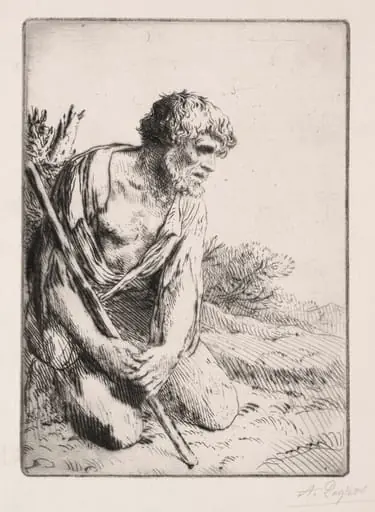
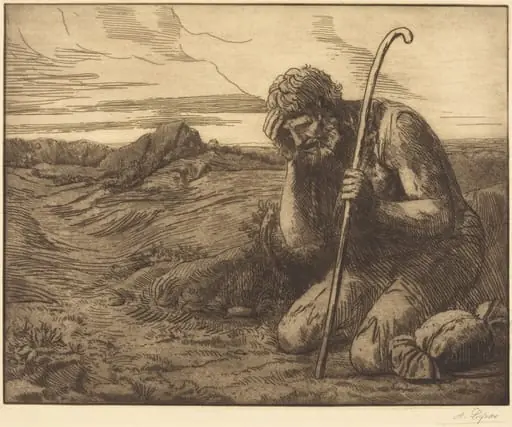
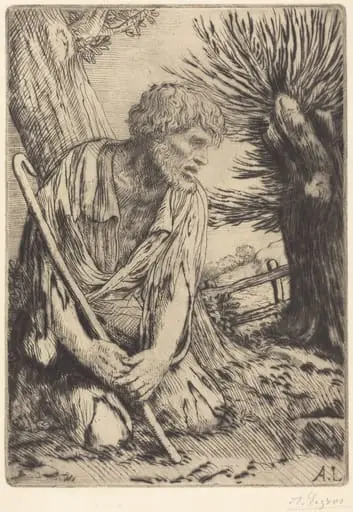
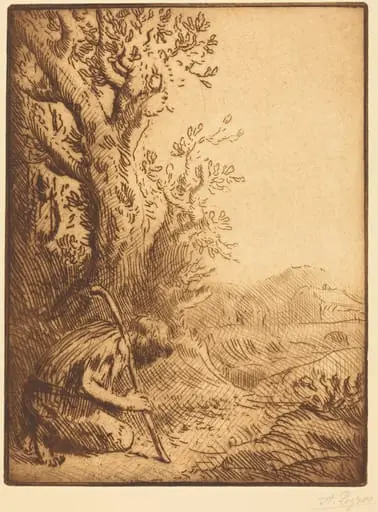
The print depicts a scene inspired by the biblical parable of the Prodigal Son. The figure, shown as a weary, barefoot, and shirtless man walking through tall grass with a bundle of sticks, conveys a sense of exhaustion and hardship, interpreted through the lens of the parable's themes of penance and return.
Technique & Style
Legros employed etching and drypoint to achieve expressive textures, evident in the rendering of grass, skin, and wrinkled clothing. The rough lines and deep shading, characteristic of intaglio techniques, emphasize the subject's physical and emotional state.
History & Provenance
Created in 1874, this print reflects Legros' role in the British etching revival. Produced while he was an influential teacher in London, it showcases his teaching and artistic practice during this period.
Context
This work was made during a time when Legros was contributing to the resurgence of etching in Britain, influencing the medium's popularity among artists and students alike through his teachings and artworks.
Legacy
As one of Legros' notable etchings, The Prodigal Son, 3rd plate, contributes to his enduring legacy as a printmaker and educator, highlighting the expressive potential of intaglio techniques in capturing nuanced themes and textures.
Artist & collection

Artist
Alphonse Legros (French pronunciation: ; 8 May 1837 – 8 December 1911) was a French, later British, painter, etcher, sculptor, and medallist.