Artwork
The Tree of Salvation (L'arbe de salut)
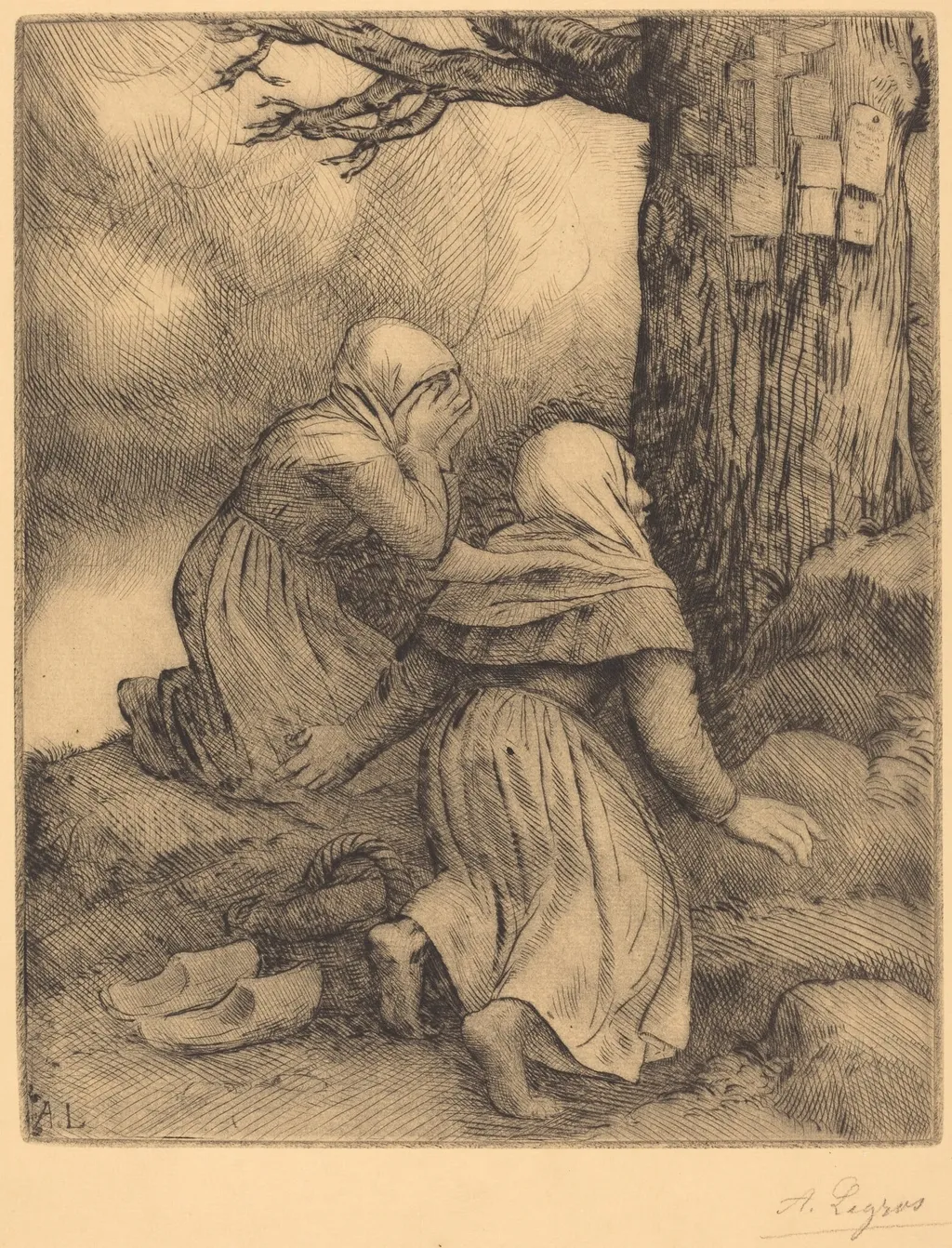
The Tree of Salvation (L'arbe de salut) is an ink print by the Romanticist artist Alphonse Legros. It dates from 1874 and is held in the collection of the National Gallery of Art. Created in 1874, *The Tree of Salvation* is a print executed in drypoint and etching on a buff‑toned sheet of paper.
About this work
Overview
Created in 1874, *The Tree of Salvation* is a print executed in drypoint and etching on a buff‑toned sheet of paper. The work presents a stark nocturnal landscape dominated by a gnarled tree under which two cloaked figures huddle, their hands clasped. The composition is framed by jagged rocks and a deteriorating wall, conveying a sense of isolation and vulnerability.
Subject & Meaning
The image captures a moment of shared refuge: two individuals, dressed in loose, weathered garments, seek shelter beneath the twisted trunk. Their tightly bound hands and the oppressive darkness surrounding them suggest themes of survival, mutual dependence, and perhaps spiritual salvation amid a hostile environment.
Technique & Style
Legros employed the incisive lines of drypoint alongside the tonal possibilities of etching, allowing the bark, fabric and stone to acquire a tactile, almost three‑dimensional quality. The scratchy, uneven strokes emphasize texture, while the blurred facial features draw attention to gesture rather than identity, reinforcing the work’s emotional focus.
History & Provenance
Alphonse Legros, born in France and later based in London, was instrumental in the mid‑nineteenth‑century British etching revival. After moving to the capital in 1863, he devoted much of his practice to printmaking, and *The Tree of Salvation* exemplifies his engagement with the medium during this formative period.
Artist & collection

Artist
Alphonse Legros (French pronunciation: ; 8 May 1837 – 8 December 1911) was a French, later British, painter, etcher, sculptor, and medallist.

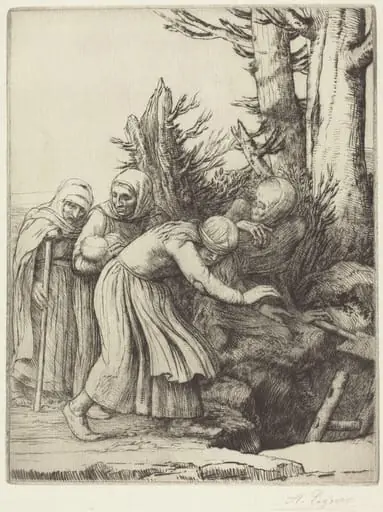 The Triumph of Death: Death Prepares a Dwelling for the Homeless (Le triomphe de la Mort: Lamort a prepare une demeure a des abandonnees)
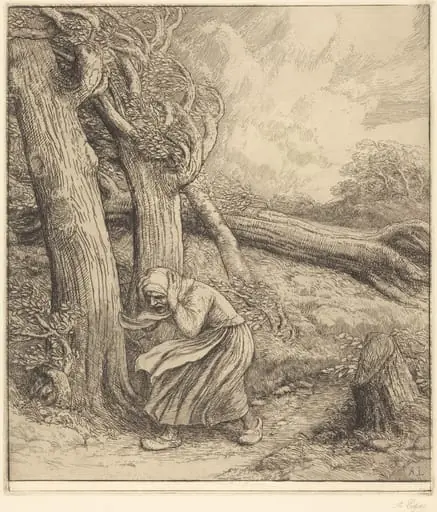 Hurricane (L'ouragan)
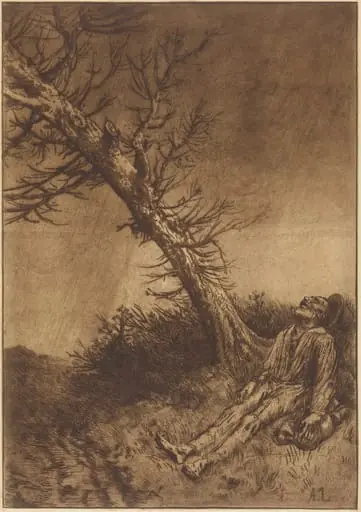 Death of the Vagabond (La mort du vagabond)
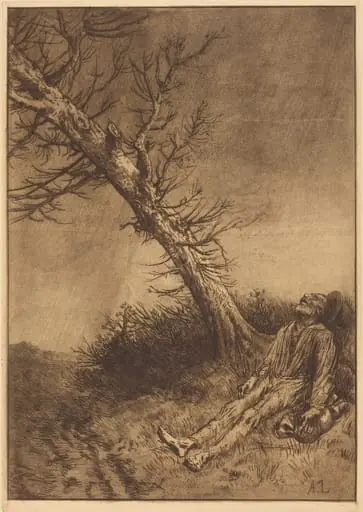 Death of the Vagabond (La mort du vagabond)
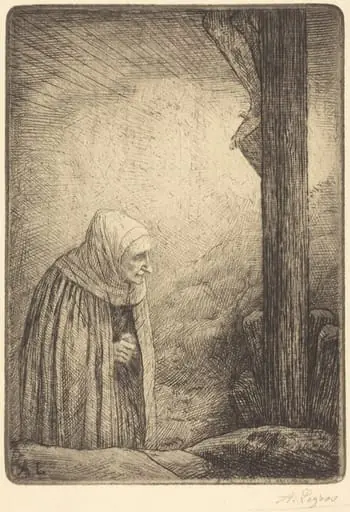 Woman at the Foot of the Cross (Femme au calvaire)
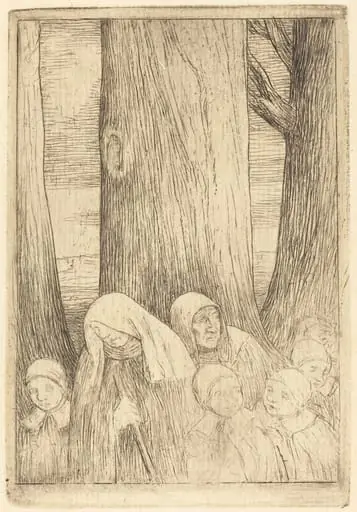 Orphans (Les orphelins (?))
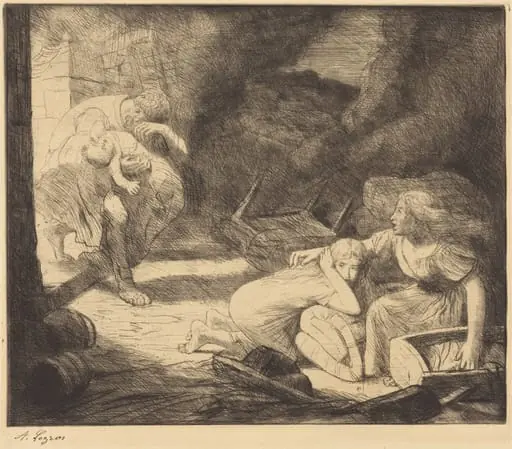 The Fire, 2nd plate (L'incendie)
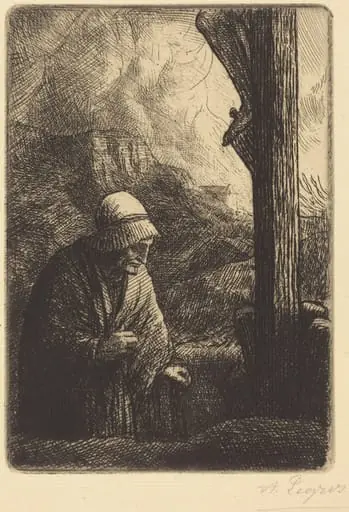 Woman at the Foot of the Cross (Femme au calvaire)
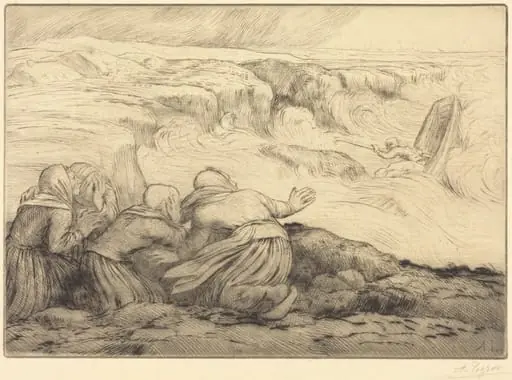 Small Boat in Peril (Barque en peril)