Artwork
The Fire, 2nd plate (L'incendie)
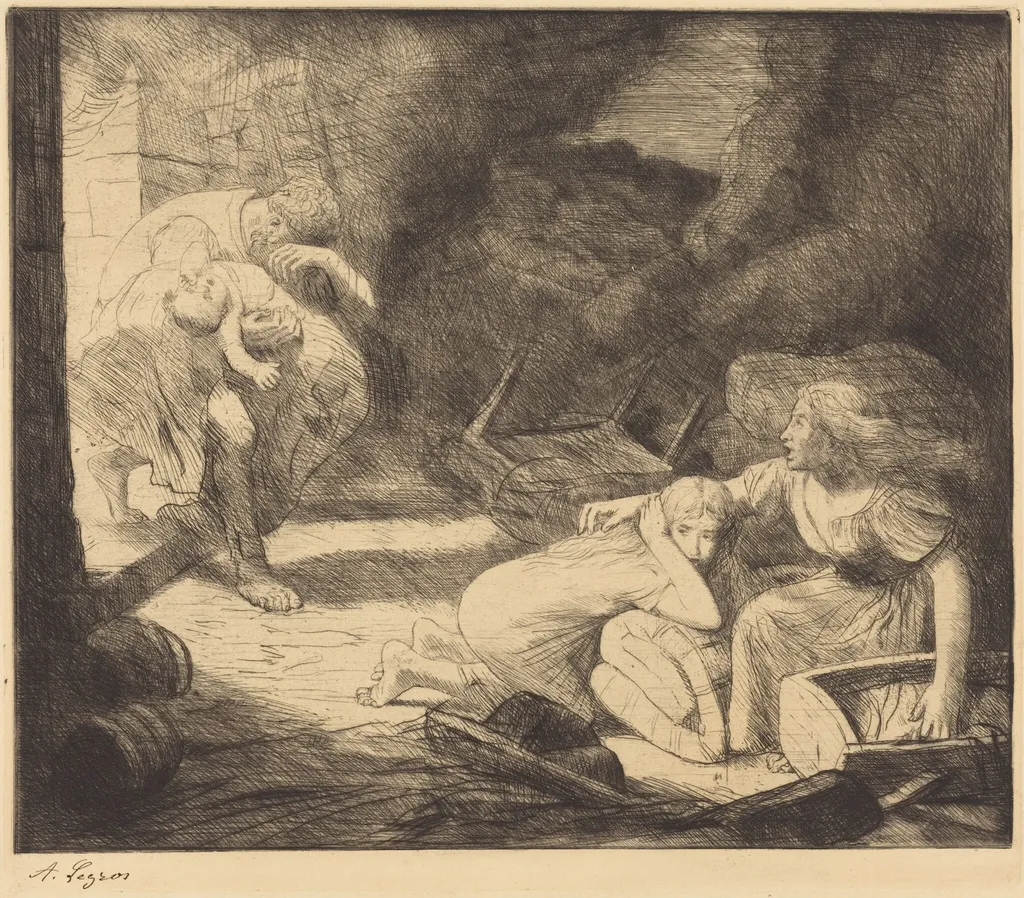
The Fire, 2nd plate (L'incendie) is an ink print by the Romanticist artist Alphonse Legros. It dates from 1874 and is held in the collection of the National Gallery of Art.
About this work
Overview
The Fire, 2nd plate (L'incendie), an etching created by Alphonse Legros in 1874, captures a chaotic scene of panic and desperation amidst a burning backdrop.
Subject & Meaning
The print depicts a dark, smoky street where people flee in disarray, carrying belongings. A kneeling woman clutches a child and a bag, while another tends to a fallen man nearby, with an overturned cart in the background, conveying the human plight in the face of disaster.
Technique & Style
Legros employed the etching technique, scratching into a metal plate to achieve rough, expressive lines that imbue the scene with urgency. The method allowed for textured layers, particularly evident in the dense smoke and shadows, enhancing the overall sense of turmoil.
History & Provenance
Created in 1874 by Alphonse Legros, a French-born artist naturalized in Britain, this work reflects his contribution to the revival of etching in Britain, also influenced by his teaching.
Context
As a multifaceted artist (painter, sculptor, and printmaker), Legros's work in etching, such as *The Fire, 2nd plate*, situated him at the forefront of a medium experiencing resurgence in late 19th-century Britain.
Legacy
While specific legacy details of *The Fire, 2nd plate* are not provided, Legros's overall impact on British etching is well-documented, with his teaching and body of work inspiring future generations of printmakers.
Artist & collection

Artist
Alphonse Legros (French pronunciation: ; 8 May 1837 – 8 December 1911) was a French, later British, painter, etcher, sculptor, and medallist.

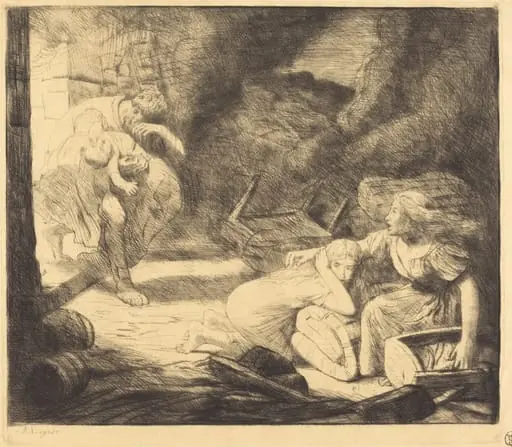 The Fire, 2nd plate (L'incendie)
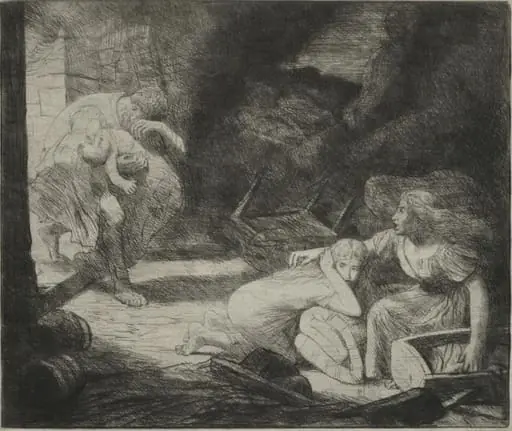 L'Incendie
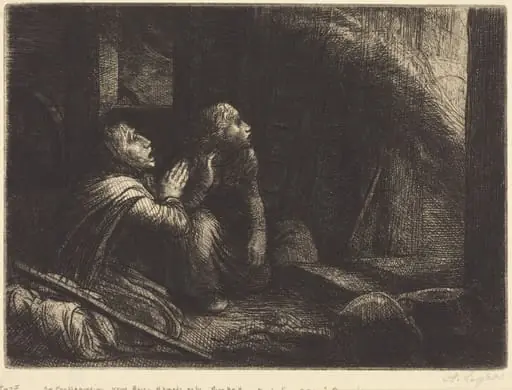 Fire, 3rd plate (L'incendie)
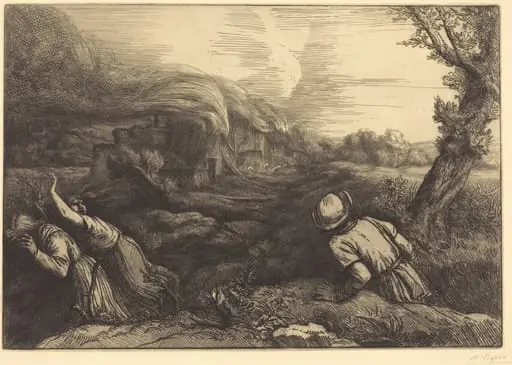 Fire in the Hamlet (L'incendie du hameau)
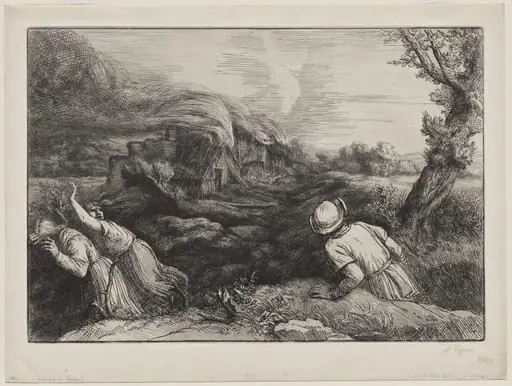 The Village in Flames (L'Incendie du Hameau)
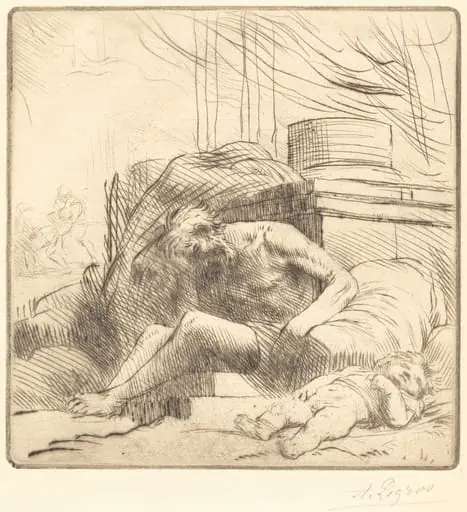 Victim of a Fire (Victime d'un incendie)
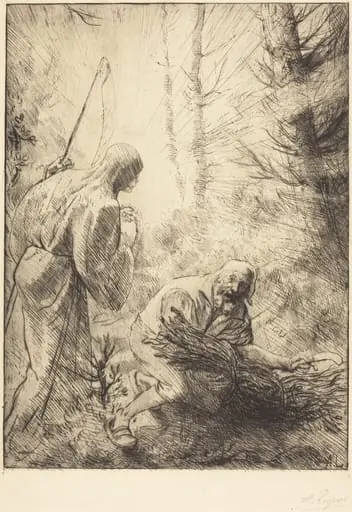 Death and the Woodcutter, 2nd plate (La mort et le bucheron)
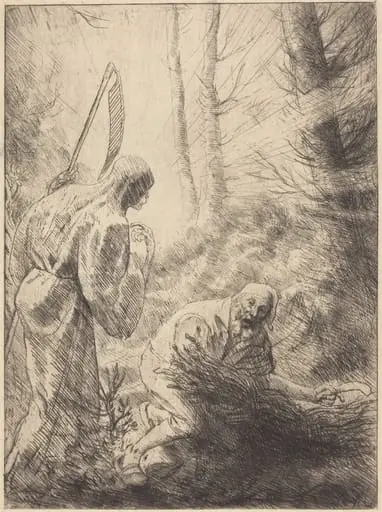 Death and the Woodcutter, 2nd plate (La Mort de le bucheron)