Artwork
Two Studies of Hands
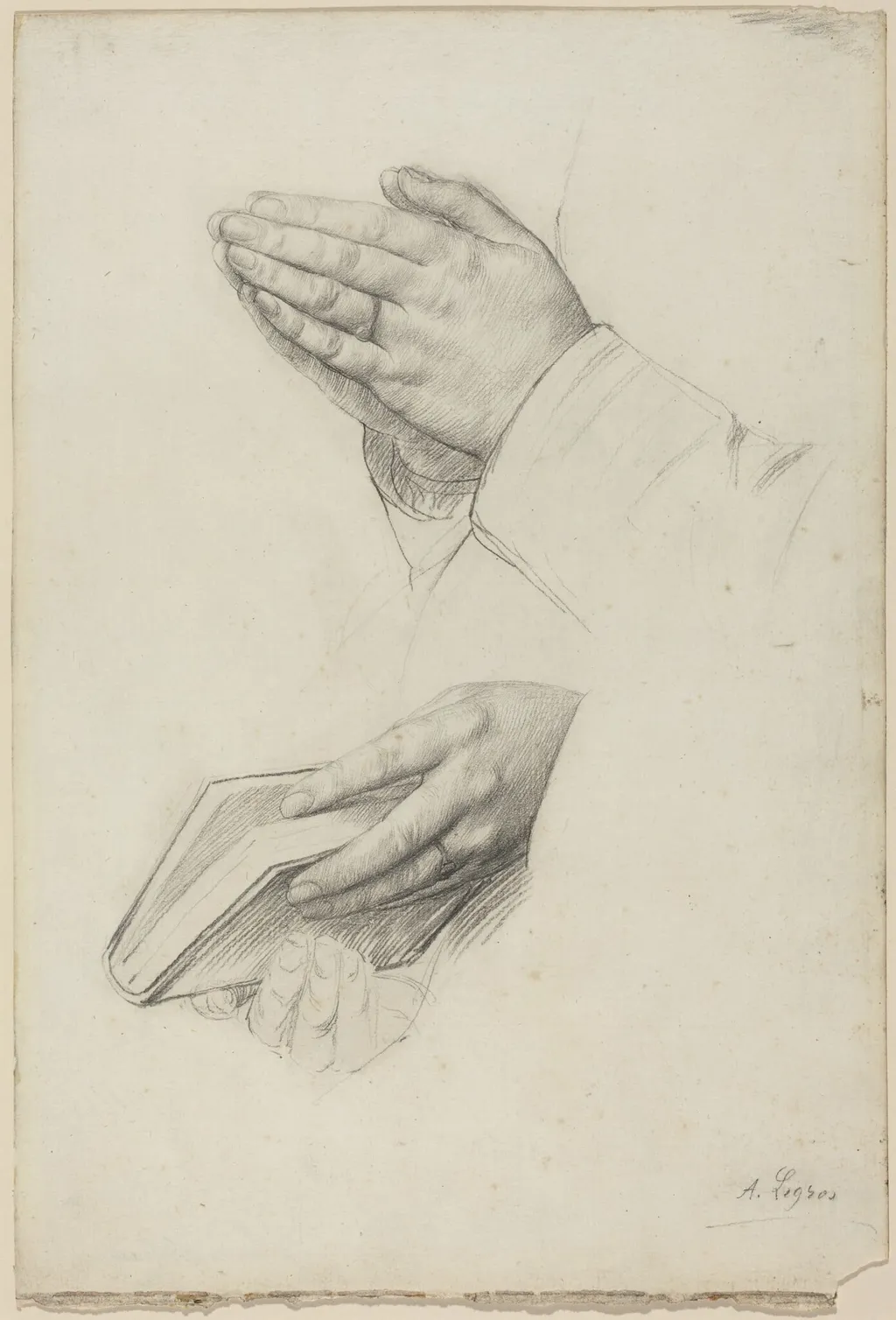
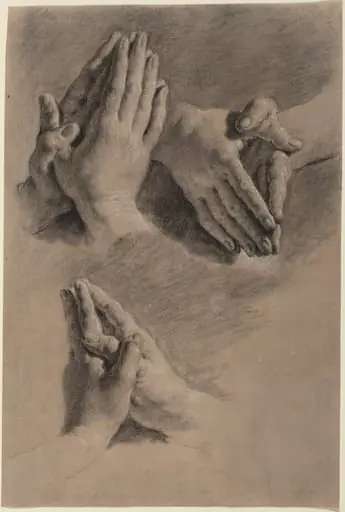
Two Studies of Hands is a graphite drawing by the Romanticist artist Alphonse Legros. It dates from 1874 and is held in the collection of the National Gallery of Art.
About this work
Overview
Created in 1874 by French-born artist Alphonse Legros, this graphite drawing captures two distinct hand gestures with quiet precision.
Created in 1874 by French-born artist Alphonse Legros, this graphite drawing captures two distinct hand gestures with quiet precision. Though Legros was active in painting and sculpture, he frequently returned to drawing as a means of close observation. This work belongs to a series of studies focused on the human hand, reflecting his interest in anatomy and gesture as carriers of meaning without narrative embellishment.
Subject & Meaning
The drawing presents two simple, unadorned actions: hands folded in prayer and hands cradling a folded cloth. Neither gesture is theatrical; both suggest introspection and routine. The absence of context or facial features directs attention to the physicality of touch and stillness. These moments, ordinary yet intimate, imply spiritual or domestic ritual, inviting contemplation rather than storytelling.
Technique & Style
Legros employed soft, controlled graphite lines to model skin and fabric with subtle tonal gradations. The rendering is detailed but restrained, avoiding sharp contrasts or dramatic shading. The hands are rendered with anatomical accuracy, yet the focus remains on texture and form rather than idealization. The sketch’s unfinished quality enhances its immediacy, as if captured in a moment of quiet observation.
History & Provenance
Legros moved to England in the 1860s and became a central figure in the British etching revival, teaching at the Slade School of Art. This drawing, made during his early years in Britain, reflects his ongoing engagement with observational drawing as a foundational practice. It likely served as preparatory study, though its sensitivity suggests it was valued beyond mere utility, possibly retained in his personal collection.
Context
In the mid-19th century, artists across Europe increasingly turned to everyday subjects as worthy of artistic attention. Legros’s focus on hands aligns with this trend, echoing the Realist and Romantic emphasis on authentic human experience. Unlike grand historical scenes, his work finds dignity in stillness and gesture, resonating with contemporaries who sought emotional truth in the mundane.
Legacy
Legros’s hand studies influenced generations of British art students through his teaching at the Slade. His emphasis on direct observation and restrained technique helped shape a generation’s approach to drawing. Though not widely exhibited as standalone works, these studies remain important examples of how quiet, focused observation can convey depth without spectacle.
Artist & collection

Artist
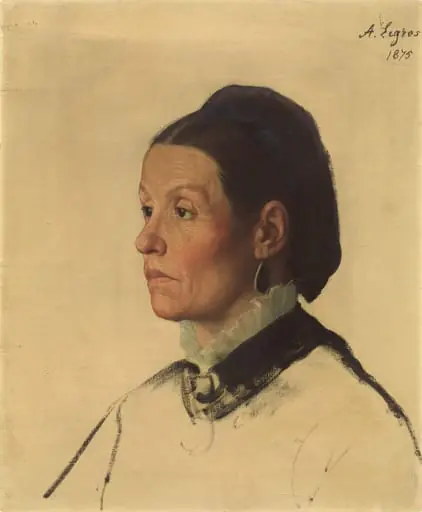
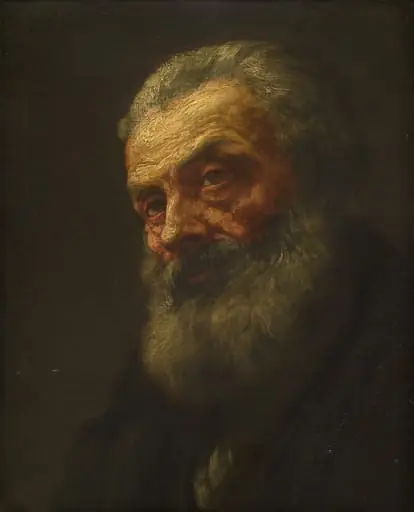
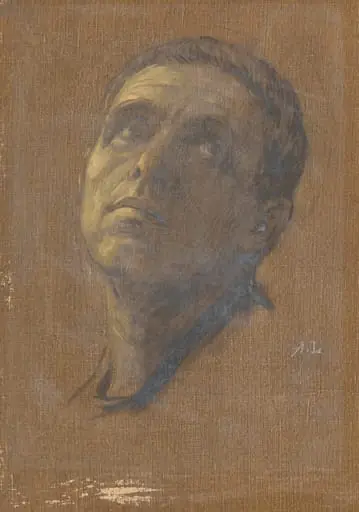
Alphonse Legros (French pronunciation: ; 8 May 1837 – 8 December 1911) was a French, later British, painter, etcher, sculptor, and medallist.

![Study of a Right Hand [recto], by Benjamin Haydon](https://artifactworldgallery.com/img/benjamin-haydon--study-of-a-right-hand-recto--88b544f65d3eb1a7-w320.webp)
![Hand Studies [verso], by Allan Ramsay](https://artifactworldgallery.com/img/allan-ramsay--hand-studies-verso--f6c634d33f170fe2-w320.webp)
![Studies of Feet [verso], by Edgar Degas](https://artifactworldgallery.com/img/edgar-degas--studies-of-feet-verso--68fc58487d2c01d0-w320.webp)