Artwork
Vagabond Moving along a Lane (Un vagabond passant dans une ruelle)
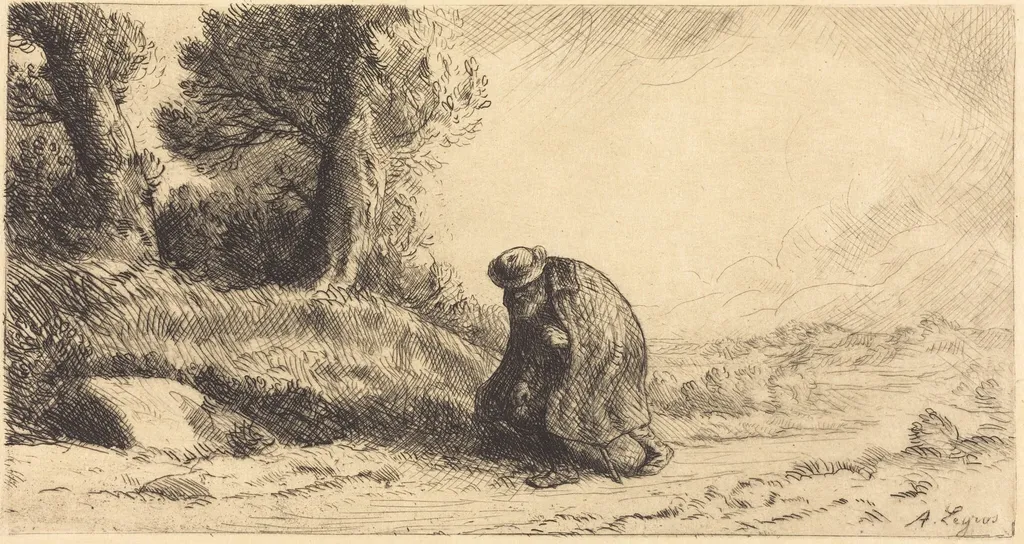
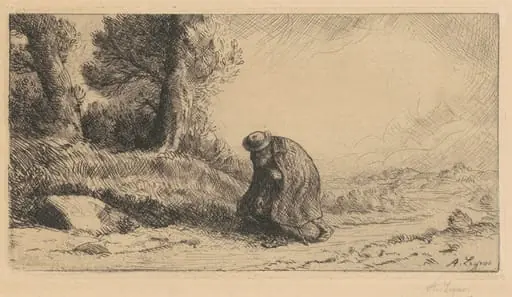
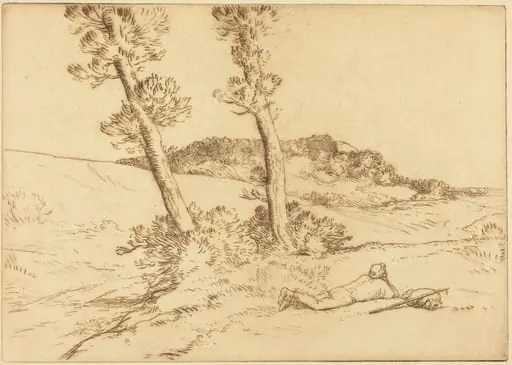
Vagabond Moving along a Lane (Un vagabond passant dans une ruelle) is an ink print by the Romanticist artist Alphonse Legros. It dates from 1874 and is held in the collection of the National Gallery of Art.
About this work
Overview
Legros, originally French but based in London since 1863, was instrumental in revitalizing etching as a serious artistic medium in Britain.
Created in 1874 by Alphonse Legros, this etching captures a solitary figure traversing a narrow urban alley. Legros, originally French but based in London since 1863, was instrumental in revitalizing etching as a serious artistic medium in Britain. The work reflects his commitment to the craft, emphasizing direct, tactile mark-making over polished finish. Its modest scale and unidealized subject align with his broader interest in everyday human experience.
Subject & Meaning
The figure, bent beneath a burden and cloaked in a wide-brimmed hat, moves silently along a confined path. No narrative context is given—only the weight of motion and isolation. The anonymity of the wanderer invites contemplation of marginal lives, avoiding sentimentality. The composition’s lack of background detail focuses attention on the figure’s physical presence and the oppressive narrowness of the environment, suggesting themes of endurance and invisibility.
Technique & Style
Legros employed drypoint and etching to create dense, scratchy lines that build texture through incision rather than wash or tone. The surface is marked by irregular, energetic strokes, producing a gritty, uneven quality that mimics the roughness of the path and the figure’s worn attire. Dark areas emerge from accumulated ink in the grooves, while lighter zones suggest fleeting light filtering through overhanging foliage. The technique prioritizes immediacy and material presence.
History & Provenance
Made during Legros’s tenure at the Slade School of Fine Art, where he taught etching to a generation of British artists, this print reflects his pedagogical influence. Though not widely exhibited at the time, it circulated among print collectors and students. Its survival in institutional and private collections attests to its role as a quiet but significant example of late 19th-century British print revival, rooted in Legros’s insistence on handcrafted integrity.
Context
In 1870s Britain, etching was undergoing a resurgence as artists rejected mass-produced illustrations in favor of hand-made, expressive prints. Legros, influenced by Rembrandt and French Realism, championed etching as a vehicle for personal vision. This work aligns with broader European trends toward depicting the working poor with dignity, yet avoids overt social commentary, favoring quiet observation over polemic.
Legacy
Legros’s etchings, including this one, helped redefine printmaking in Britain as a serious art form rather than a reproductive tool. His emphasis on direct engraving and emotional restraint influenced later generations of British etchers. While not widely reproduced, *Vagabond Moving along a Lane* remains a representative example of his quiet, labor-intensive approach—valued for its honesty and technical discipline rather than spectacle.
Artist & collection

Artist
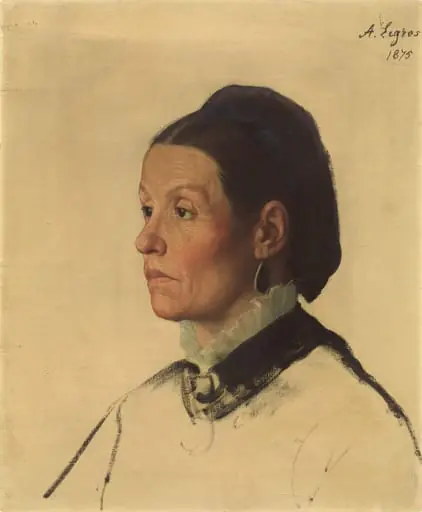
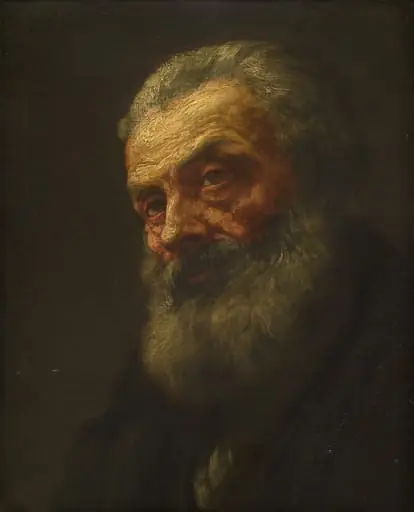
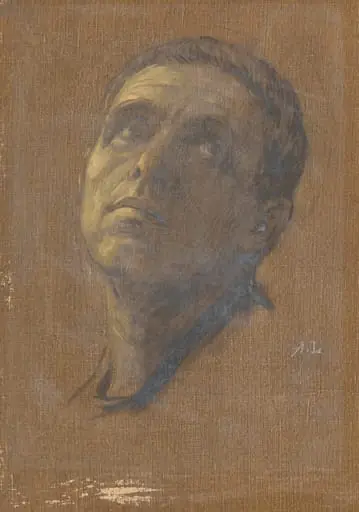
Alphonse Legros (French pronunciation: ; 8 May 1837 – 8 December 1911) was a French, later British, painter, etcher, sculptor, and medallist.

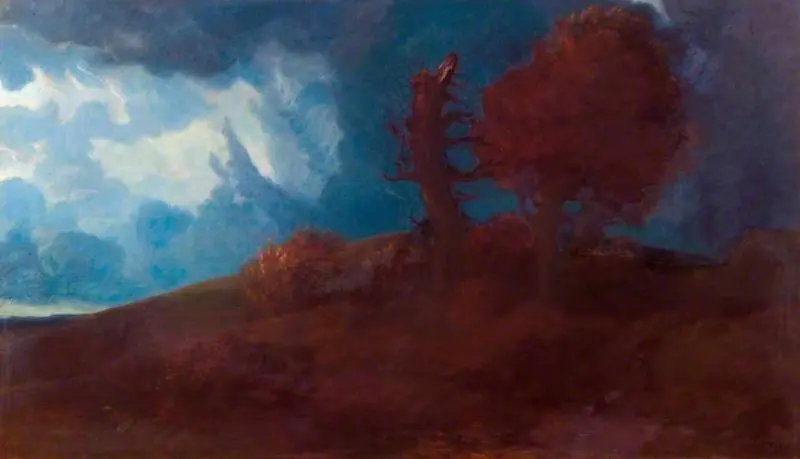
 Wayfarer Surprised by a Storm (Le Voyageur surpris par l'Orage)
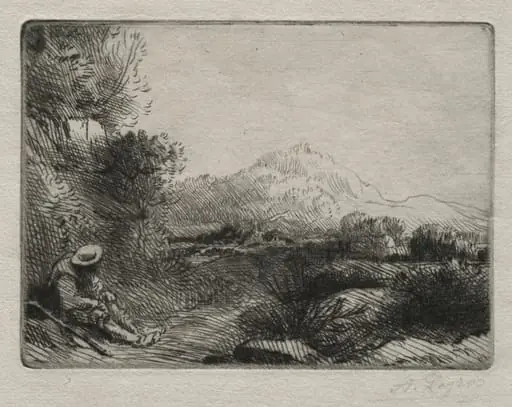 Rest of the Traveler
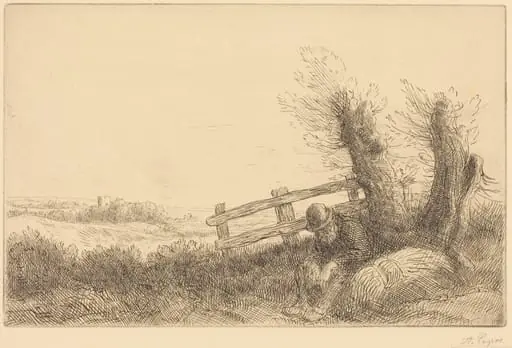 Farmer Reclining (Le fermier au repos)
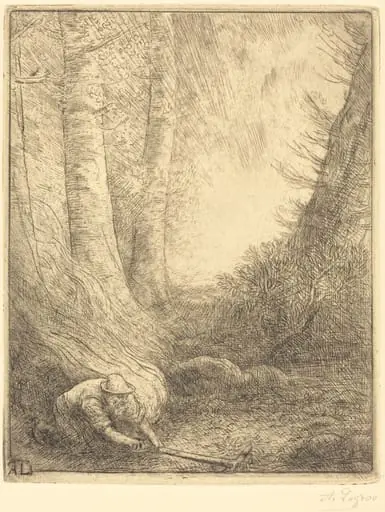 Burning the Grasses (Le bruleur d'herbes)
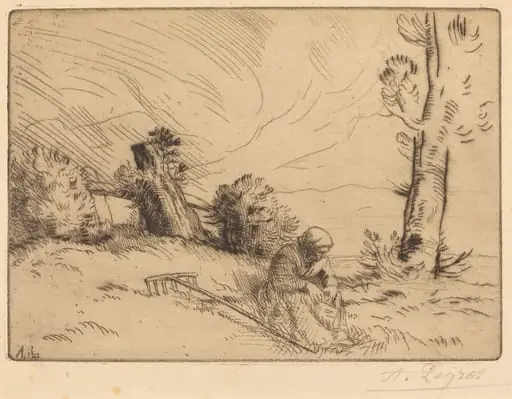 Peasant Woman Seated near a Hedge (Paysanne assise pres d'une haie)
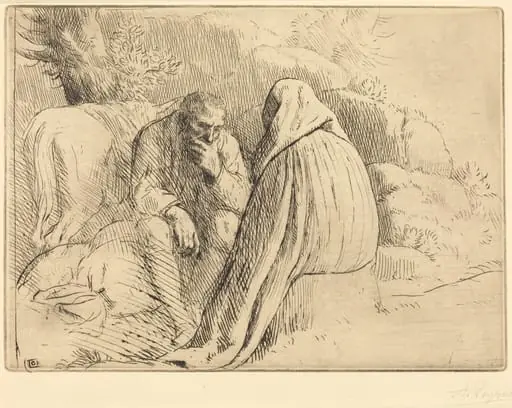 Bohemien Encampment (Campement de bohemiens)
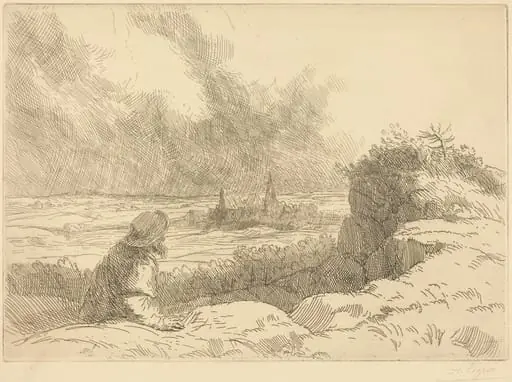 Landscape (Paysage)
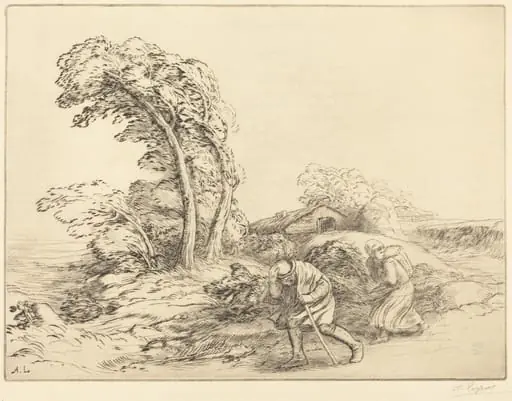 Gust of Wind (Un coup de vent)
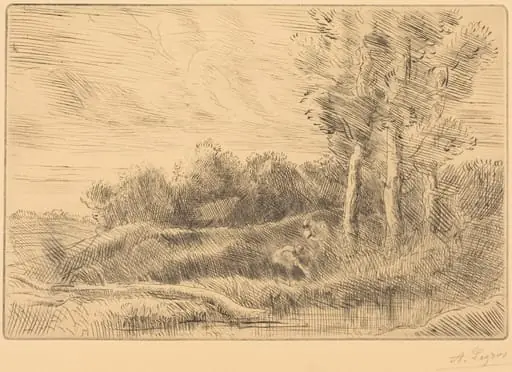 The House of the Well (La maison du puits)
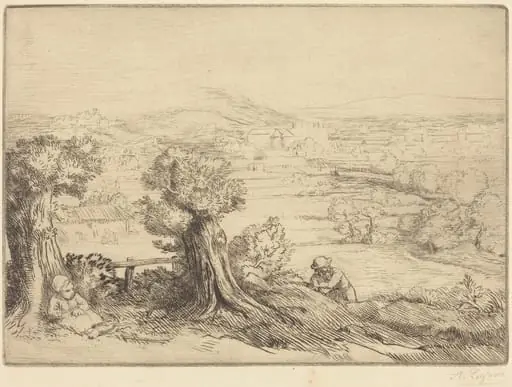 Remembrance of a Valley in Bourgogne (Souvenir d'une vallee en Bourgogne)
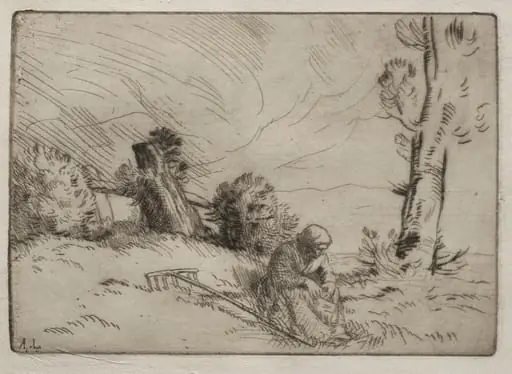 Peasant Woman Seated near a Hedge
 Traveler Reclining on the Grass (Le voyageur etendu sur le gazon)