Artwork
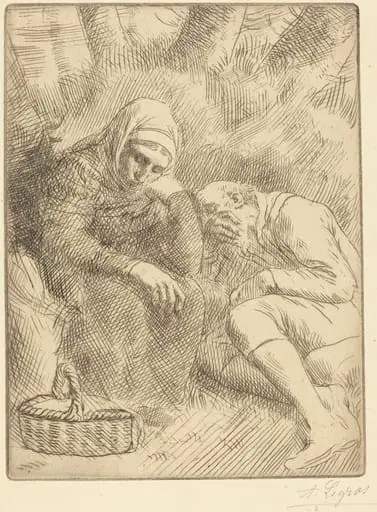
Bohemien Encampment (Campement de bohemiens)
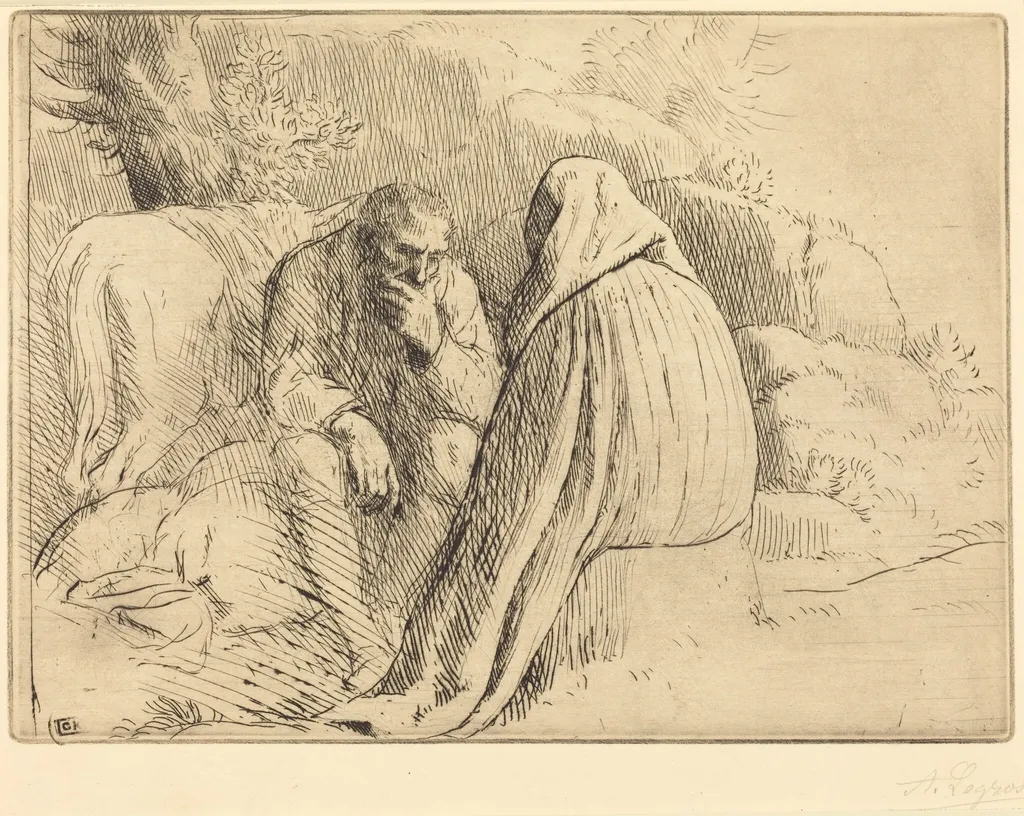
Bohemien Encampment (Campement de bohemiens) is an ink print by the Romanticist artist Alphonse Legros. It dates from 1874 and is held in the collection of the National Gallery of Art.
About this work
Overview
Alphonse Legros produced the etching *Bohemien Encampment* in 1874. Executed after his relocation to London in 1863, the work belongs to the period when the French‑born artist was active in both painting and printmaking, contributing to a renewed interest in etching among British artists.
Subject & Meaning
The image captures a small, informal gathering of two figures in a grassy setting, suggesting a temporary settlement of itinerant individuals. The composition emphasizes the immediacy of everyday life and the fluidity of movement, themes that recur throughout Legros’s broader output.
Technique & Style
Legros employed traditional intaglio methods, incising lines that were later filled with ink. The surface is dominated by dense hatching—short, parallel strokes—that convey light, shadow, and texture. The resulting grainy, sketch‑like quality gives the scene a spontaneous, lived‑in atmosphere.
History & Provenance
Created during Legros’s London years, the print reflects his role in reviving the etching medium in Britain. While specific ownership records are limited, the work has been documented in catalogues of Legros’s prints and appears in collections that focus on 19th‑century British etching.
Artist & collection

Artist
Alphonse Legros (French pronunciation: ; 8 May 1837 – 8 December 1911) was a French, later British, painter, etcher, sculptor, and medallist.

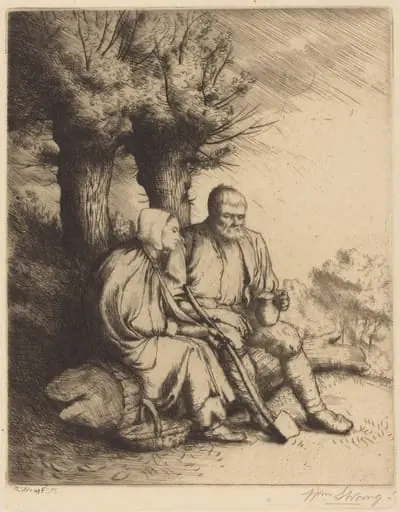 Man and Woman under a Tree
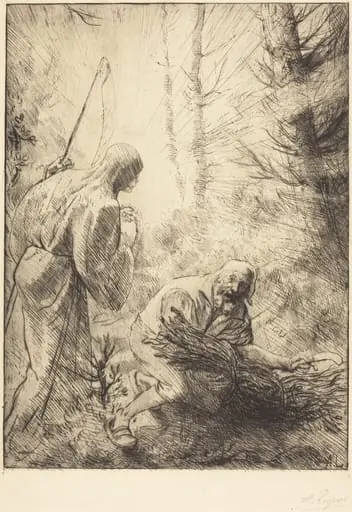 Death and the Woodcutter, 2nd plate (La mort et le bucheron)
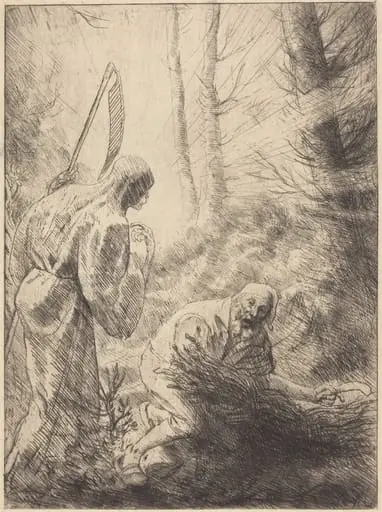 Death and the Woodcutter, 2nd plate (La Mort de le bucheron)
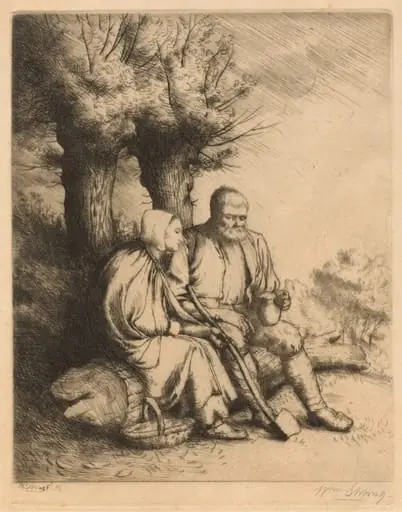 The Woodman
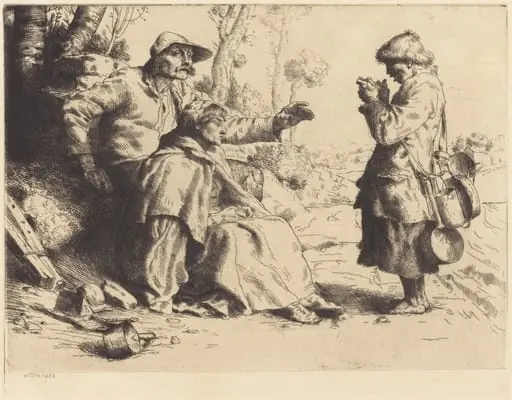 Tinkers
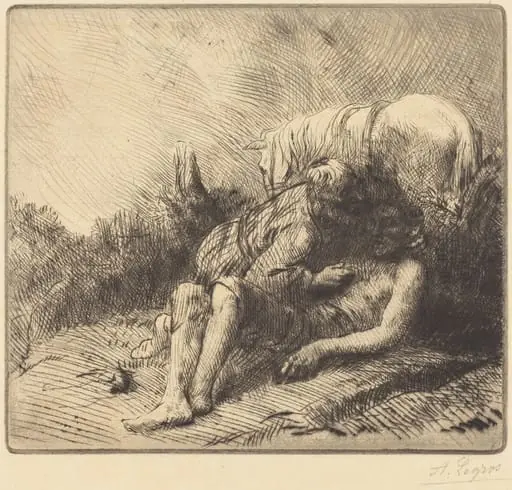 The Good Samaritan (Le bon samaritain)
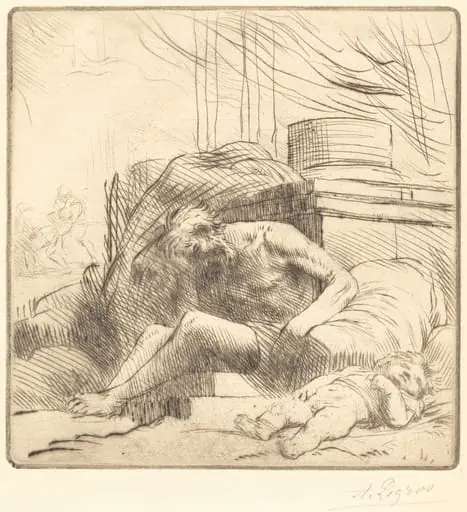 Victim of a Fire (Victime d'un incendie)
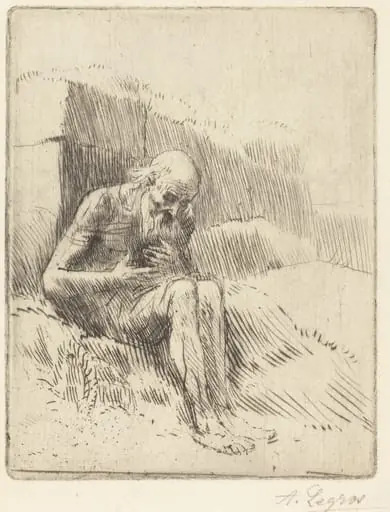 Job, 2nd plate
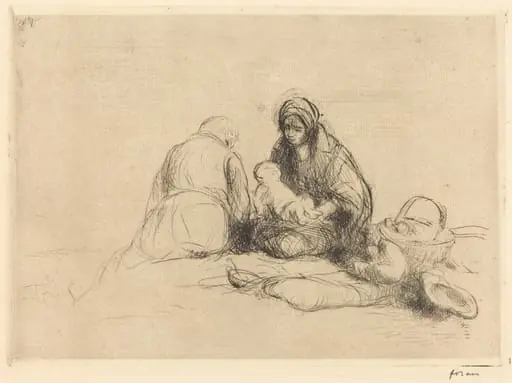 Le repos en Egypte (The Rest in Egypt)
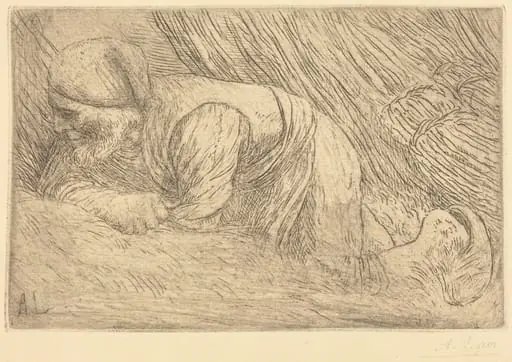 Fagot-gatherer (Le fagotier)
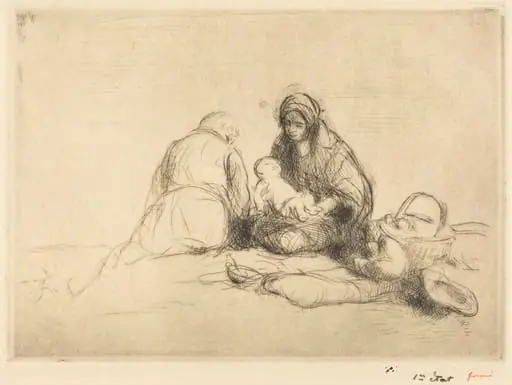 La repos en Egypte (The Rest in Egypt)
 Man and Wife Seated by the Road with a Basket(Homme et femme assis au bord de la rou te aven un panier)