Artwork
Village of Wimille, near Boulogne (Village de Wimille, pres Boulogne)
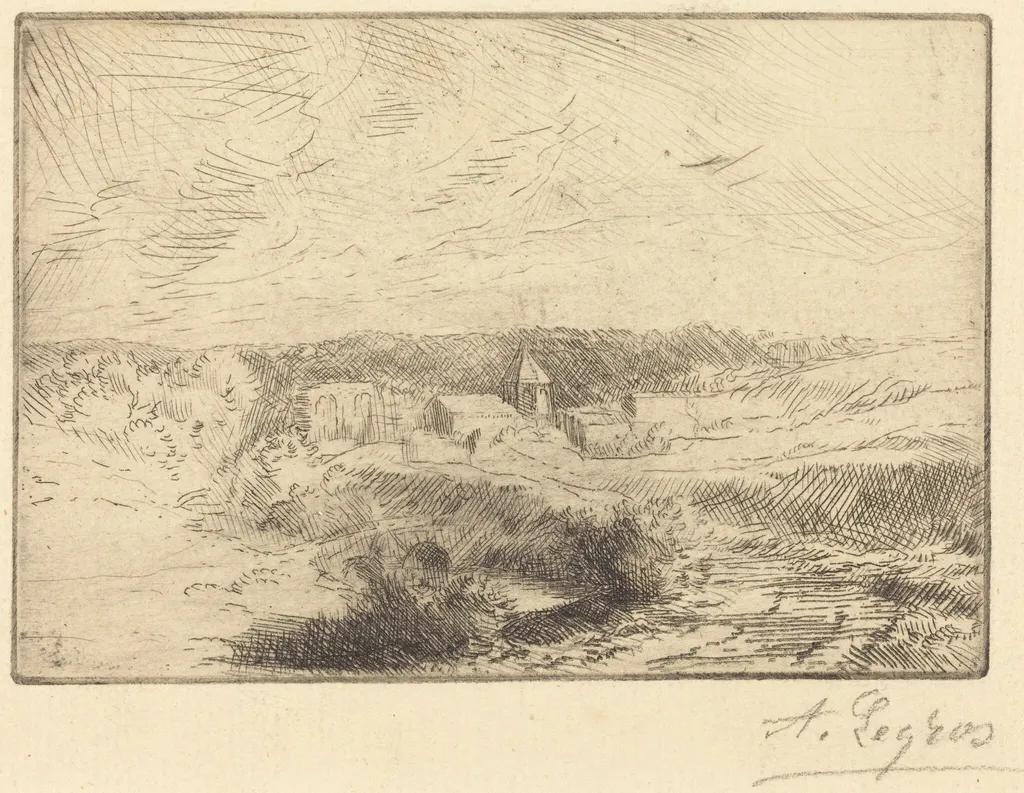
Village of Wimille, near Boulogne (Village de Wimille, pres Boulogne) is an ink print by the Romanticist artist Alphonse Legros. It dates from 1874 and is held in the collection of the National Gallery of Art.
About this work
Overview
Alphonse Legros created 'Village of Wimille, near Boulogne' in 1874 as an etching, a printmaking technique involving acid and metal plates.
Subject & Meaning
The etching depicts a serene rural scene near Boulogne, featuring a village with a church and simple houses on a hillside, nestled beside water.
Technique & Style
Legros employed loose, scratchy lines to convey the textures of trees, waves, and sky, resulting in a rough, sketchy quality characteristic of etched works. Darker foreground elements contrast with softer, more delicate rendering of the distant village.
History & Provenance
Legros, a French-born artist who became a naturalized British citizen in the 1860s, was instrumental in reviving etching in Britain, where he had settled in 1863.
Own this work as a print
Artist & collection

Artist
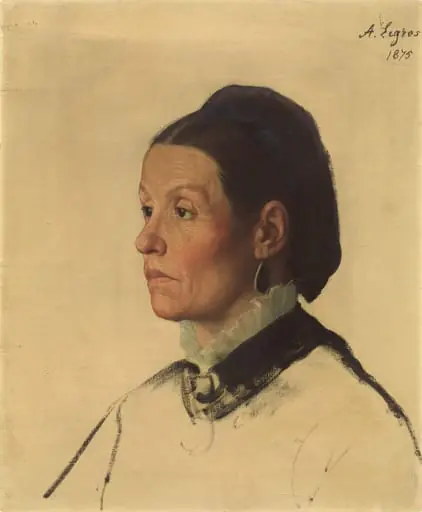
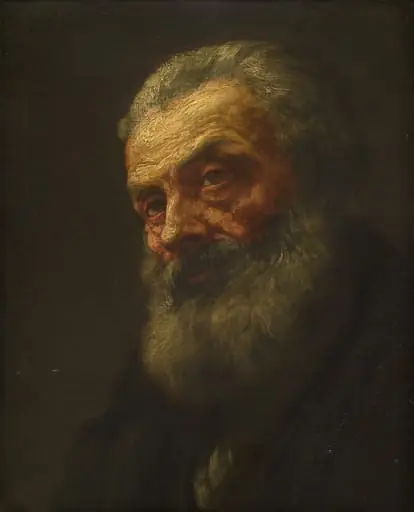
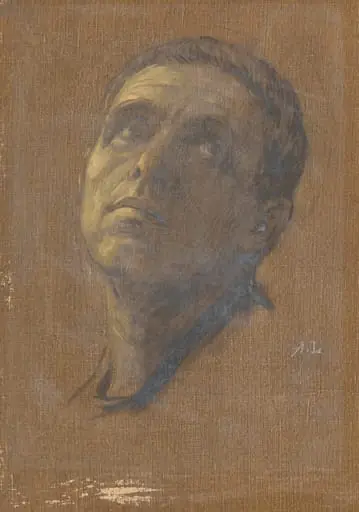
Alphonse Legros (French pronunciation: ; 8 May 1837 – 8 December 1911) was a French, later British, painter, etcher, sculptor, and medallist.

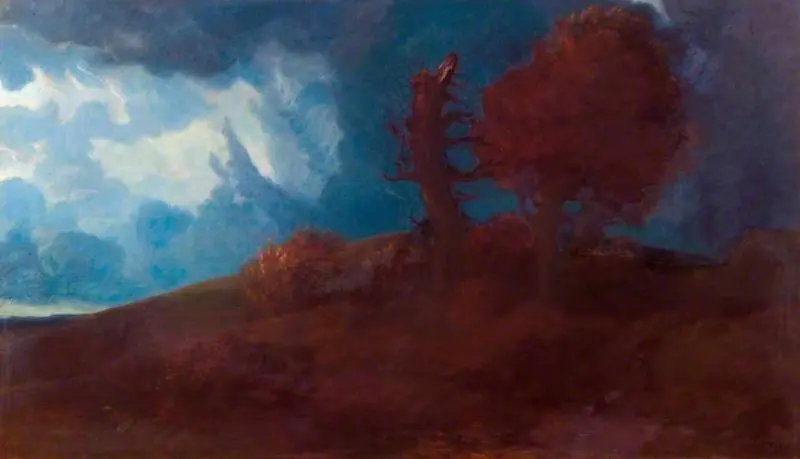
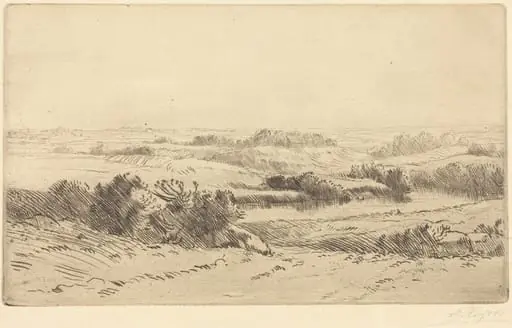 Banks of the Yanne (Les bords de la Yanne)
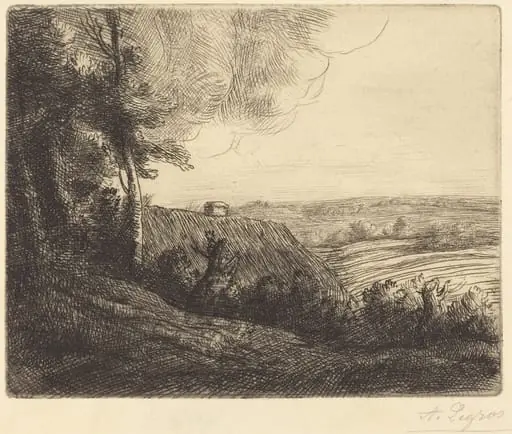 Landscape: Road to Horville (Paysage: Chemin d'Horville)
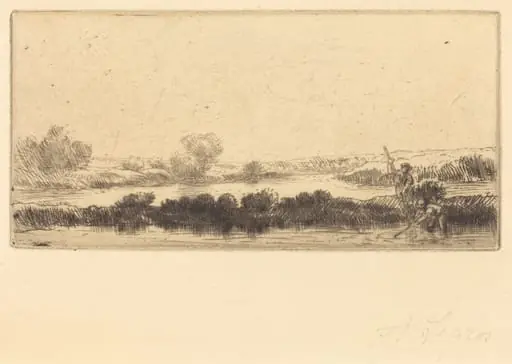 Landscape with Peat-bog; In the Marsh (Paysage des tourbieres; Dans les marais)
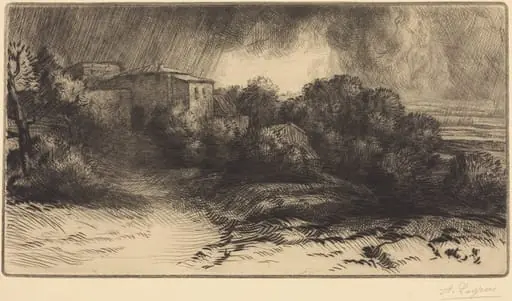 View of a Farm Seen in a Storm (La ferme de Brieux (Effet d'orage))
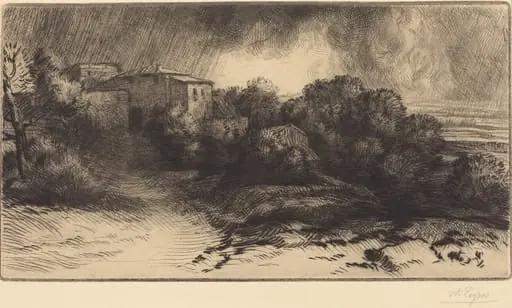 View of a Farm Seen in a Storm (La ferme de Brieux (Effet d'orage))
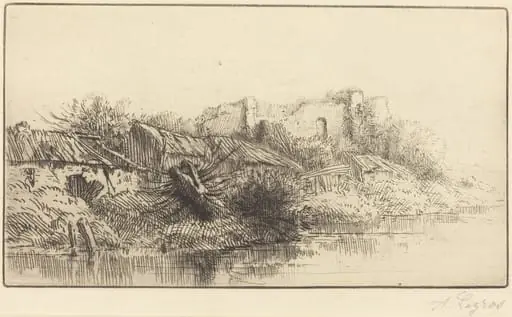 Abandoned Village
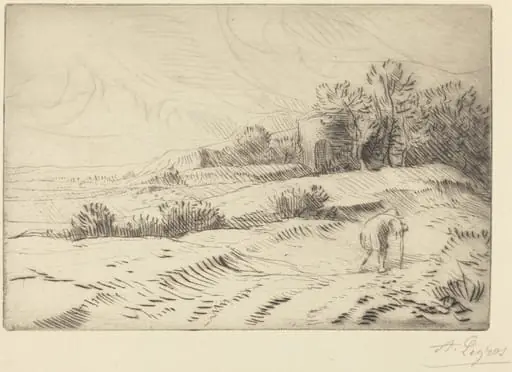 Tower (La tour)