Artwork
Abandoned Village
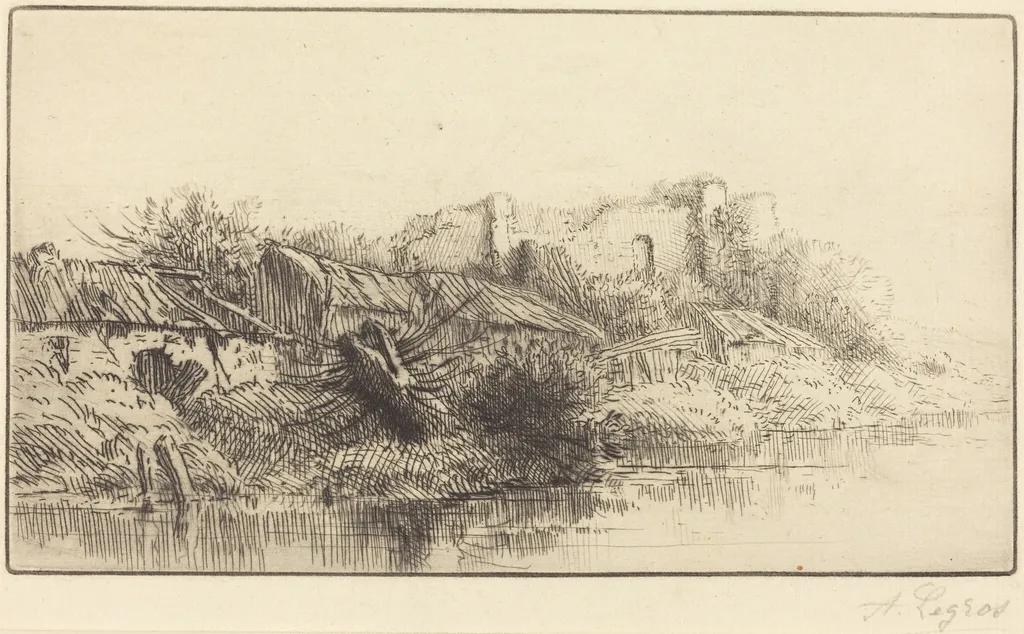
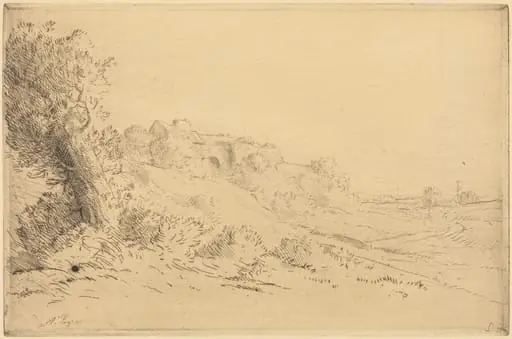
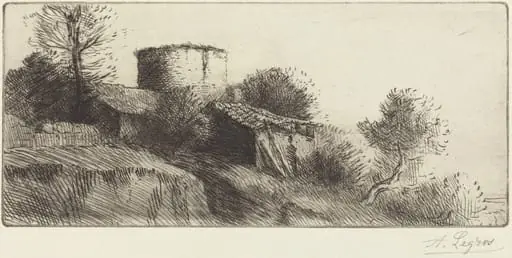
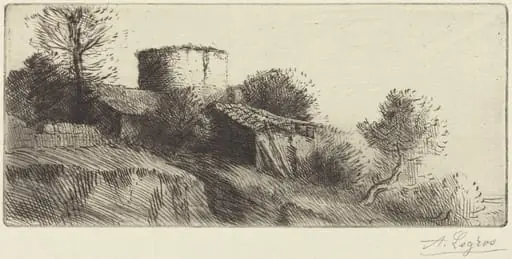
Abandoned Village is an ink print by the Romanticist artist Alphonse Legros. It dates from 1874 and is held in the collection of the National Gallery of Art.
About this work
Overview
Abandoned Village is a print created by Alphonse Legros in 1874, combining etching and drypoint techniques on laid paper.
Subject & Meaning
The print depicts a serene, overgrown village scene, with crumbling buildings partially concealed by foliage. The atmosphere is one of stillness and decay, evoked through the use of suggestive, scratchy lines.
Technique & Style
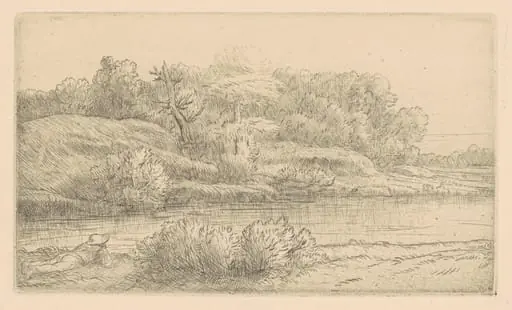
Legros employed a range of etching and drypoint techniques to achieve a textured, expressive effect. The style, characterized by quick, gestural lines, was typical of 19th-century printmaking, where mood and atmosphere took precedence over precise detail.
History & Provenance
Alphonse Legros, a French artist who settled in Britain in 1863, was instrumental in reviving the art of etching in the UK. Abandoned Village reflects his experimentation with etching techniques during this period.
Artist & collection

Artist
Alphonse Legros (French pronunciation: ; 8 May 1837 – 8 December 1911) was a French, later British, painter, etcher, sculptor, and medallist.