Artwork
Wash-house, called "The Washerwomen" (Le lavoir, dite "Les Laveuses")
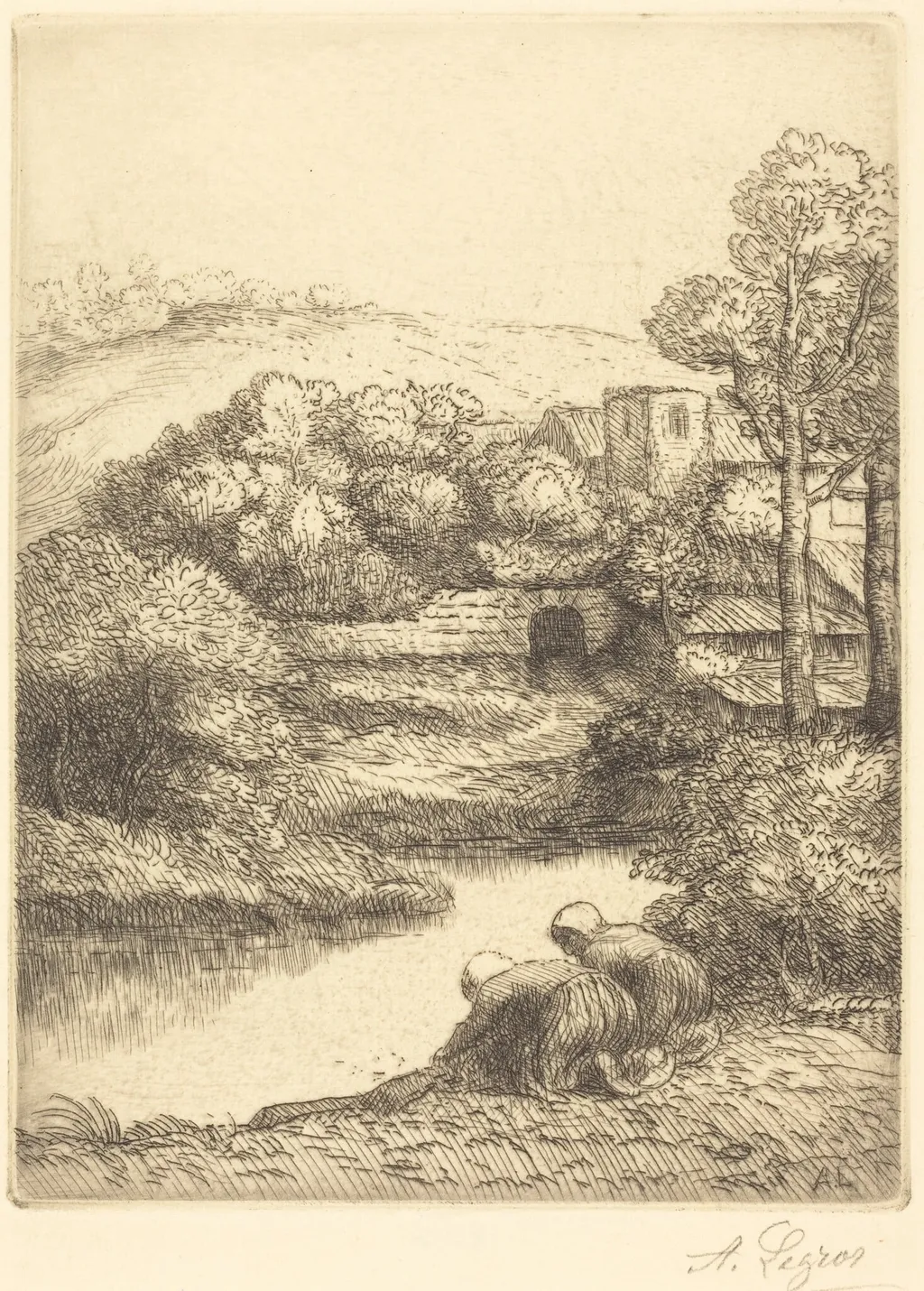
Wash-house, called "The Washerwomen" (Le lavoir, dite "Les Laveuses") is an ink print by the Romanticist artist Alphonse Legros. It dates from 1874 and is held in the collection of the National Gallery of Art.
About this work
Overview
Alphonse Legros, a French artist who became a British citizen, created the etching 'Wash-house, called "The Washerwomen"' in 1874. The work is a representation of women at work in a laundry setting.
Subject & Meaning
The etching depicts two women bent over, scrubbing clothes by a river. The scene is framed by trees and foliage, with a house and church tower visible in the background. The image captures a moment of everyday labor.
Technique & Style
Legros used fine lines to convey texture, rendering details such as the women's hands and tree bark. The black and white medium is enlivened by the level of detail, creating a sense of realism.
Artist & collection

Artist
Alphonse Legros (French pronunciation: ; 8 May 1837 – 8 December 1911) was a French, later British, painter, etcher, sculptor, and medallist.

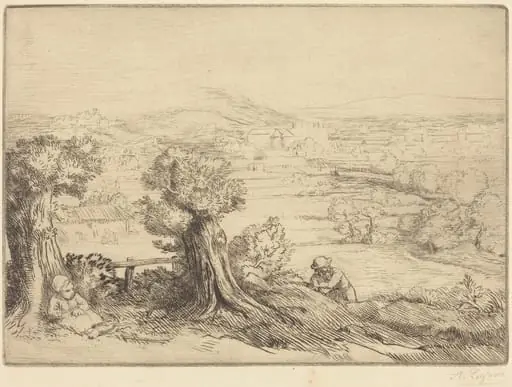 Remembrance of a Valley in Bourgogne (Souvenir d'une vallee en Bourgogne)
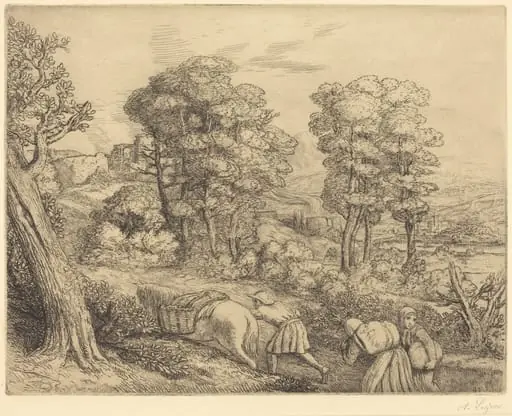 Return to the Farm (Le retour a la ferme)
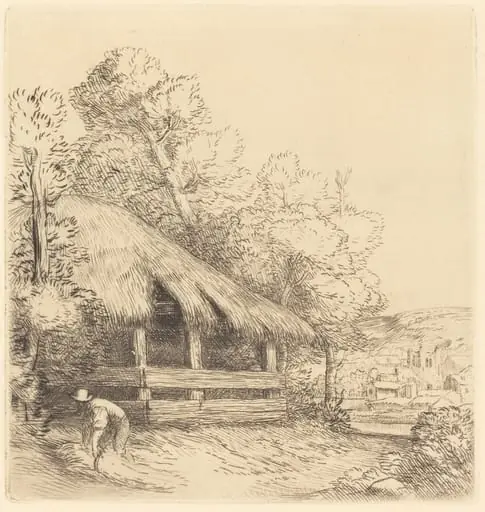 Little Shelter (Le petit hangar)
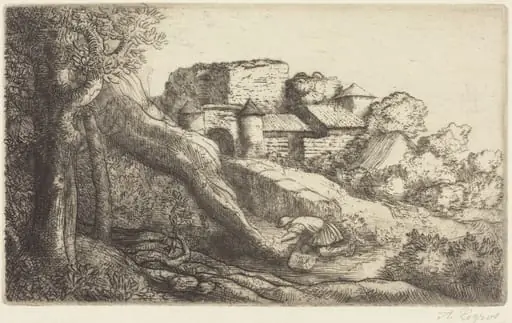 Little Burner of Grass (Le petit bruleur d'herbe)
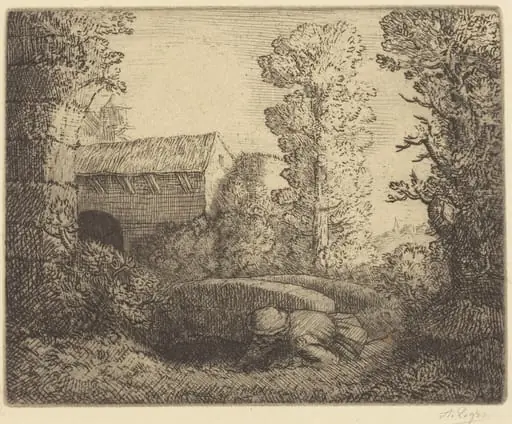 Bridge at the Mill (Le pont du moulin)
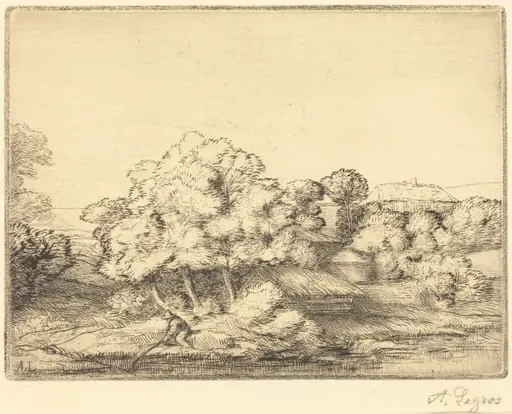 Hamlet near the Lake (Le hameau pres du lac)
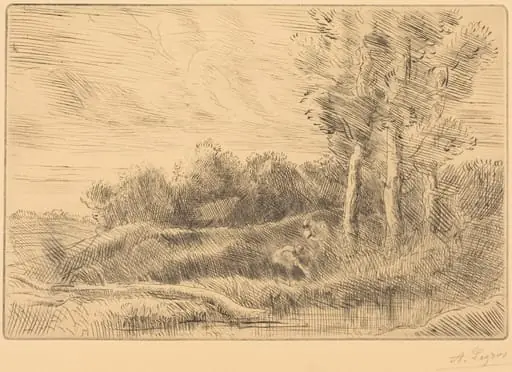 The House of the Well (La maison du puits)
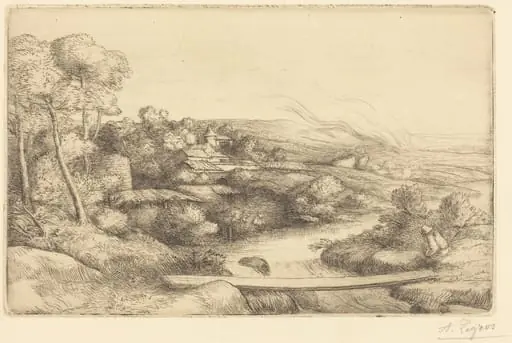 Footbridge (La passerelle)
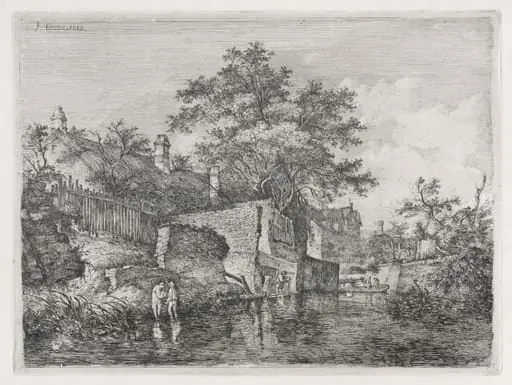 Front of the New Mills
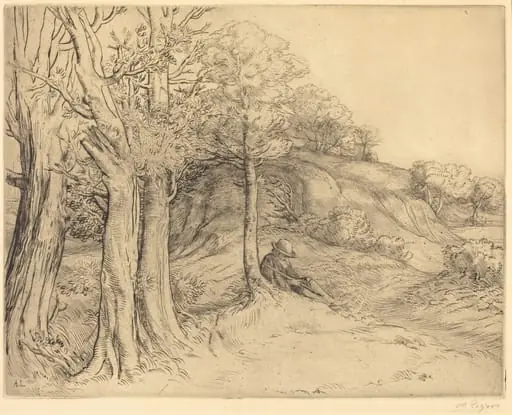 Solitude (Solitude (Paysage))