Artwork
Tancred and Erminia
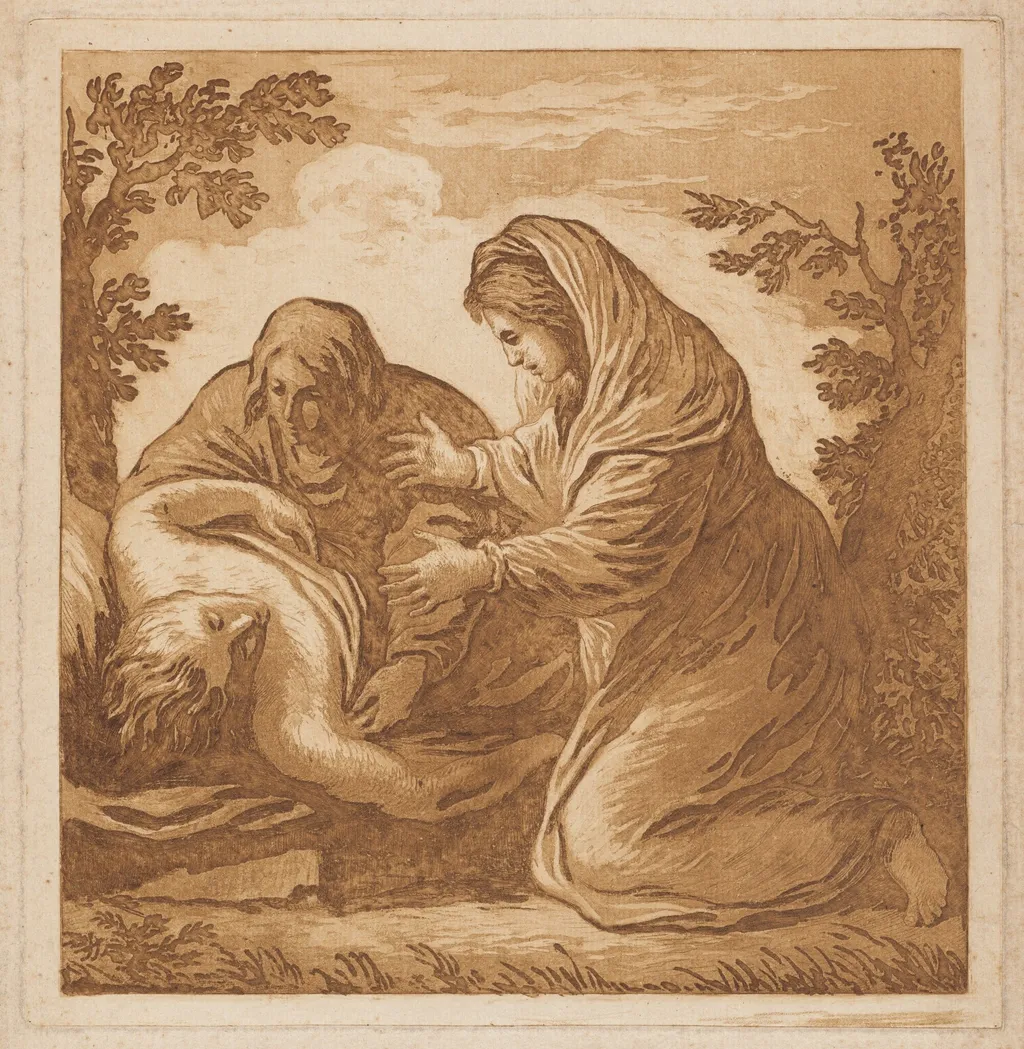
Tancred and Erminia is an ink print by the Romanticist artist Pierre Lelu. It is held in the collection of the National Gallery of Art.
About this work
Overview
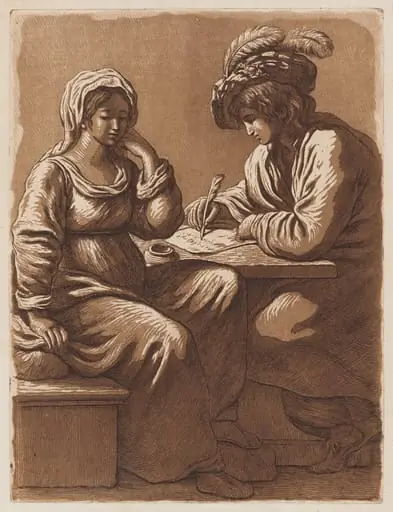
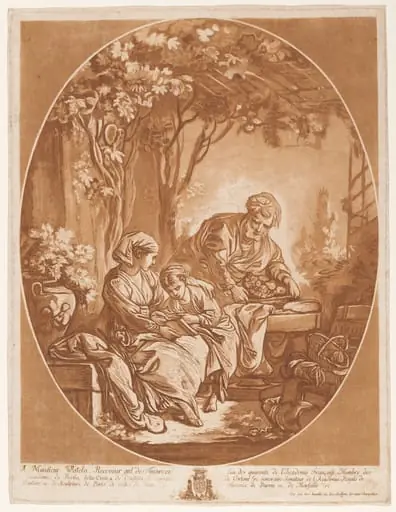
Pierre Lelu’s 1781 aquatint titled *Tancred and Erminia* is a brown‑toned print executed on laid paper. The work is part of the collection of the National Gallery of Art in Washington, D.C. It presents a quiet, intimate scene rendered in the soft, muted palette characteristic of late‑eighteenth‑century printmaking.
Subject & Meaning
The image depicts two figures seated amid a lightly wooded, grassy setting. The figure on the left reclines, swathed in a heavy cloak, while the companion on the right kneels nearby, dressed in flowing garments and a headscarf. The composition suggests a moment of repose or private conversation, echoing the romantic narrative of the medieval lovers Tancred and Erminia.
Technique & Style
Lelu employed the aquatint process, allowing him to achieve gradual tonal transitions that model form without relying on line. The brown ink and the smooth gradations of light and shadow produce a chiaroscuro effect, softening edges and giving the foliage and drapery a velvety appearance. Such tonal control was a hallmark of printmaking in the final decades of the 1700s.
History & Provenance
Created in 1781, the print entered the National Gallery of Art’s holdings through acquisition (specific acquisition details are not recorded in the available sources). Its survival on laid paper, a textured support common before the widespread use of modern rag paper, attests to the durability of Lelu’s technique and the care of subsequent collectors.
Artist & collection