Artwork
Saint Luke
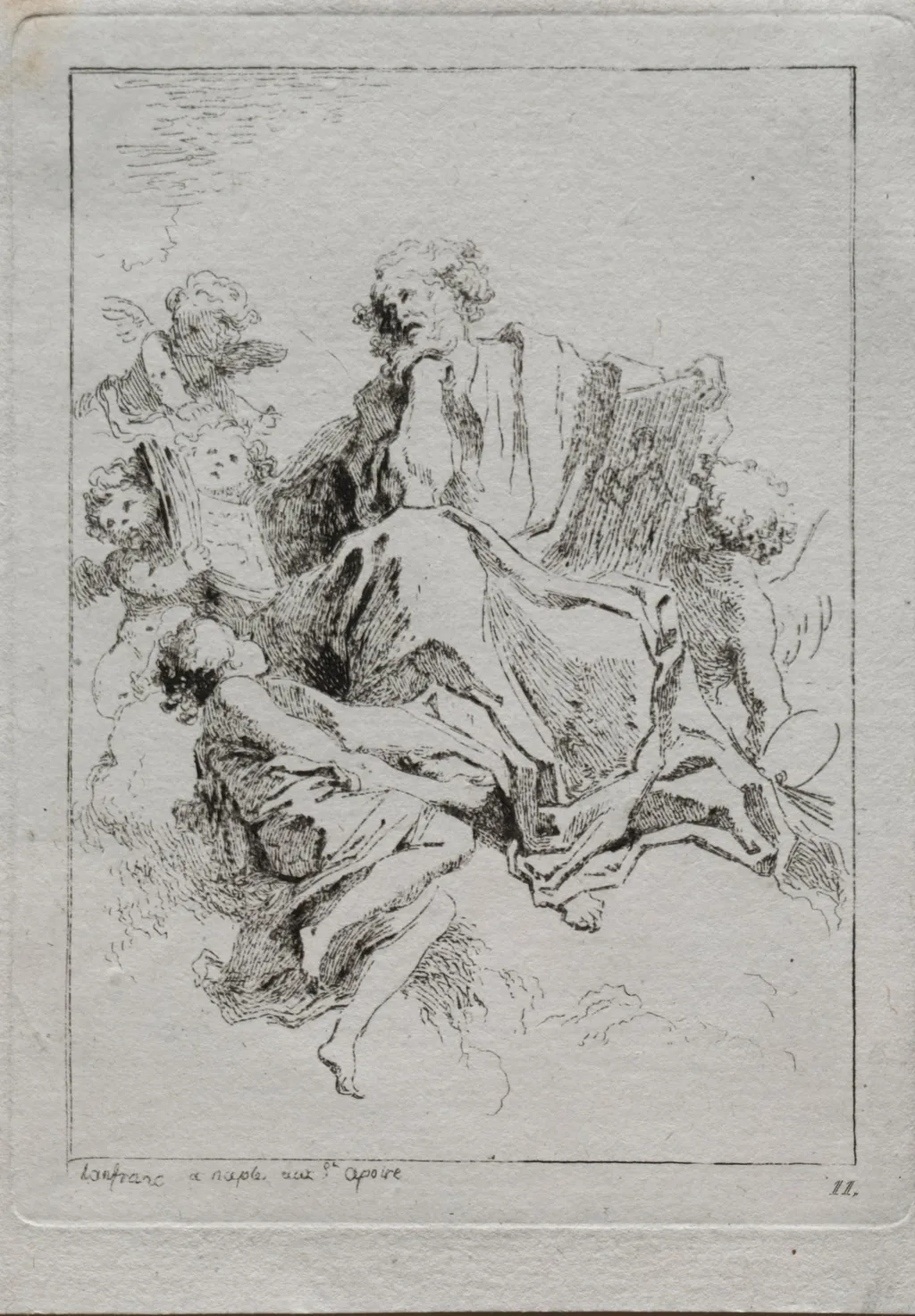
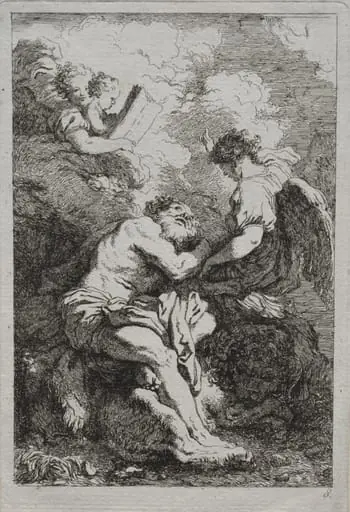
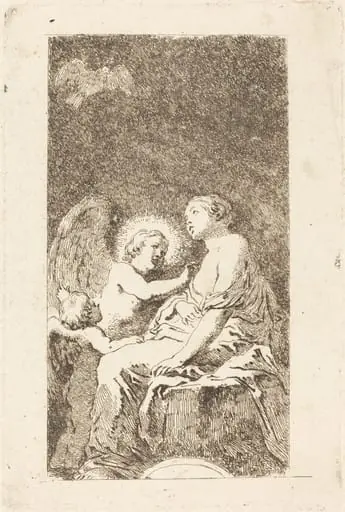
Saint Luke is a print by the Romanticist artist Jean Honoré Fragonard. It dates from 1764 and is held in the collection of the Cleveland Museum of Art.
About this work
Overview
Created around 1764, this drawing by Jean-Honoré Fragonard depicts Saint Luke in a moment of divine inspiration.
Created around 1764, this drawing by Jean-Honoré Fragonard depicts Saint Luke in a moment of divine inspiration. Executed in chalk or ink with strong tonal contrasts, the work is a preparatory study, not a finished painting. It resides in The Cleveland Museum of Art’s collection, where its intimate scale and spontaneous execution reflect the artist’s interest in capturing transient, emotional moments.
Subject & Meaning
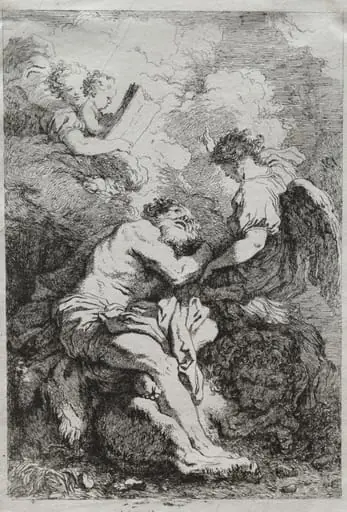
The scene portrays Saint Luke, traditionally regarded as the evangelist and patron saint of artists, receiving divine guidance. A winged figure, interpreted as an angel, hovers above him, offering a scroll—symbolizing the Gospel he will write. The saint’s reclining, half-draped form suggests vulnerability and receptivity, emphasizing the quiet, personal nature of revelation rather than grandeur.
Technique & Style
Fragonard employed rapid, fluid lines and dense shading to model form and suggest movement. The angel’s wings and the drapery are rendered with bold contrasts, using chiaroscuro to create volume. The blurred, smudged features of the angel’s face dissolve boundaries between the earthly and the ethereal, reinforcing the dreamlike atmosphere and the immediacy of the artist’s hand.
History & Provenance
The drawing likely originated as a study for a larger religious composition, though no final painting is known to exist. It entered The Cleveland Museum of Art’s collection through established acquisitions of 18th-century French drawings, valued for its expressive quality and insight into Fragonard’s working process during his early career.
Context
In mid-18th-century France, religious subjects remained relevant in academic circles despite the rising popularity of secular themes. Fragonard, though later known for Rococo intimacy and genre scenes, engaged with traditional iconography early on. This study reflects his training under artists who emphasized draftsmanship and emotional expression within sacred narratives.
Legacy
This work exemplifies Fragonard’s ability to infuse religious imagery with psychological nuance and tactile immediacy. Though not widely exhibited, it contributes to understanding his artistic development and the fluid boundary between preparatory sketches and finished works in 18th-century French drawing practice.
Artist & collection

Artist
Jean-Honoré Fragonard was born on 5 April 1732 in Grasse, the son of a glover, and moved with his family to Paris in 1738.