Artwork
Cap de studiu

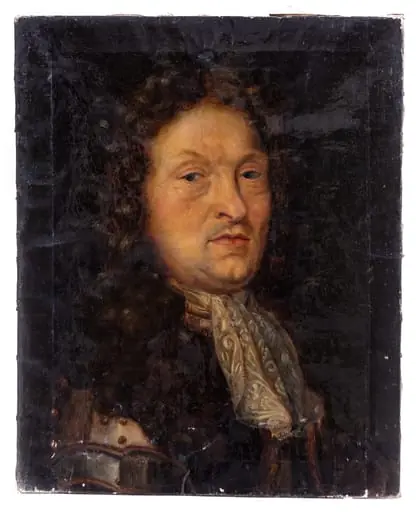
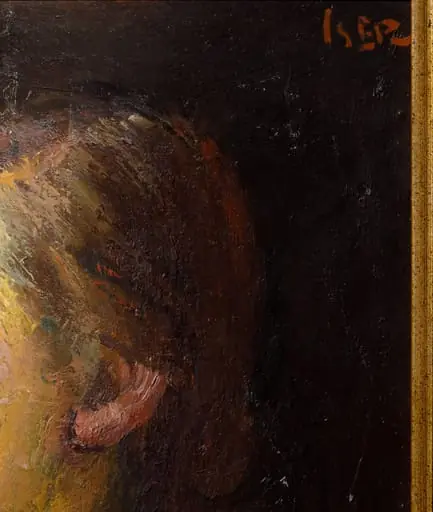
Cap de studiu is an unspecified painting by Gheorghe Lemeni. It is held in the collection of the Moldova National Museum Complex. This small-scale study depicts a close-up of a male face, centered on the forehead and hairline.
About this work
Overview
The work appears intended as an observational exercise rather than a finished portrait, emphasizing form and light over narrative or identity.
This small-scale study depicts a close-up of a male face, centered on the forehead and hairline. The background is a uniform dark brown, eliminating contextual distractions. The work appears intended as an observational exercise rather than a finished portrait, emphasizing form and light over narrative or identity. The restrained composition directs attention solely to the texture and modeling of skin and hair.
Subject & Meaning
The subject is unidentified, with no indication of name, status, or emotion. The neatness of the hair and the calm expression suggest a deliberate, composed pose. The focus on the upper face—forehead, temples, and hairline—implies an interest in anatomical structure and the transition between skin and hair. The absence of eyes or mouth reinforces its function as a study of surface and volume rather than psychological depth.
Technique & Style
The artist employs soft chiaroscuro to model the face, using subtle gradations of light to suggest rounded forms without harsh contrasts. The skin appears smooth, rendered with delicate brushwork that avoids texture or detail beyond what is necessary for volume. The dark, neutral background enhances the three-dimensionality of the face, isolating it as a study in light and form rather than a portrait in context.
History & Provenance
The work’s origin is undocumented, with no known record of its commission, owner, or exhibition history. Its modest scale and focused subject suggest it was created in a private studio setting, possibly as part of an artist’s training or preparatory work. It lacks signatures or inscriptions, making attribution and dating speculative, though its technique aligns with early modern observational practices.
Context
In the context of Renaissance and Baroque studio practice, such studies were common tools for mastering human anatomy and light behavior. Artists often produced these focused renderings to refine their ability to capture form under controlled conditions. This piece reflects a tradition of empirical observation, where the face became a subject of technical inquiry rather than a vessel for social representation.
Legacy
Though not widely known or exhibited, this study exemplifies the quiet, methodical side of artistic training that underpinned larger works. Its survival suggests a value placed on process over product, preserving the artist’s engagement with fundamental visual principles. Such studies, though unassuming, contributed to the development of naturalistic representation in Western art.
Artist & collection
Artist
Romanian painter Gheorghe Lemeni focused on portraits and religious figures in the mid-19th century.