Artwork
Human Suffering
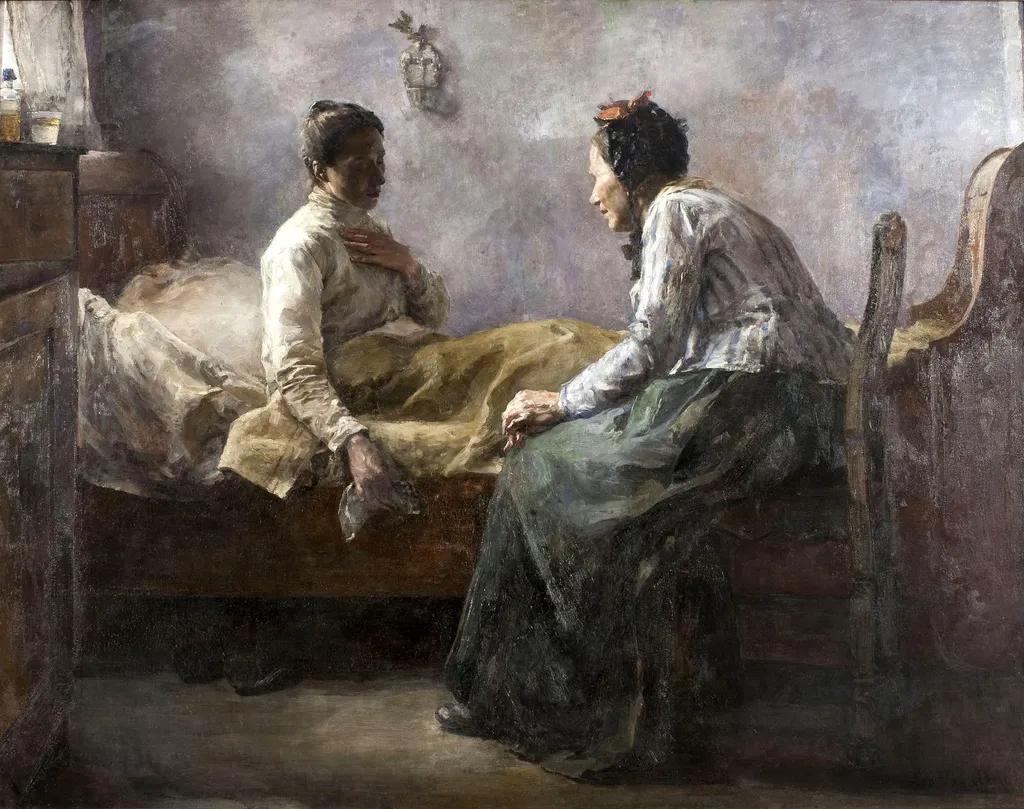
Human Suffering is an unspecified painting by the Post-Impressionist artist Leo Van Aken. It dates from 1896 and is held in the collection of the Museu Nacional d'Art de Catalunya.
About this work
Overview
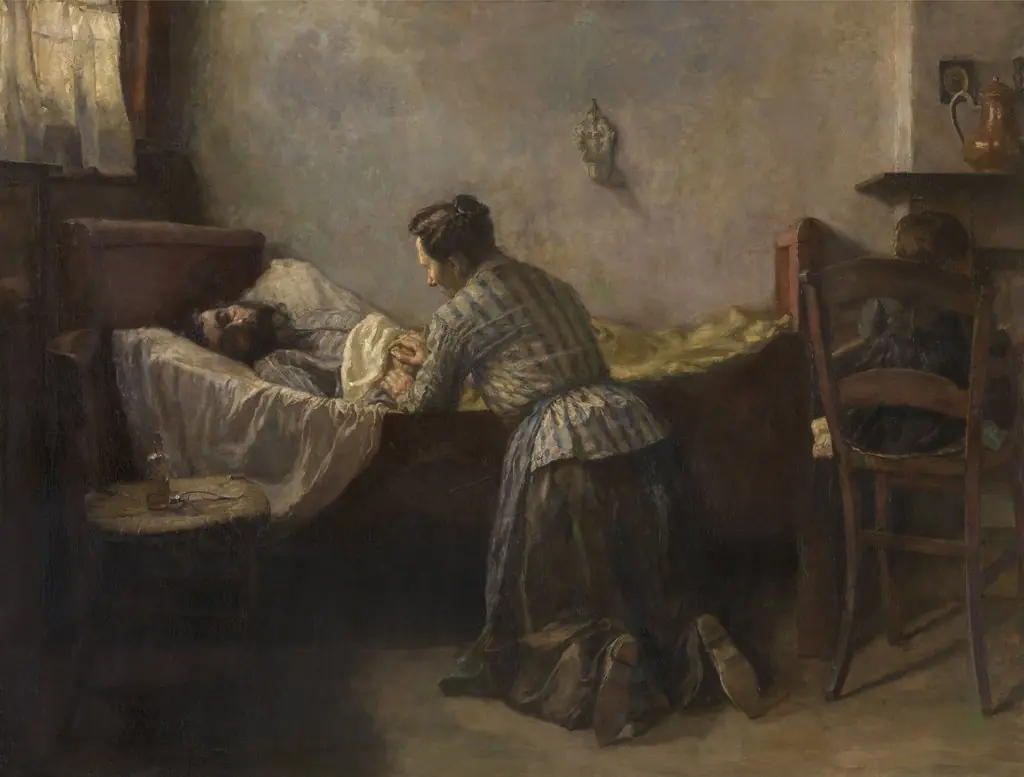
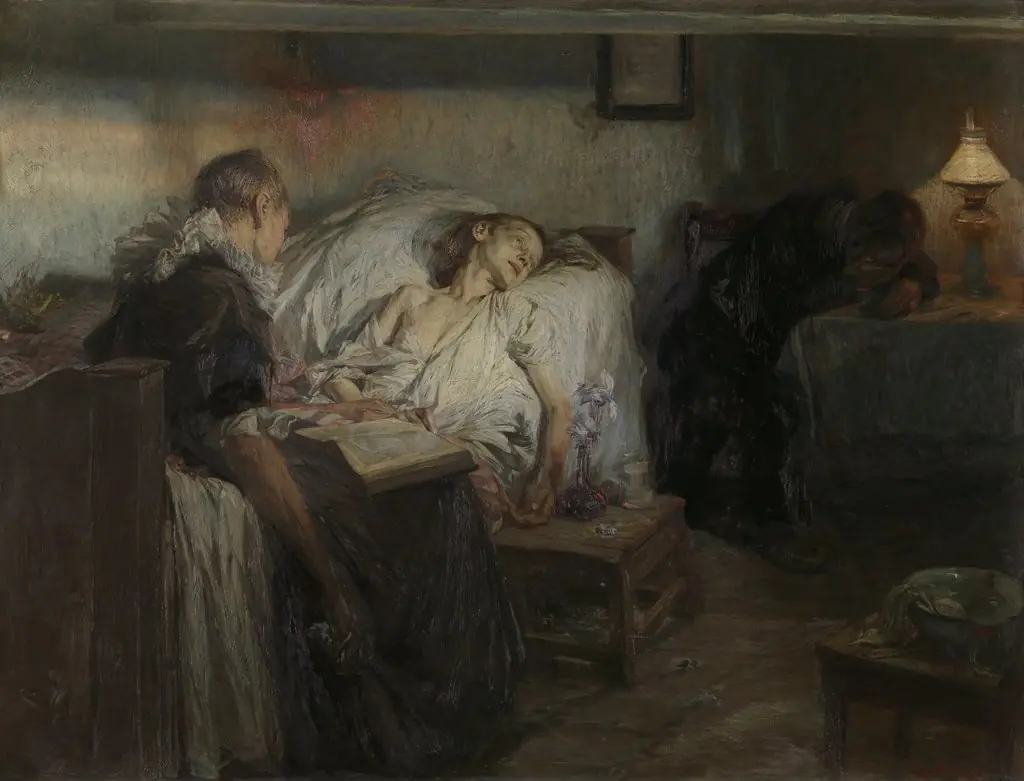
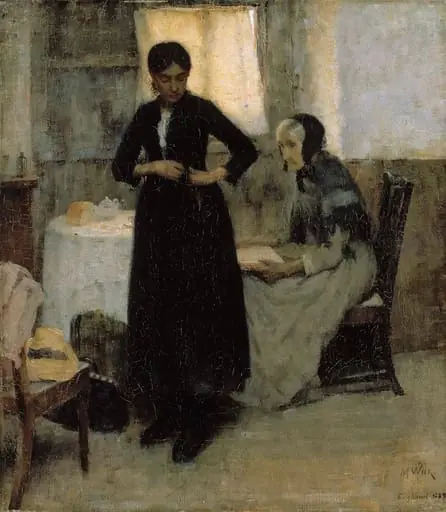
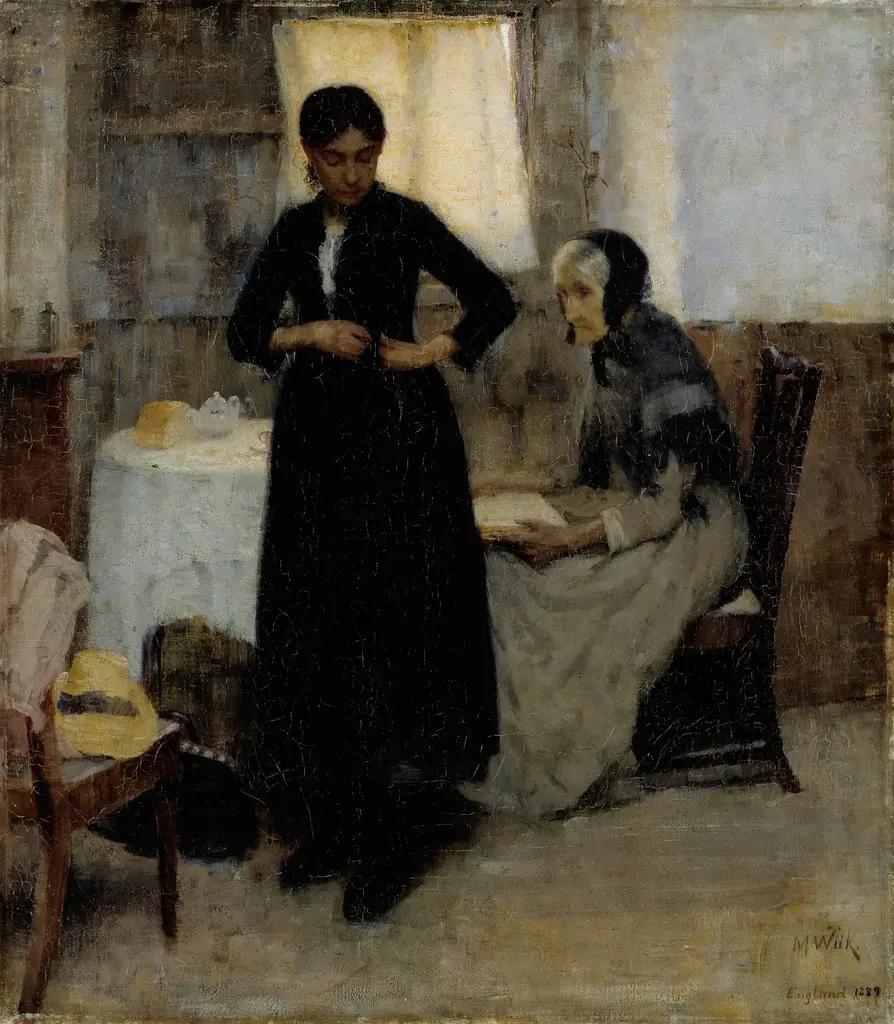
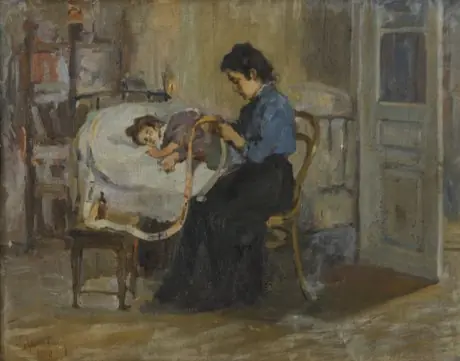
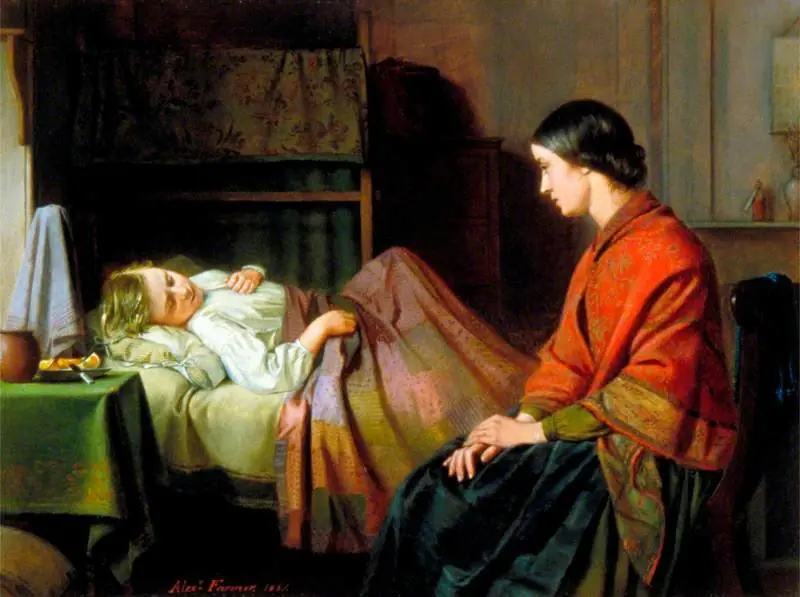
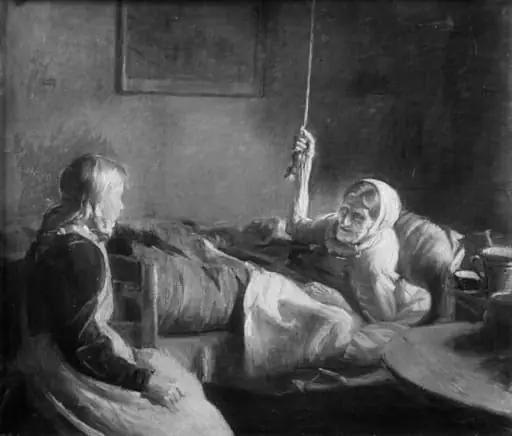
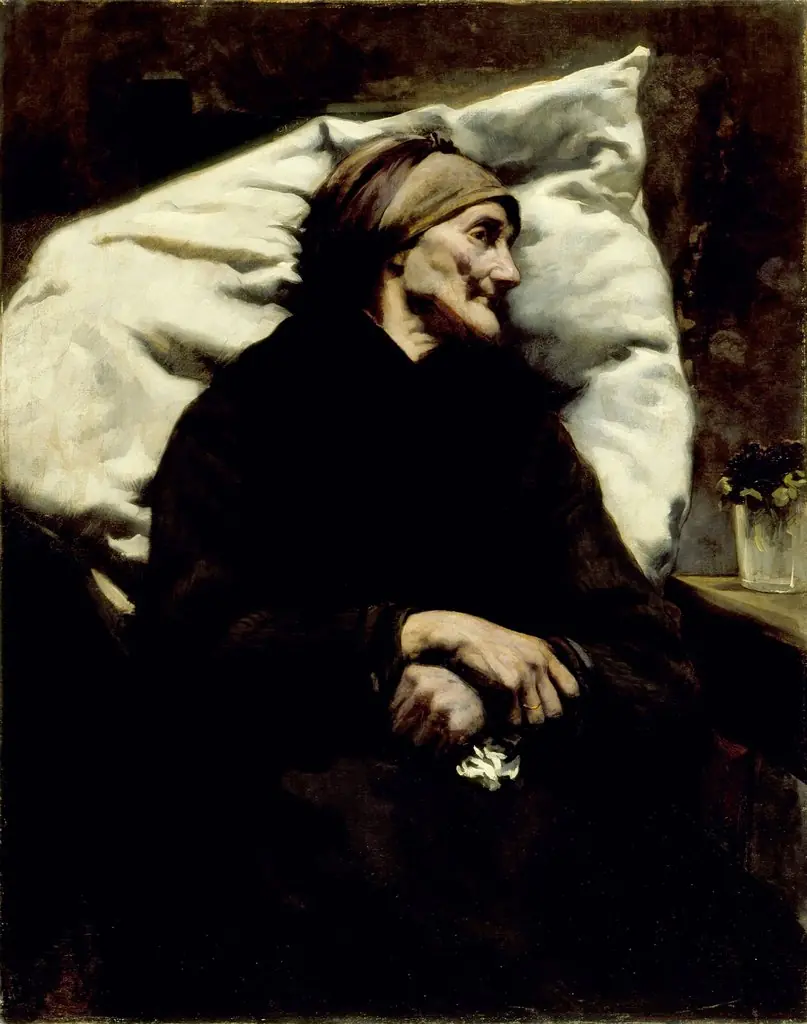
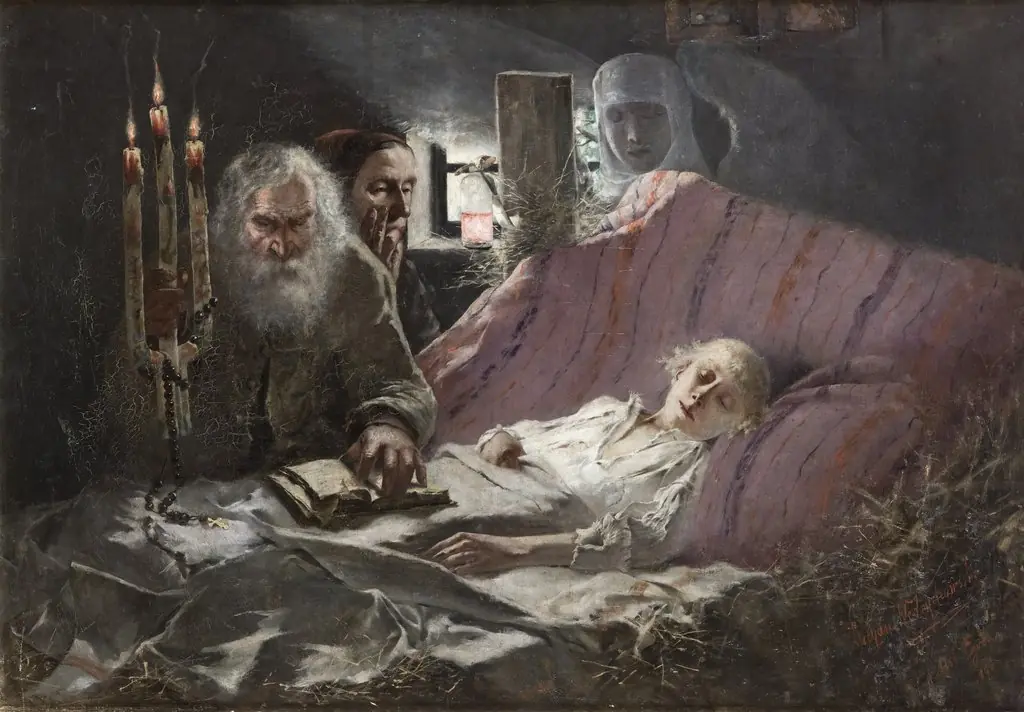
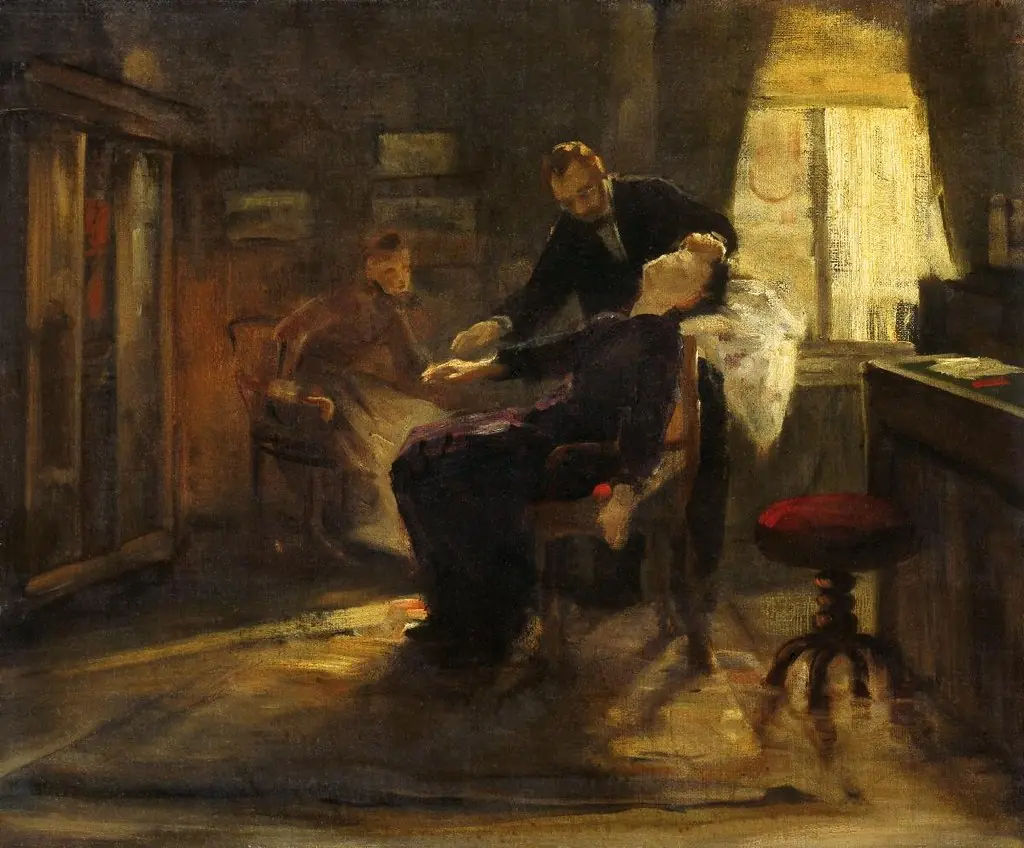
Painted in 1896 by Leo Van Aken, Human Suffering is a quiet, intimate scene depicting two figures in a modest interior. The work belongs to the collection of the Museu Nacional d'Art de Catalunya, where it is presented as an example of late 19th-century Spanish realism. Its subdued palette and restrained composition reflect a focus on emotional atmosphere over dramatic action.
Subject & Meaning
The painting portrays a man seated on a bed, one hand pressed to his chest, and a woman seated nearby, her gaze fixed on him. Their postures suggest illness or impending loss, though no explicit narrative is given. The absence of identifiers or context invites interpretation centered on vulnerability and silent companionship in moments of physical decline.
Technique & Style
Van Aken employs muted earth tones and soft lighting to create a somber mood. The figures are rendered with careful attention to form, but brushwork remains restrained, avoiding theatricality. The room’s simple wooden floor and pale walls frame the subjects without distraction, emphasizing psychological weight over environmental detail.
History & Provenance
The painting entered the Museu Nacional d'Art de Catalunya’s collection in the early 20th century, likely through acquisition or donation following Van Aken’s death. Little is documented about its exhibition history prior to its inclusion in the museum’s permanent holdings, though its preservation suggests recognition of its emotional resonance within Catalan art circles.
Context
Created during a period when Spanish art increasingly turned toward social and domestic realism, Human Suffering aligns with broader trends of depicting everyday hardship. Unlike grand historical or religious scenes, Van Aken focuses on private, unremarkable moments, reflecting a shift in artistic priorities toward the human condition in ordinary settings.
Legacy
Though not widely known outside regional collections, the painting endures as a quiet testament to the expressive potential of restraint. Its influence is subtle, contributing to a lineage of Catalan realist works that prioritize emotional authenticity over spectacle, influencing later generations focused on interiority in painting.
Own this work as a print
Artist & collection