Artwork
Battery, Malakoff
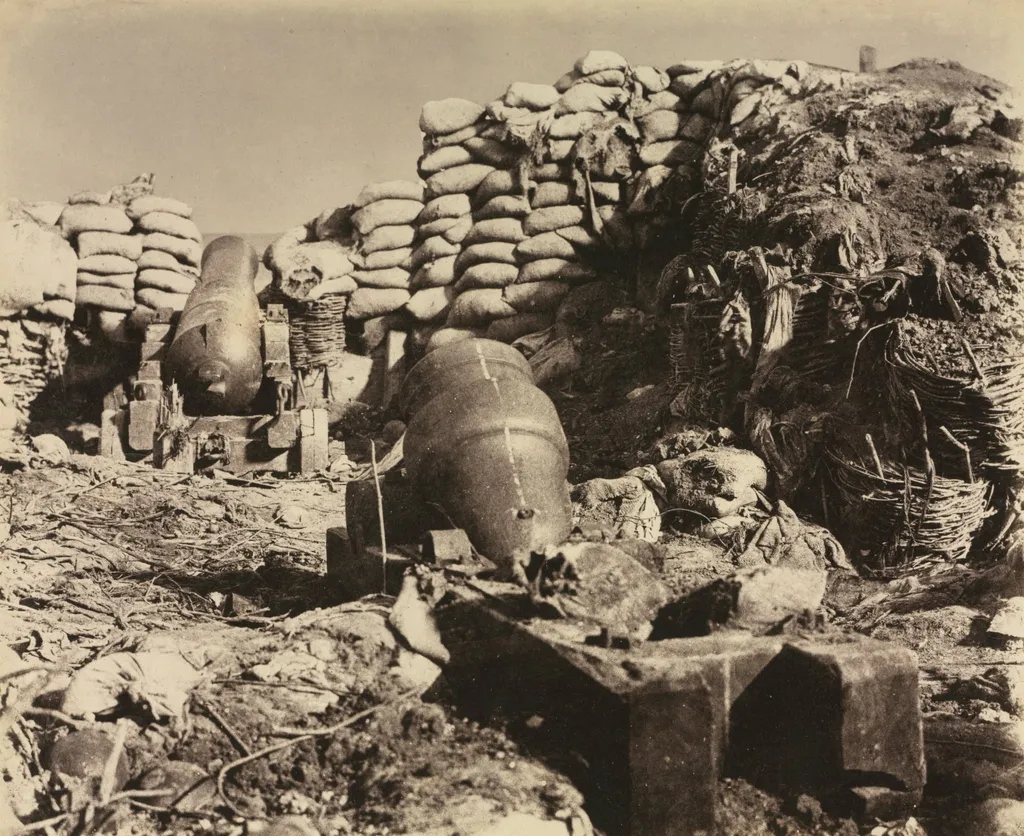
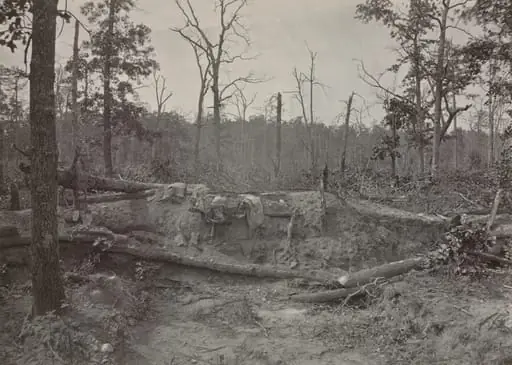
Battery, Malakoff is a photography by the Impressionist artist Leon-Eugéne Méhédin. It dates from 1855 and is held in the collection of the Cleveland Museum of Art.
About this work
You can learn more about this style by looking at the work of artist Leon-Eugéne Méhédin (French, 1828–1905).
This painting shows a desolate scene with cannons standing like sentinels.
The image records the aftermath of a siege on the fortifications at Malakoff. It's interesting that this work is a collaboration between two people, which is rare. They documented the Crimean War, making this a unique historical record.
You can learn more about this style by looking at the work of artist Leon-Eugéne Méhédin (French, 1828–1905).
Overview
This 1855 photograph, titled Battery, Malakoff, is a varnished salt print made from a waxed paper negative. It results from the only known collaboration between French photographers Léon-Eugène Méhédin and Colonel Jean-Charles Langlois. Created during the Crimean War, the image captures a ruined artillery position near Sebastopol, offering a rare visual record of battlefield aftermath rather than active combat.
Subject & Meaning
The scene depicts abandoned cannons surrounded by shattered earthworks, scattered debris, and remnants of sandbags and twig-reinforced revetments. No human figures are present, yet the emptiness speaks to the violence that preceded it. The composition isolates military hardware amid ruin, suggesting abandonment and the quiet weight of loss, turning the landscape into a silent witness to war's toll.
Technique & Style
Using the waxed paper negative process, the photographers achieved a range of tonal contrasts that heighten the desolation. The varnished salt print surface adds a slight sheen, preserving fine detail in shadows and highlights. Their framing emphasizes stillness and texture—crumbling earth, rusted metal, and woven brushwork—avoiding dramatic action in favor of somber, documentary precision.
History & Provenance
The photograph was produced during the Crimean War, a conflict notable for its early use of photography in war reporting. Though battlefield action was too dynamic for the slow exposure times of the era, post-battle sites like Malakoff were accessible. This print entered the collection in 1998, cataloged as the sole surviving record of Méhédin and Langlois’s joint work.
Context
The Crimean War marked the first large-scale photographic documentation of military conflict. Photographers like Méhédin and Langlois focused on ruins, camps, and fortifications, as moving subjects remained beyond technical reach. Their images served both military record-keeping and public awareness, shifting how war was perceived through visual media, even if indirectly.
Legacy
Battery, Malakoff stands as an early example of war photography’s capacity to convey absence as testimony. Its restrained aesthetic influenced later documentary traditions, prioritizing evidence over spectacle. Though not widely exhibited in its time, it remains a key artifact in the history of photographic journalism and the evolving representation of conflict.
Artist & collection

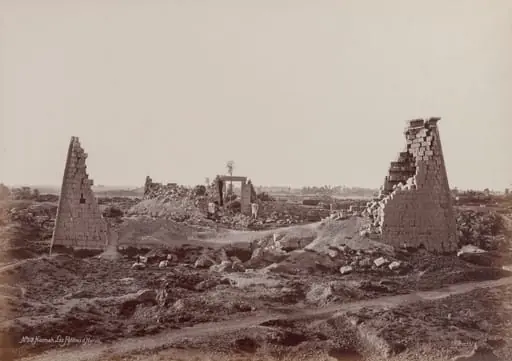 Karnak, Les Pylônes d'Horus
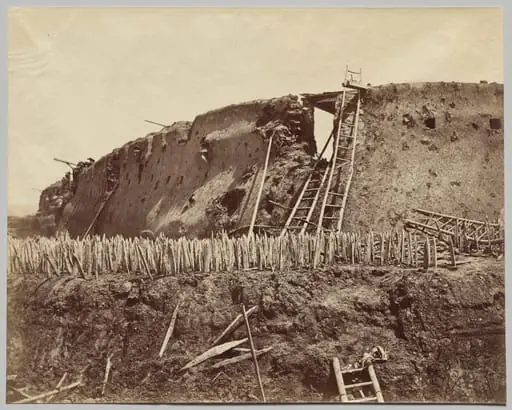 Angle of Taku Fort at which the French entered
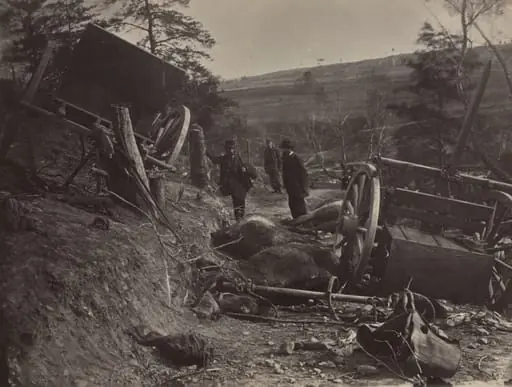 Effects of a Shell Explosion, Fredericksburg, VA.
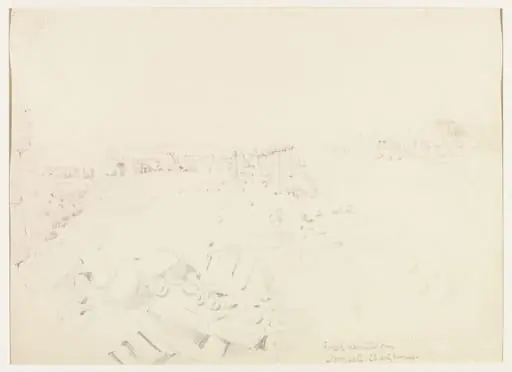 Gerash from N Gate
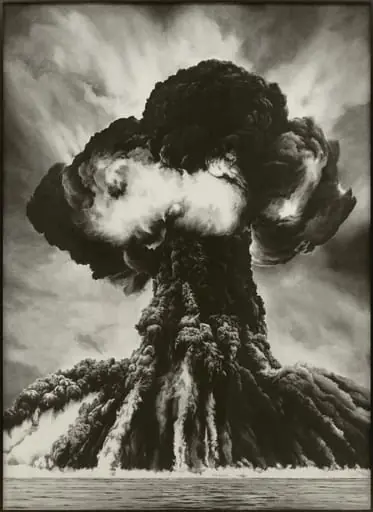 Untitled
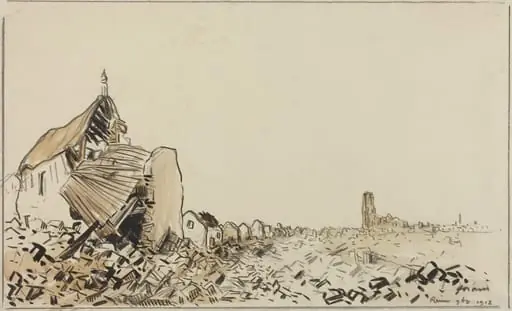 Reims 9bre 1918
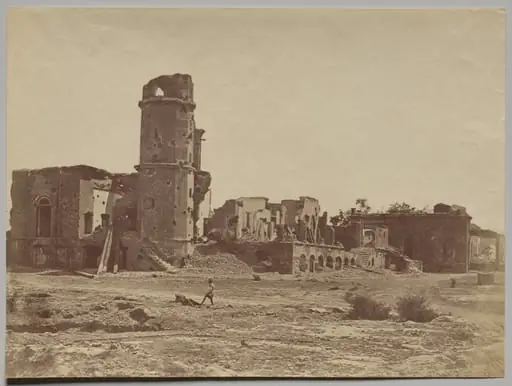 The Residency, Taken from the Redan Battery
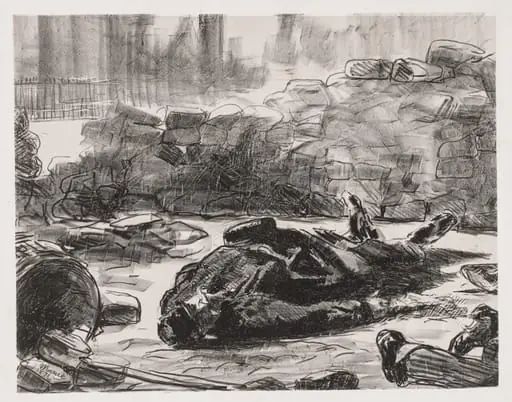 Civil War (Scene of the Commune of Paris)
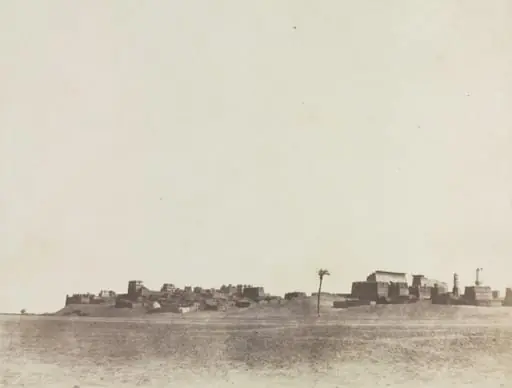 View of Luxor
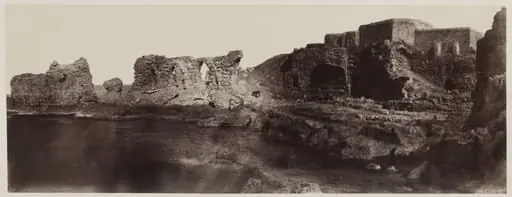 Kaalat el Athlit, Syria, View from the Seaside
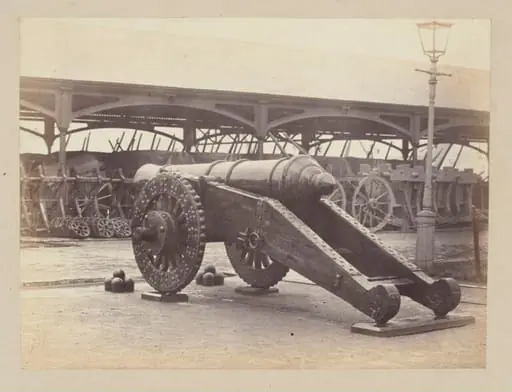 Canon on Display
 Battlefield of New Hope Church, Georgia, No. 2