Artwork
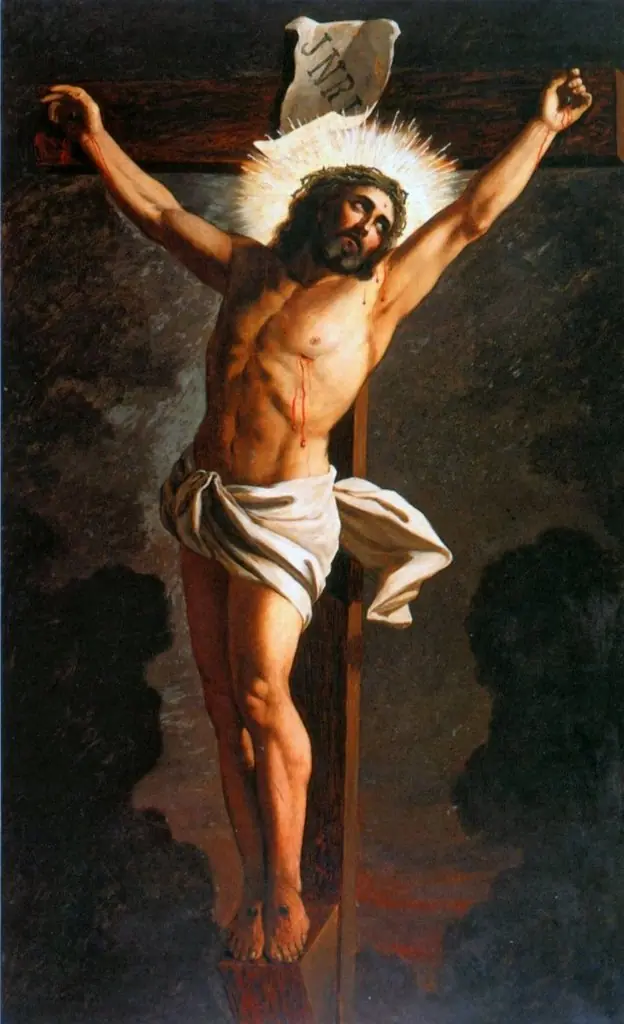
Wawel Crucifix (Queen Hedwig’s Crucifix).
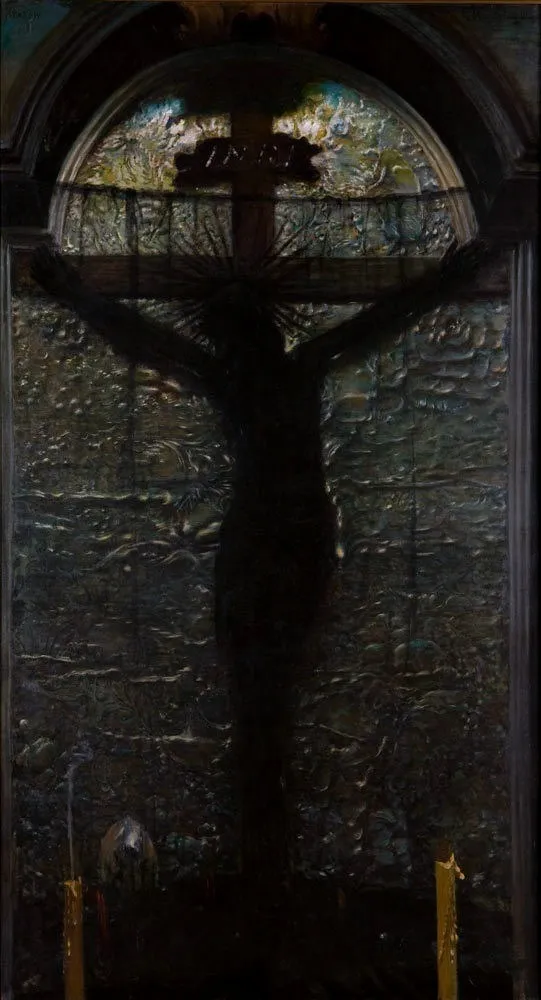
Wawel Crucifix (Queen Hedwig’s Crucifix). is an oil painting by Leon Wyczółkowski. It dates from 1898 and is held in the collection of the National Museum in Kraków.
About this work
Overview
Wawel Crucifix (Queen Hedwig’s Crucifix) is a 1898 oil painting by Leon Wyczółkowski, a prominent Polish artist and educator associated with the Young Poland movement and Polish Realism. The work is characterized by its realistic depiction of a religious theme.
Subject & Meaning
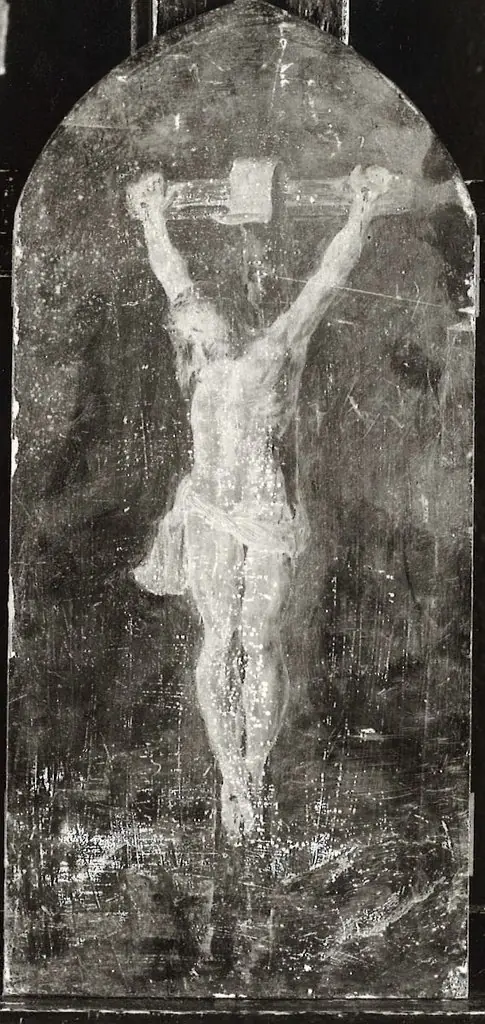
The painting portrays a somber and contemplative scene of Jesus Christ on the cross, set against a stone wall with an arched window featuring abstract, colorful shapes resembling stained glass. Two tall, yellow candles flank the crucifix, enhancing the solemn atmosphere.
Technique & Style
Wyczółkowski employed chiaroscuro to create depth and drama, with strong contrasts between light and dark accentuating the emotional intensity of the scene. The realistic style aligns with the artist's broader oeuvre and his association with Polish Realism.
History & Provenance
Created in 1898, the painting is part of the collection at the National Museum in Kraków. Wyczółkowski, a professor at the Jan Matejko Academy of Fine Arts (1895-1911) and founding member of the Society of Polish Artists 'Sztuka,' was a leading figure in Polish artistic circles during this period.
Artist & collection
Artist
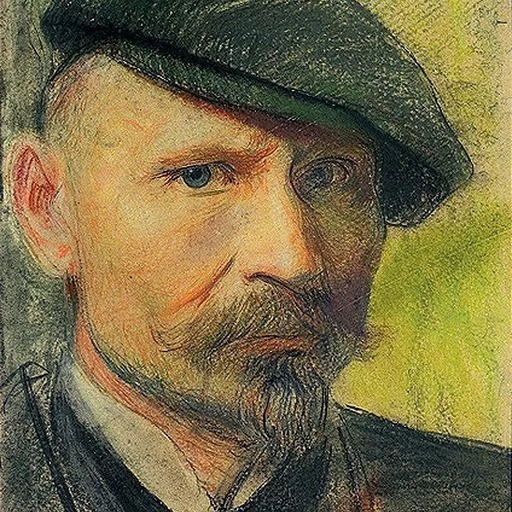
Leon Jan Wyczółkowski (Polish: ; 11 April 1852 – 27 December 1936) was a Polish painter and educator who was one of the leading painters of the Young Poland movement, as well as the principal representative of Polish Realism in art of the…