Artwork
Untitled
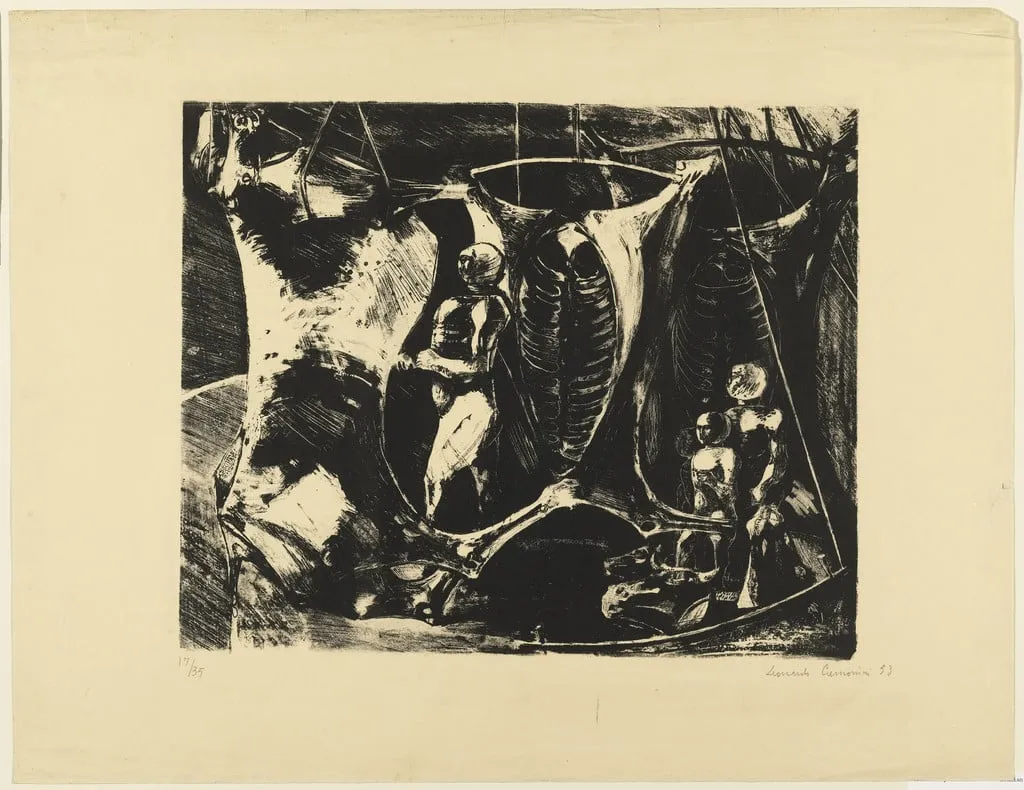
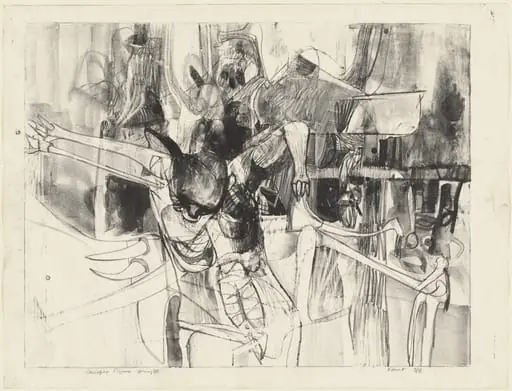
Untitled is an ink print by Leonardo Cremonini. It dates from 1953 and is held in the collection of the Museum of Modern Art.
About this work
Overview
The medium—lithography—allowed the artist to translate spontaneous marks into a printed image, preserving the immediacy of the drawing.
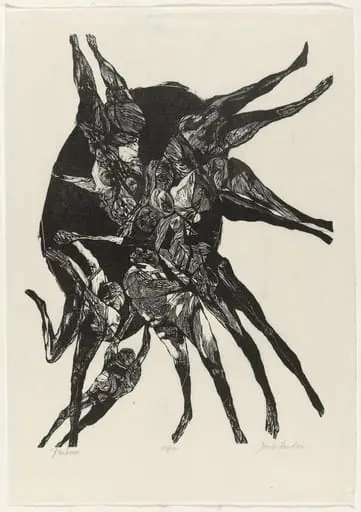
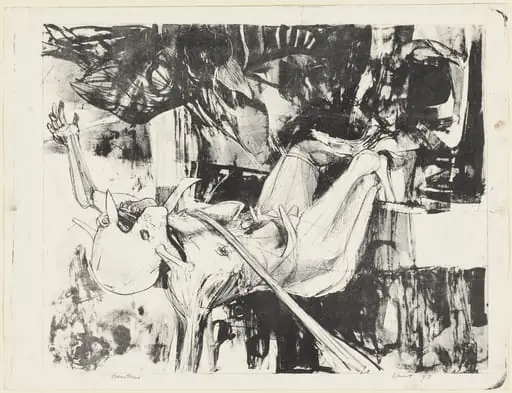
Created in 1953, this black-and-white lithograph by Leonardo Cremonini is part of The Museum of Modern Art’s collection. It depicts a dense, interwoven group of figures in motion, rendered with coarse, gestural lines. The composition conveys a sense of physical strain and collective effort, without clear narrative context. The medium—lithography—allowed the artist to translate spontaneous marks into a printed image, preserving the immediacy of the drawing.
Subject & Meaning
The figures appear entangled in a shared labor, their bodies twisted and overlapping as if burdened by large, curved forms—possibly baskets or sacks. Faces are obscured, emphasizing physical exertion over individual identity. The lack of spatial depth and ambiguous objects suggests a universal theme of human toil rather than a specific event. The scene evokes endurance and collective struggle, stripped of detail to focus on movement and weight.
Technique & Style
Cremonini employed lithography to achieve a rough, tactile surface, using dense, overlapping lines that blur and smudge like hurried sketches. The ink was applied unevenly, creating areas of high contrast and grainy texture. The technique mimics the spontaneity of drawing, with forms emerging through layered strokes rather than precise contours. This method enhances the sense of chaos and physical tension within the composition.
History & Provenance
The work entered The Museum of Modern Art’s collection in the mid-20th century, likely acquired during a period of renewed interest in European printmaking after World War II. Little is documented about its exhibition history prior to institutional acquisition. Its inclusion in MoMA’s holdings reflects the museum’s broader engagement with postwar artists exploring expressive, non-representational forms in print media.
Context
Created in the early 1950s, the print aligns with European postwar artistic trends that favored emotional intensity over formal clarity. Artists across the continent were turning to gestural mark-making to convey trauma, labor, and collective experience. Cremonini’s work shares affinities with Informel and Expressionist print practices, where the physicality of the medium became a vehicle for psychological and social commentary.
Legacy
Though not widely exhibited, this lithograph remains a quiet example of Cremonini’s engagement with human movement and materiality. It contributes to the understanding of mid-century European printmaking as a space for raw, unpolished expression. Its presence in MoMA’s collection situates it within a broader dialogue on abstraction and the human form in postwar art.
Artist & collection