Artwork
S. S. Glencairn: The Moon of the Caribbes
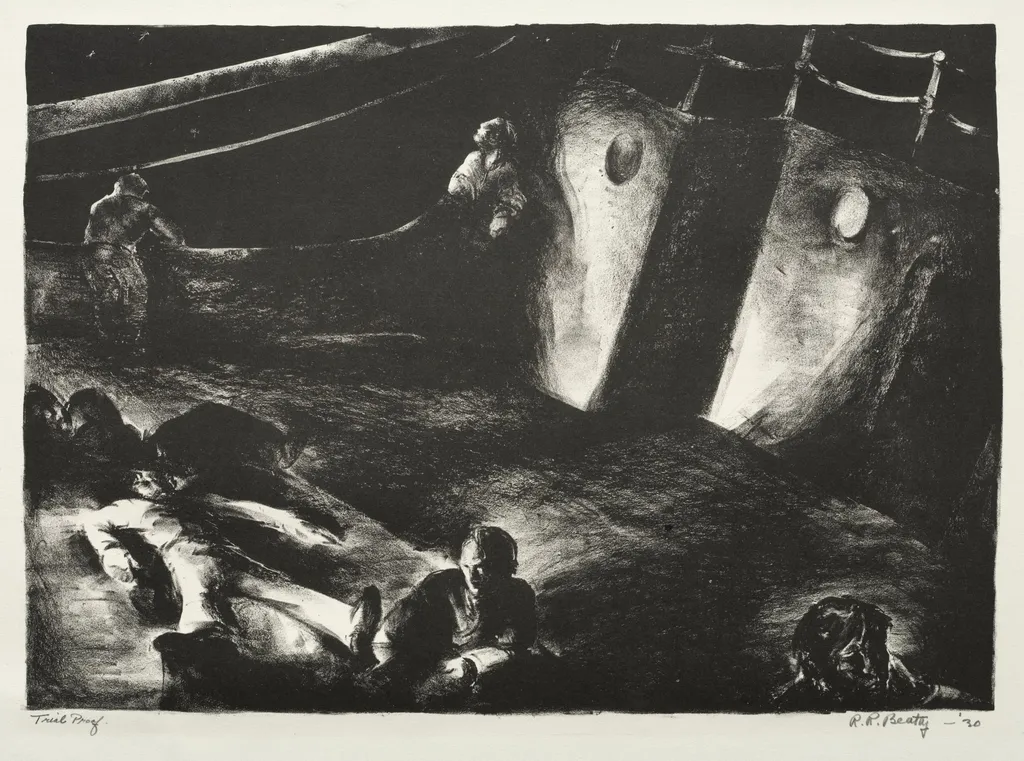
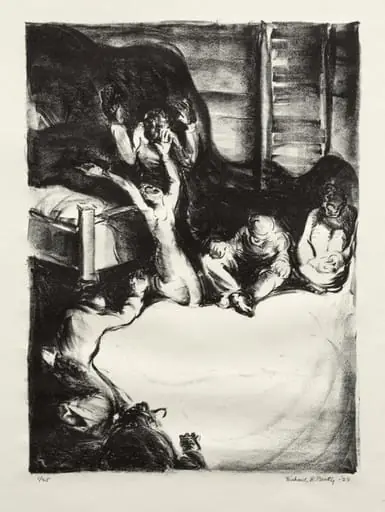
S. S. Glencairn: The Moon of the Caribbes is a print by Richard Beatty. It dates from 1930 and is held in the collection of the Cleveland Museum of Art.
About this work
Overview
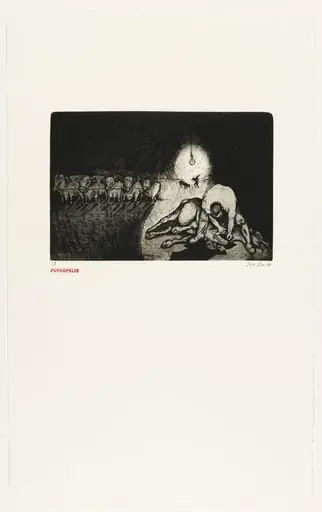
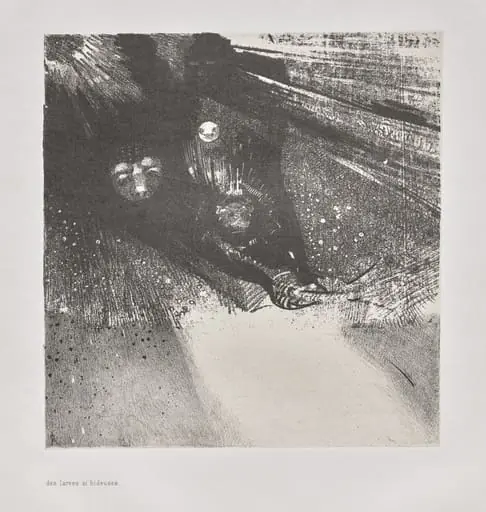
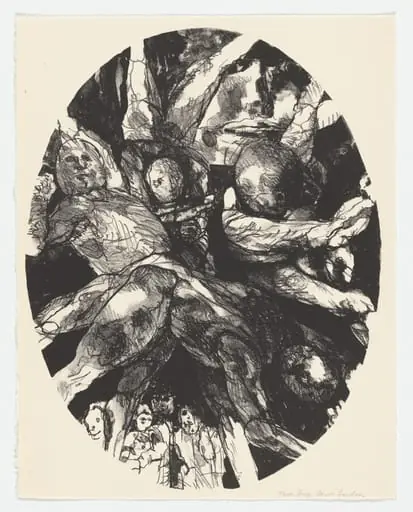
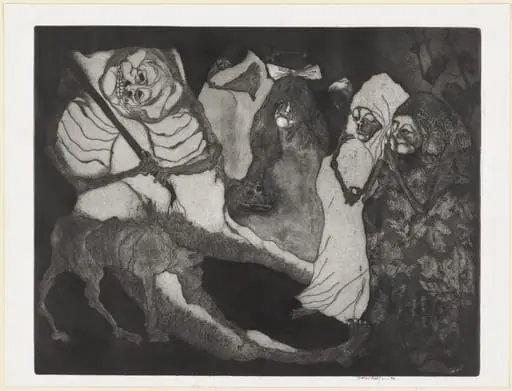
Created in 1930 by Richard Beatty, this print captures a maritime scene of crisis under a moonlit sky. The work is part of the collection at The Cleveland Museum of Art and reflects early 20th-century American interest in dramatic seascapes. Though titled after a vessel, the focus lies in the human and atmospheric tension rather than the ship’s identity.
Subject & Meaning
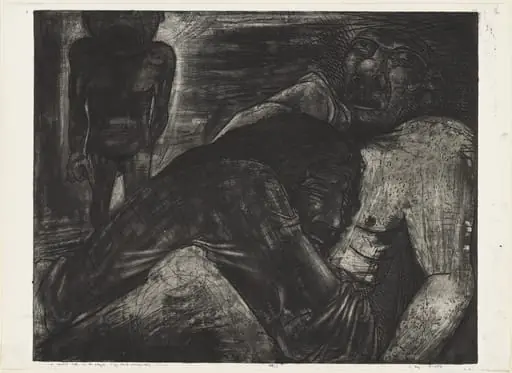
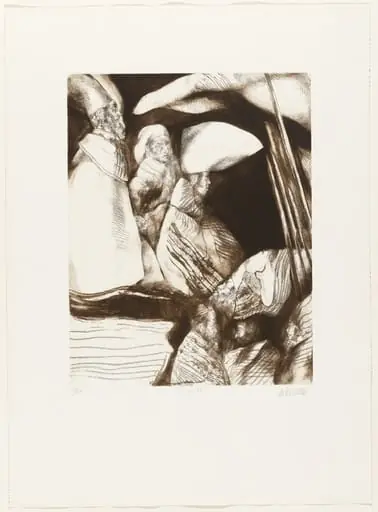
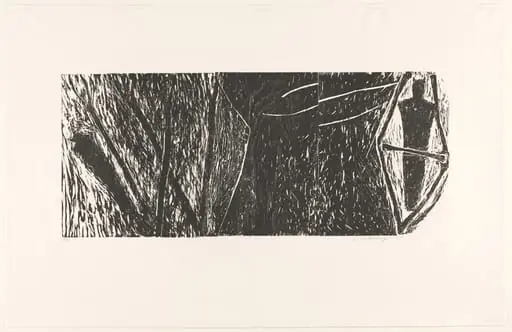
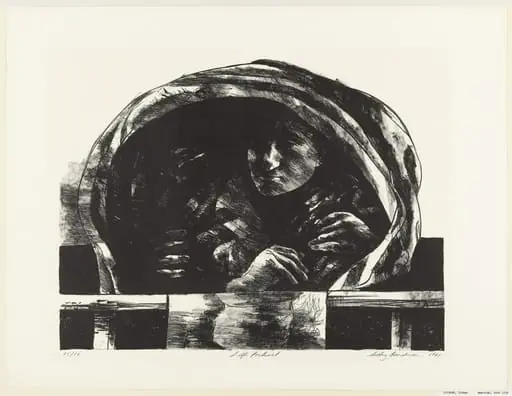
The scene portrays a ship in peril, with figures scattered across the deck and in the water below. One figure lies prone, suggesting injury or exhaustion, while others react with varied urgency. The moon, cold and luminous, casts an impartial light over the chaos, evoking isolation and the inevitability of nature’s power over human endeavor.
Technique & Style
Beatty employs stark contrasts of light and shadow to heighten emotional intensity. Bold, fluid brushwork conveys motion and disorder, while the limited palette emphasizes mood over detail. The composition directs the viewer’s eye toward the central figure and the moon, reinforcing the narrative’s gravity through controlled visual hierarchy.
History & Provenance
The work entered The Cleveland Museum of Art’s collection shortly after its creation. Little is documented about its exhibition history prior to its acquisition, but its inclusion in a major institution suggests early recognition of its emotional resonance. Beatty’s output from this period remains relatively understudied, limiting broader contextual analysis.
Context
Produced during a time when American artists increasingly turned to maritime themes to explore human vulnerability, the print aligns with broader cultural interests in survival, isolation, and the sublime power of the sea. It reflects a shift from romanticized seafaring to more psychologically charged depictions of crisis.
Legacy
Though not widely reproduced or exhibited beyond institutional settings, the print stands as a quiet example of early 20th-century American printmaking that prioritized emotional atmosphere over narrative clarity. It contributes to a lesser-known strand of regional art that valued mood and tension over spectacle.
Artist & collection