Artwork
Anna Maria van Schurman
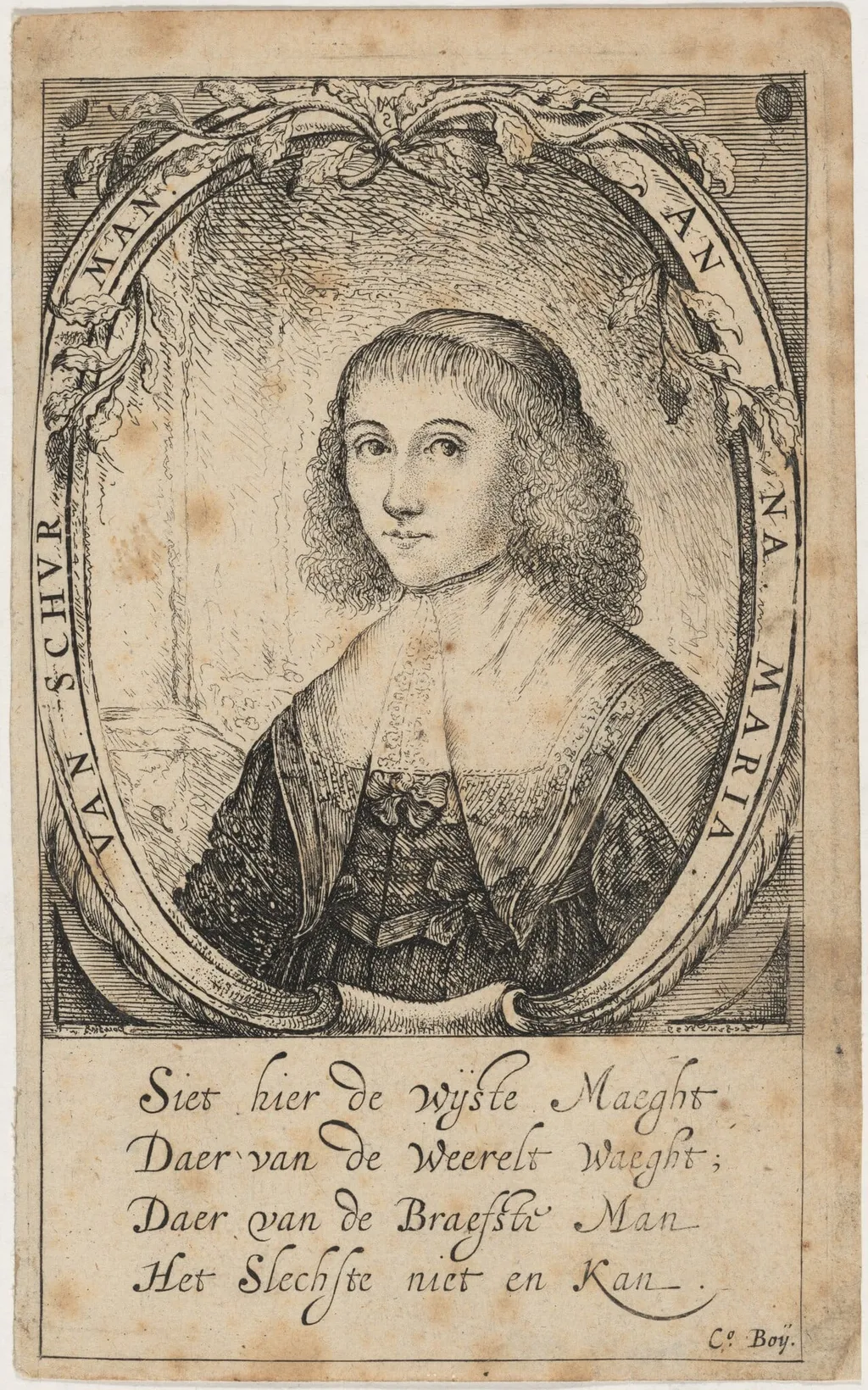
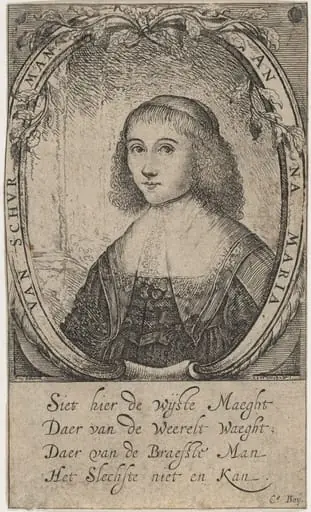
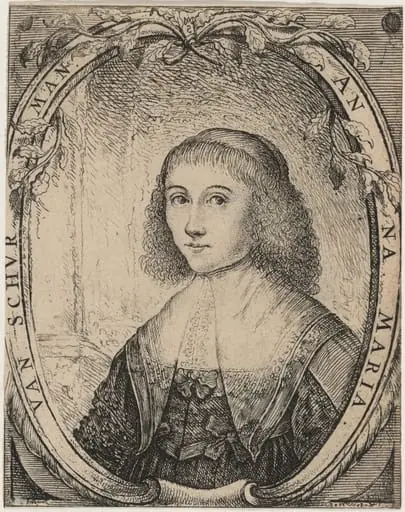
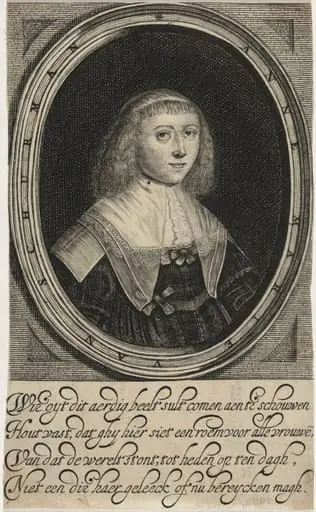
Anna Maria van Schurman is an ink print by the Baroque artist Paulus Lesire. It dates from 1643 and is held in the collection of the National Gallery of Art.
About this work
Overview
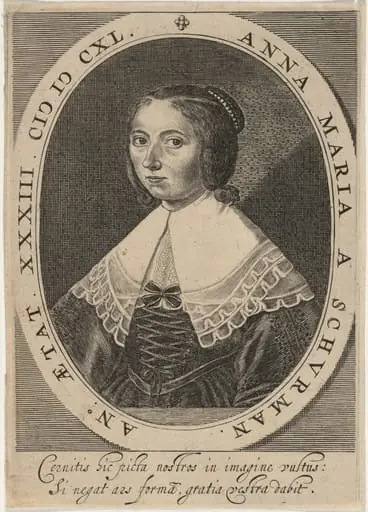
An engraving on laid paper from 1643 depicts Anna Maria van Schurman, a Dutch scholar and intellectual. The print was made by Paulus Lesire, a painter who worked in The Hague and was influenced by the artistic developments of Leiden. The medium and precision suggest a deliberate, intimate portrayal, typical of portrait engravings intended for scholarly circulation rather than mass reproduction.
Subject & Meaning
Anna Maria van Schurman was recognized for her mastery of multiple languages, philosophy, and theology—rare achievements for a woman in the 17th century.
Anna Maria van Schurman was recognized for her mastery of multiple languages, philosophy, and theology—rare achievements for a woman in the 17th century. The engraving presents her with composed dignity, her gaze steady and inward, reflecting her intellectual stature. Her attire, though outdated, signals her adherence to personal conviction over fashion, reinforcing her identity as a thinker apart from societal norms.
Technique & Style
Lesire employed fine, controlled lines typical of engraving to render texture in her clothing and subtle gradations in her facial features. The soft modeling of light recalls Rembrandt’s chiaroscuro, though adapted to the linear constraints of the medium. The precision of detail suggests a close observation of the sitter, likely based on a drawing or direct study, emphasizing authenticity over idealization.
History & Provenance
Created in 1643, the engraving was produced during Lesire’s later years, after his time in Leiden where he encountered Rembrandt’s circle. It was likely made to accompany scholarly texts or as a gift among intellectual networks. The print’s survival in museum collections indicates its early recognition as a significant representation of a learned woman in a male-dominated academic world.
Context
In mid-17th-century Netherlands, women were largely excluded from formal education and public intellectual life. Van Schurman’s prominence as a polyglot and theologian made her an exceptional figure. This portrait, circulated among humanist circles, served as both a personal likeness and a quiet assertion of women’s capacity for scholarly achievement within a restrictive social framework.
Legacy
The engraving endures as a visual record of a woman who challenged gendered limits of knowledge. It contributed to the broader cultural recognition of female intellectuals in the early modern period. Though not widely reproduced, its presence in institutional collections affirms its role in documenting the quiet revolution of women’s intellectual visibility in Dutch society.
Artist & collection
Artist
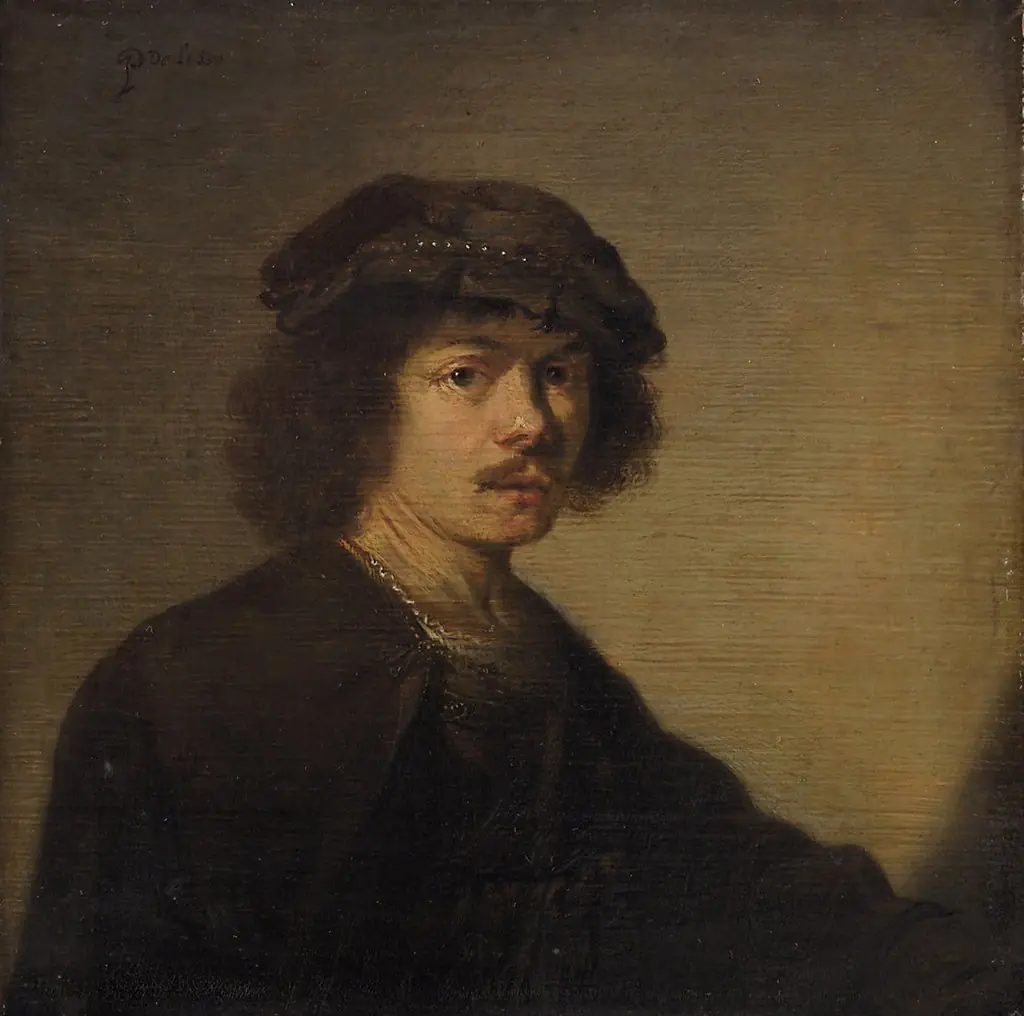
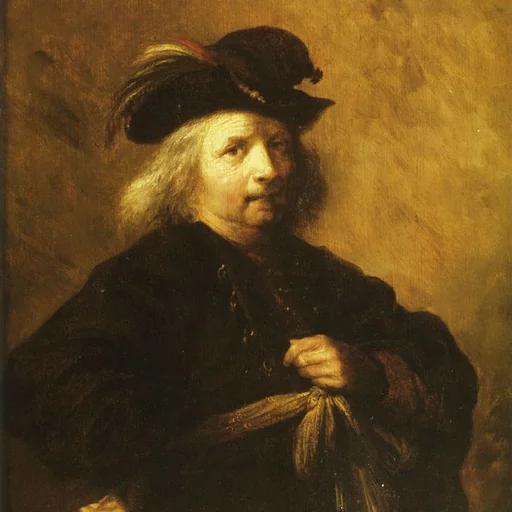
Paulus Lesire (1611–1654) was a Dutch painter who specialised in history paintings and portraits.