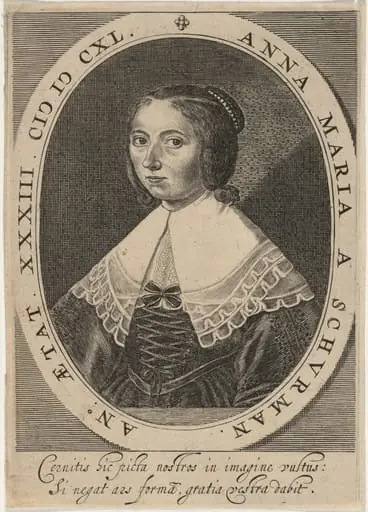
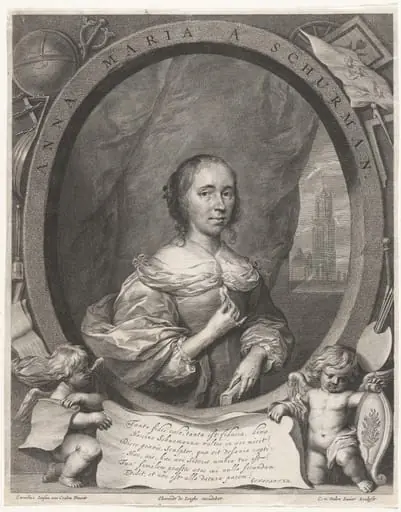
Artwork
Anna Maria van Schurman
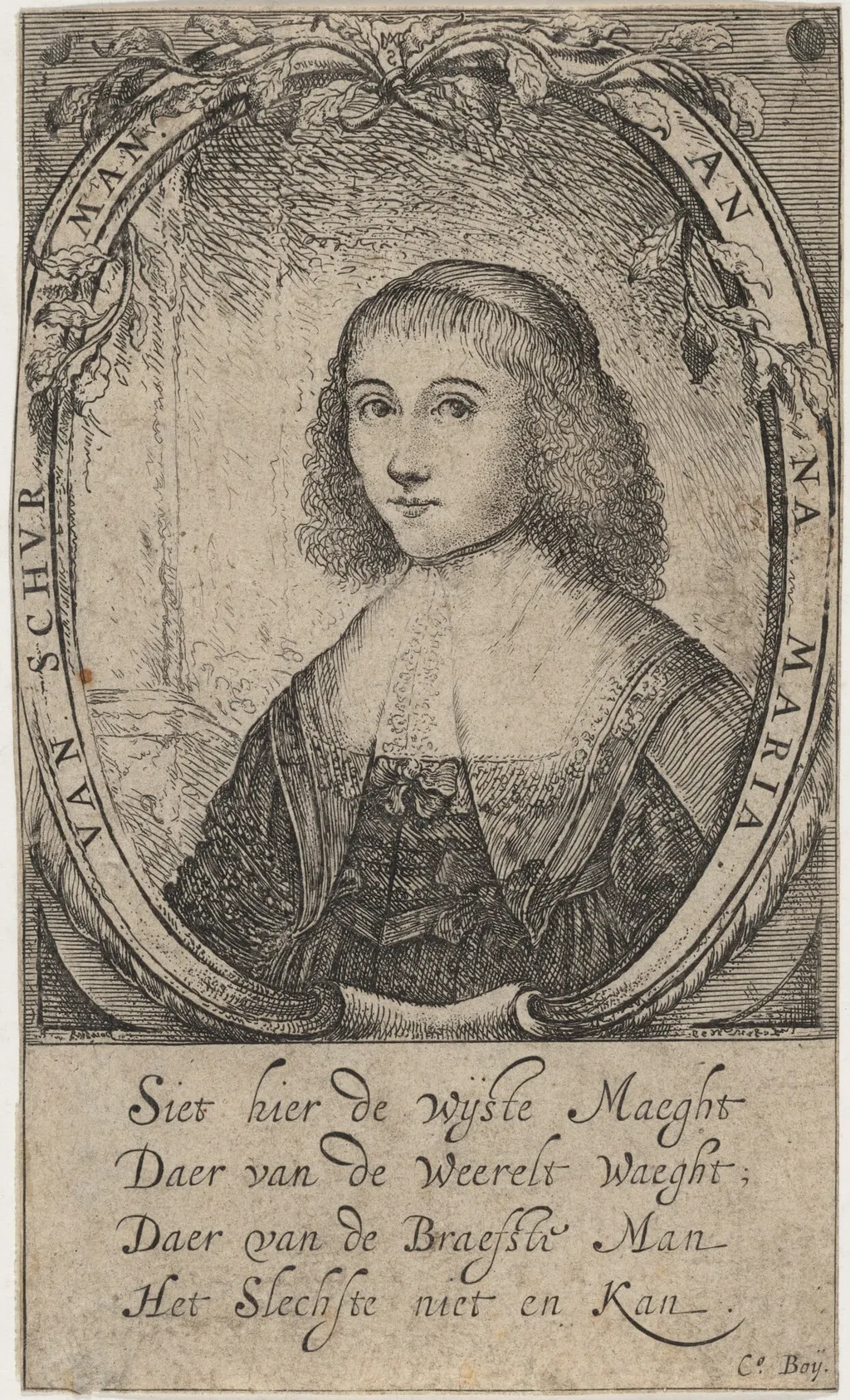
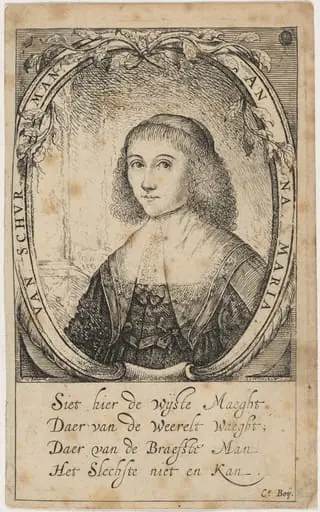
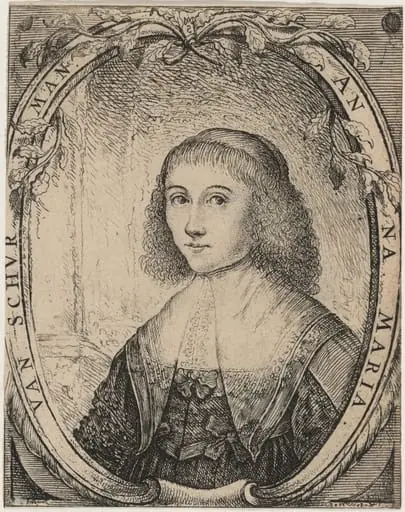
Anna Maria van Schurman is an ink print by the Baroque artist Paulus Lesire. It dates from 1643 and is held in the collection of the National Gallery of Art.
About this work
You can learn more about the technique used to create this image, engraving.
This painting shows a woman, Anna Maria van Schurman, in a simple dress.
She's looking straight at us with a calm face.
The artist made this engraving in 1643, which is interesting because it was a way to share images of important people with many others, and Anna Maria van Schurman was a learned woman who wrote about her beliefs.
You can learn more about the technique used to create this image, engraving.
Overview
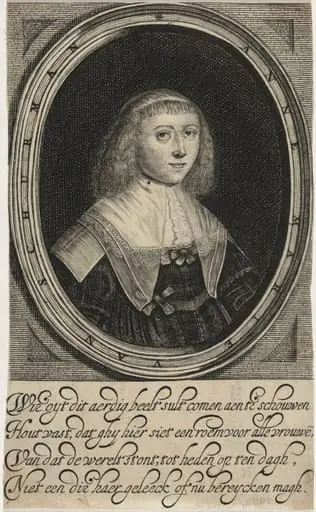
An engraving on laid paper from 1643 depicts Anna Maria van Schurman, a respected intellectual of the Dutch Republic. Created by Paulus Lesire, a painter and printmaker active in The Hague, the work is a portrait intended for wider circulation. Engraving allowed for the reproduction and dissemination of images, making such portraits accessible beyond private collections and offering a public representation of scholarly women.
Subject & Meaning
Anna Maria van Schurman was known for her erudition, linguistic talents, and writings on theology and women’s education. The portrait presents her with quiet composure, dressed plainly and gazing directly at the viewer. This unadorned presentation underscores her identity as a thinker rather than a noblewoman, aligning her image with intellectual virtue rather than social status, a deliberate choice in a culture where female scholarship was uncommon.
Technique & Style
Paulus Lesire employed engraving to render fine tonal gradations and delicate linework, capturing the texture of fabric and the subtlety of facial expression. His approach shows affinities with Rembrandt’s use of chiaroscuro, particularly in the modeling of light across the face and collar. The composition is restrained, focusing attention on the sitter’s presence without extraneous detail, reflecting the engraving’s function as a dignified, portable likeness.
History & Provenance
Lesire, trained in Dordrecht and admitted to its Guild of Saint Luke in 1631, was the son of a decorative painter and glass artisan. He later worked in The Hague, where he produced portraits and prints. This engraving of van Schurman was made during his mature period, likely commissioned or authorized by her circle. Its survival in multiple impressions suggests it was circulated among learned networks, possibly as a token of intellectual admiration.
Context
In mid-17th-century Holland, women like van Schurman were rare in scholarly circles, yet their visibility was growing through correspondence, publications, and portraiture. Engravings served as tools for constructing reputations beyond the domestic sphere. This portrait aligns with a broader trend of depicting learned women as moral and intellectual exemplars, reinforcing their legitimacy in a male-dominated academic culture.
Legacy
The engraving endures as one of the few contemporary visual records of van Schurman, preserving her image for later generations. It contributes to the historical record of how women’s intellectual authority was visually negotiated in the early modern period. As a print, it also illustrates the role of reproductive techniques in shaping public perception of scholarly figures outside the aristocracy.
Artist & collection
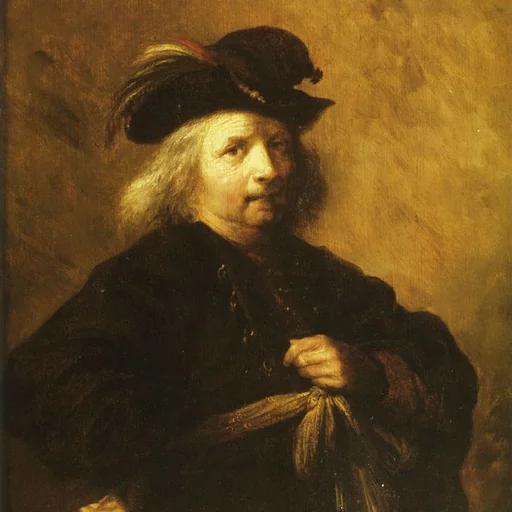
Artist
Paulus Lesire (1611–1654) was a Dutch painter who specialised in history paintings and portraits.