Artwork
Reclining Woman
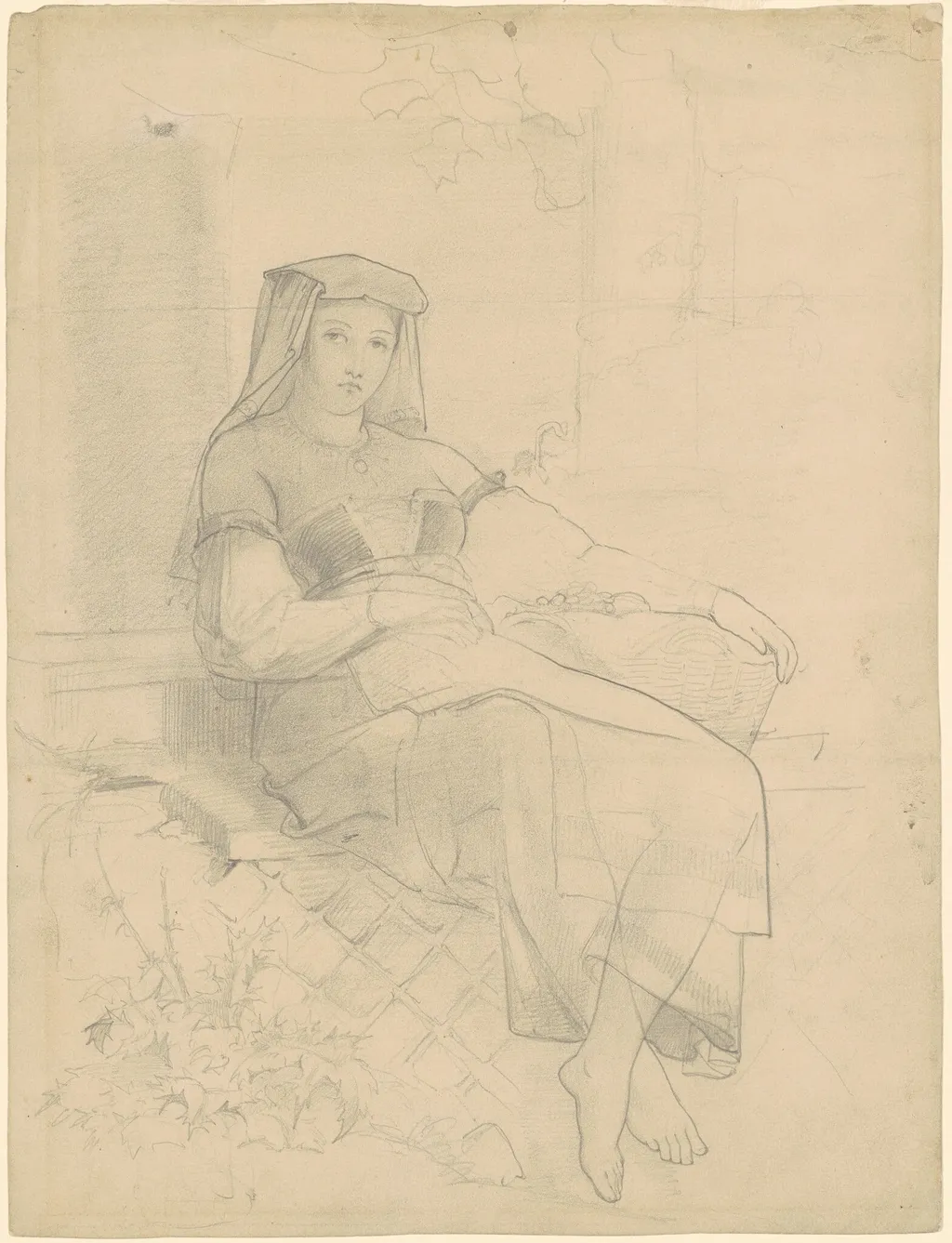
Reclining Woman is a graphite drawing by the Romanticist artist Emanuel Leutze. It dates from 1854 and is held in the collection of the National Gallery of Art.
About this work
Overview
Created circa 1854, *Reclining Woman* is a graphite drawing on wove paper by Emanuel Gottlieb Leutze, a German-born artist active in the United States.
Created circa 1854, *Reclining Woman* is a graphite drawing on wove paper by Emanuel Gottlieb Leutze, a German-born artist active in the United States. Though best known for large-scale historical narratives, this intimate work reveals his engagement with the human figure outside of grand storytelling. Its modest scale and medium reflect a private, observational practice common among academically trained artists of the period.
Subject & Meaning
The drawing depicts a woman in repose, her body relaxed and eyes closed, suggesting a moment of stillness rather than narrative action. Unlike Leutze’s dramatic historical scenes, this study focuses on quietude and physical presence. There is no symbolic or allegorical intent; the subject is rendered as a form in space, emphasizing posture, weight, and the subtlety of rest.
Technique & Style
Leutze employs graphite with controlled line and soft tonal gradations to suggest volume and surface. The drawing avoids sharp contours, instead using delicate hatching and smudging to model the figure’s form. While not employing sfumato in the Renaissance sense, the work demonstrates a sensitivity to light and shadow consistent with academic figure study traditions of the Düsseldorf school.
History & Provenance
The drawing dates from Leutze’s time in the United States, following his training in Düsseldorf and prior to his most famous commissions. It likely served as a preparatory or personal exercise, part of a broader practice of figure studies that informed his larger works. Its survival suggests it was retained by the artist or his circle, though its early ownership remains undocumented.
Context
In mid-19th century America, European-trained artists like Leutze brought academic methods to a developing art scene. Figure drawing from life was central to training, even for painters focused on history or portraiture. This work exemplifies how such studies functioned as foundational exercises—unadorned, uncommissioned, yet essential to artistic development.
Legacy
*Reclining Woman* stands as a quiet counterpoint to Leutze’s monumental public works. It underscores the importance of private practice in shaping public art, revealing the discipline behind his more celebrated compositions. As a surviving example of an artist’s daily engagement with form, it offers insight into the unseen labor of 19th-century academic training.
Artist & collection

Artist
Emanuel Leutze grew up in America but moved to Germany as a teen, where he studied art in Düsseldorf.


![Study of Half-Length Figure with Pole [verso], by Emanuel Leutze](https://artifactworldgallery.com/img/emanuel-leutze--study-of-half-length-figure-with-pole-verso--13a43a492f70c459-w320.webp)
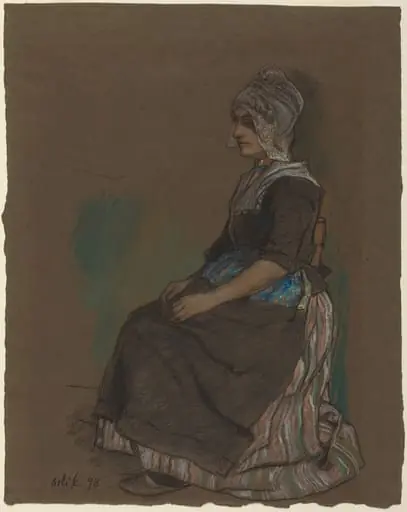 Volendam Girl in Costume
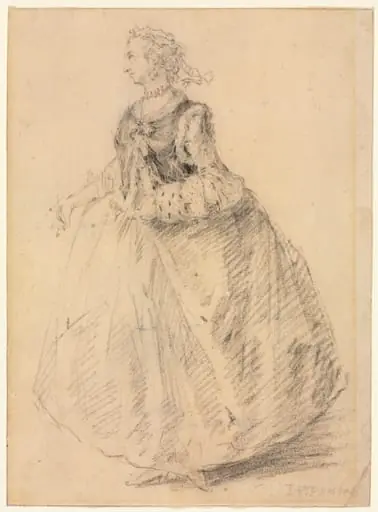 Standing Woman with an Ermine Muff
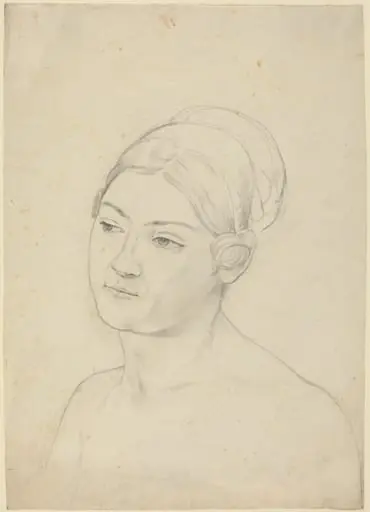 Head of a Young Woman
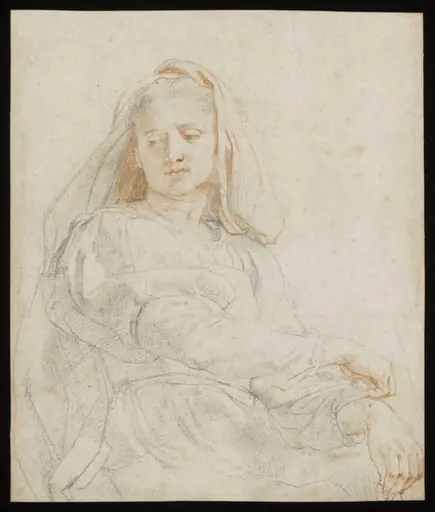 Study of a seated woman (The Virgin)
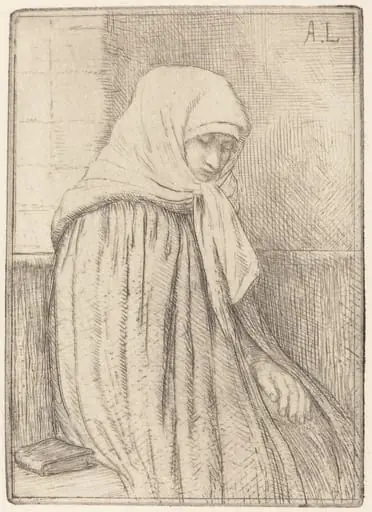 Young Peasant Seated in a Church (Jeune paysanne assise dans une eglise)
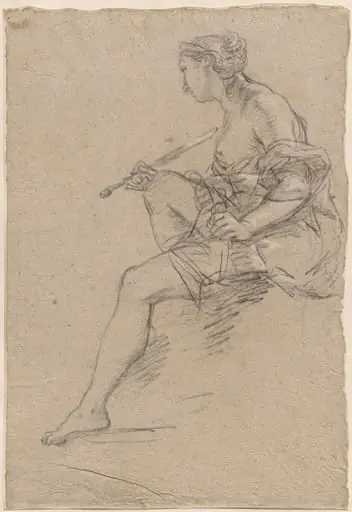 Study for an Allegory of Painting
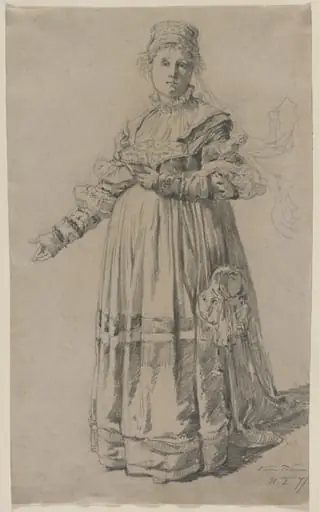 Standing Woman
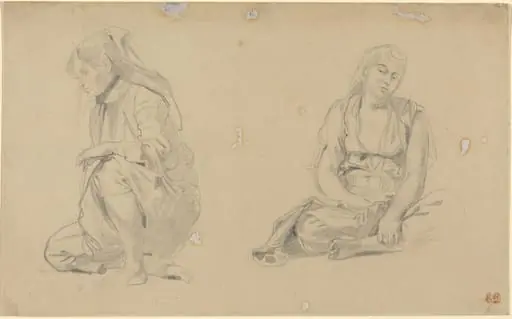 Women of Algiers
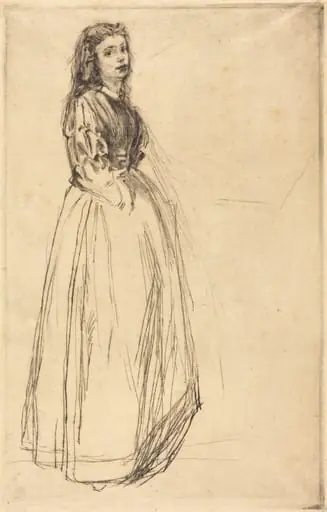 Fumette, Standing
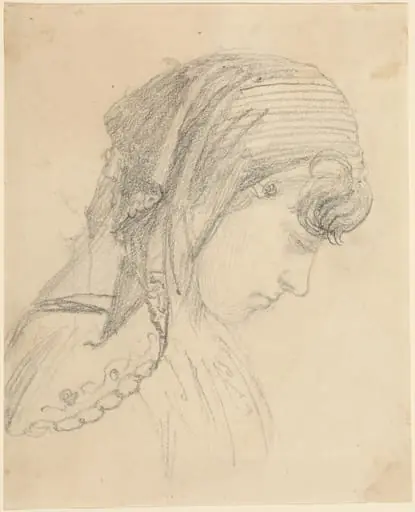 Head of a Woman in a Scarf, Looking Down
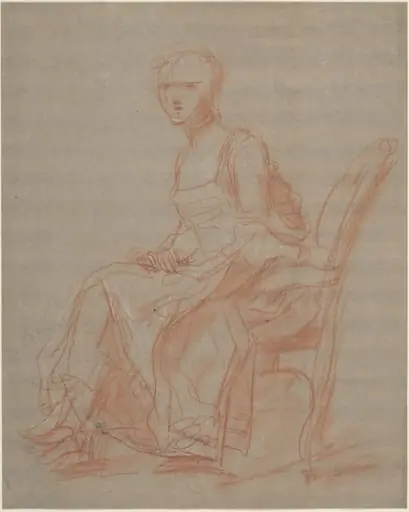 Seated Woman
![Woman in Toga [verso], by Hubert Robert](https://artifactworldgallery.com/img/hubert-robert--woman-in-toga-verso--1c4b04982206f60e-w320.webp) Woman in Toga [verso]
Woman in Toga [verso]