Artwork
Head of a Young Woman
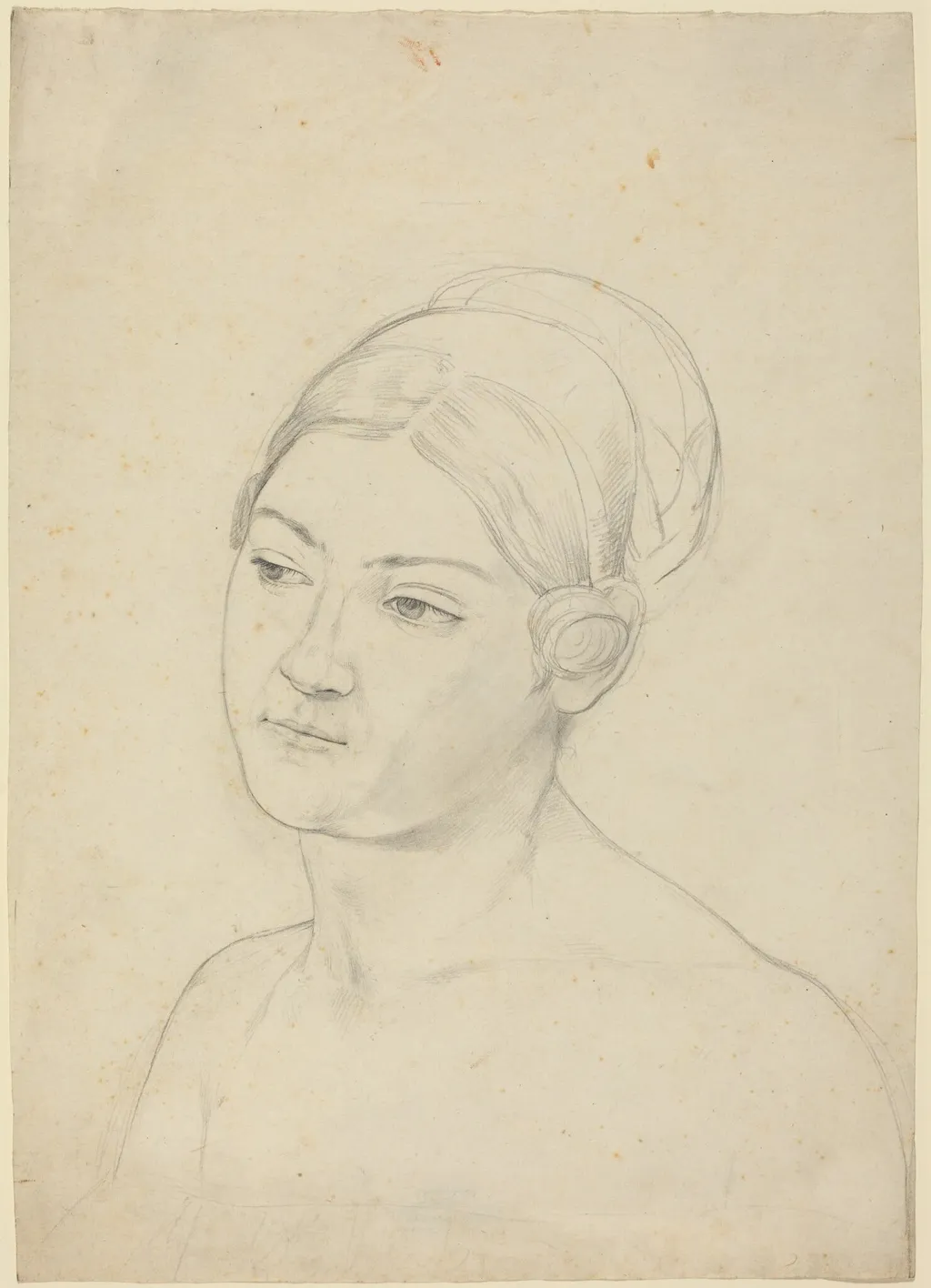
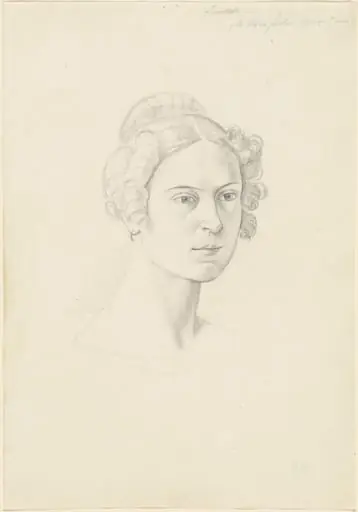
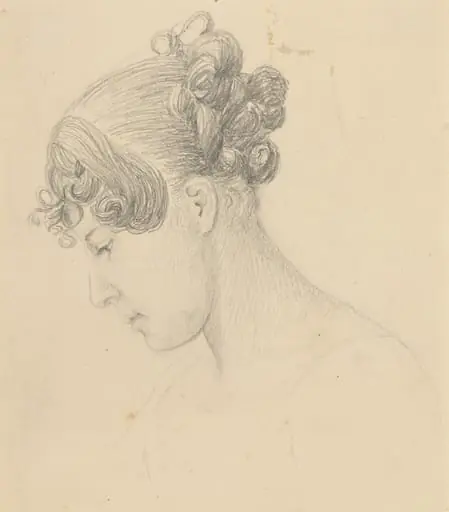
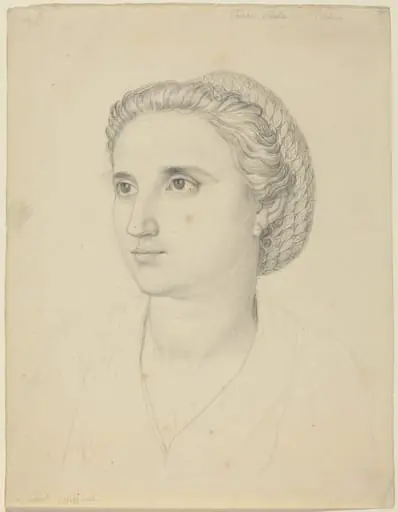
Head of a Young Woman is a graphite drawing by the Romanticist artist Moritz Daniel Oppenheim. It dates from 1844 and is held in the collection of the National Gallery of Art.
About this work
Overview
Created in 1844, *Head of a Young Woman* is a graphite drawing by Moritz Daniel Oppenheim, a German artist often identified as the first modern Jewish painter. The work presents a solitary portrait rendered in the monochrome medium typical of 19th‑century studies, offering a concise yet focused representation of its sitter.
Subject & Meaning
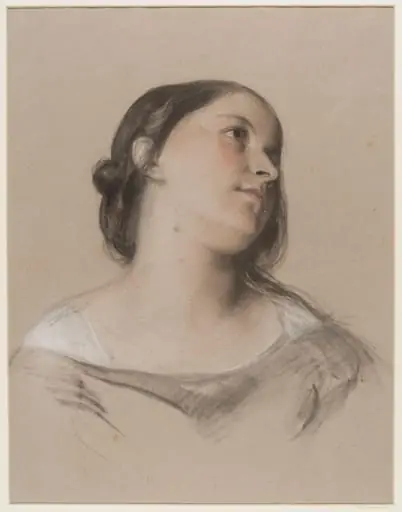
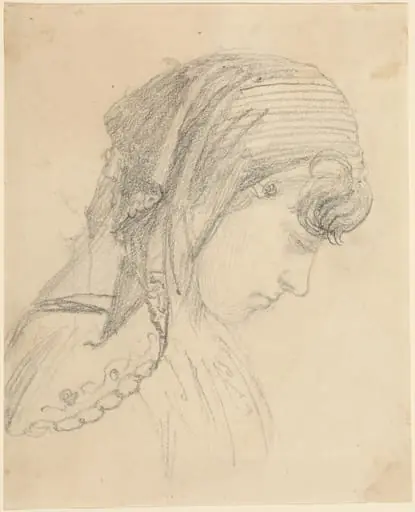
The drawing depicts a young woman rendered with careful attention to facial features and expression, suggesting an intimate study of individual identity. While the portrait does not convey an overt narrative, it reflects Oppenheim’s interest in portraying personal character within the larger framework of his cultural milieu.
Technique & Style
Executed entirely in graphite, the piece utilizes the medium’s capacity for fine line work and tonal variation. Oppenheim employs delicate hatching and subtle shading to model the face, a method common among academic drawing practices of the period, allowing a nuanced rendering of light and form without color.
Context
This drawing exemplifies how his work balanced personal identity with the broader cultural currents of mid‑19th‑century Germany.
At the time of its creation, many German Jews were navigating pressures to assimilate, often converting to Christianity. Oppenheim, aligned with the *Wissenschaft des Judentums* movement, maintained a connection to his Jewish heritage while engaging with contemporary artistic standards. This drawing exemplifies how his work balanced personal identity with the broader cultural currents of mid‑19th‑century Germany.
Artist & collection
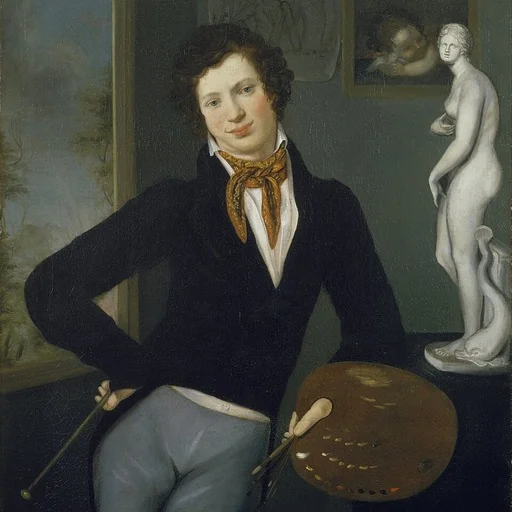
Artist
Moritz Daniel Oppenheim (7 January 1800 – 26 February 1882) was a German painter who is often regarded as the first Jewish painter of the modern era.