Artwork
St. Peter's Church
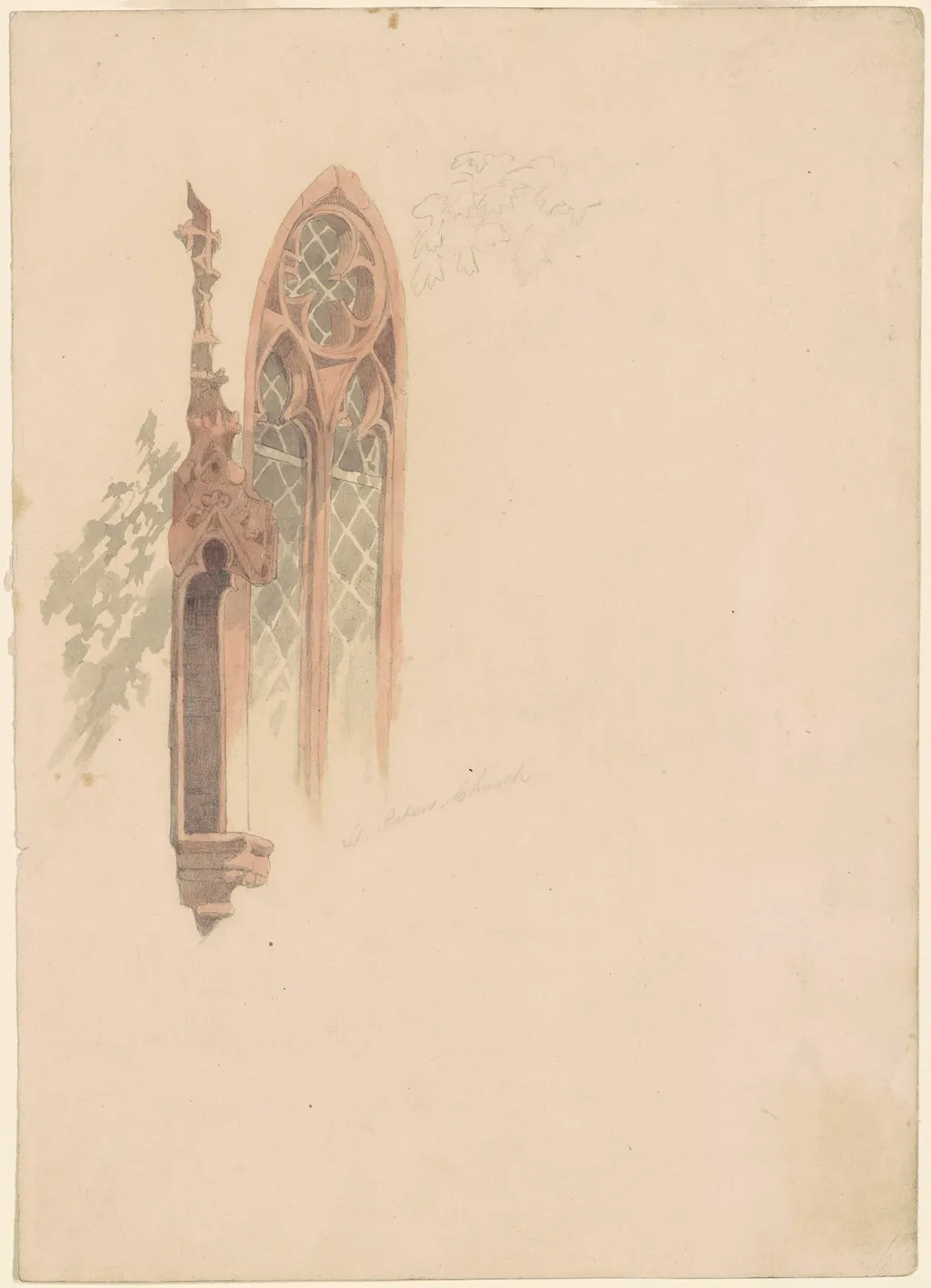
St. Peter's Church is a graphite drawing by the Romanticist artist Emanuel Leutze. It dates from 1840 and is held in the collection of the National Gallery of Art.
About this work
The painting is called St. Peter's Church.
It was made by Emanuel Gottlieb Leutze between 1849 and 1851, but the exact year is noted as around 1840.
The painting is held at the National Gallery of Art, Washington, and is an example of the Romanticism movement, which focused on emotion and imagination, and you can learn more about this style by looking into Romanticism.
Overview
Emanuel Gottlieb Leutze, a German‑born artist who later worked in the United States, produced the watercolor and graphite drawing titled *St. Peter’s Church* on wove paper in the early 1840s. The work is part of the National Gallery of Art’s collection in Washington, D.C., and exemplifies Leutze’s formative period before his later, more widely recognized historical canvases.
Subject & Meaning
The composition depicts the façade of St. Peter’s Church, rendered with a focus on atmospheric light and the building’s architectural details. While the drawing does not convey a narrative episode, its careful rendering suggests an interest in the spiritual and communal significance of the edifice within its urban setting.
Technique & Style
Leutze employed a combination of watercolor washes and graphite line work to achieve a delicate balance of tone and texture. The handling of light and the emotive mood align the piece with Romantic sensibilities, emphasizing feeling and imagination over strict realism.
History & Provenance
Created around 1840, the drawing predates Leutze’s celebrated 1851 canvas *Washington Crossing the Delaware*. It entered the National Gallery of Art’s holdings through acquisition, where it remains on view as an illustration of the artist’s early development and of American Romantic drawing practices.
Context
During the 1840s, American artists often looked to European academic traditions while also exploring a burgeoning national identity. Leutze, trained in the Düsseldorf school, blended these influences, and *St. Peter’s Church* reflects the transatlantic exchange of artistic ideas characteristic of the period.
Artist & collection

Artist
Emanuel Leutze grew up in America but moved to Germany as a teen, where he studied art in Düsseldorf.


![Study of Half-Length Figure with Pole [verso], by Emanuel Leutze](https://artifactworldgallery.com/img/emanuel-leutze--study-of-half-length-figure-with-pole-verso--13a43a492f70c459-w320.webp)
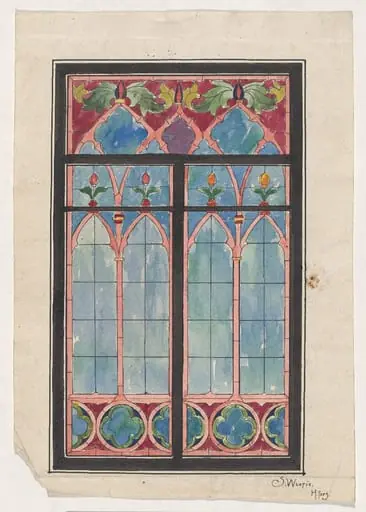 lasimaalausluonnos, kukka- ja kasviornamentiikkaa
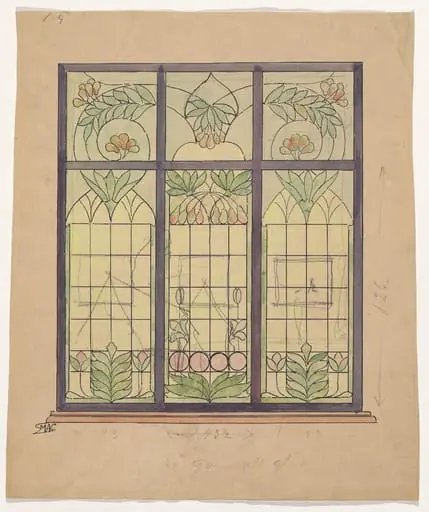 lasimaalaussuunnitelma, kasviornamentiikkaa
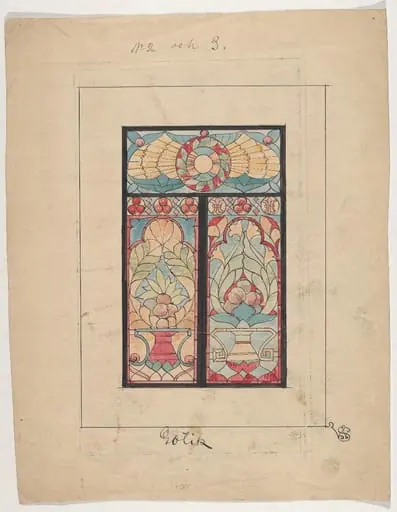 lasimaalaussuunnitelma, kasviornamentiikkaa, hedelmäkulhoja
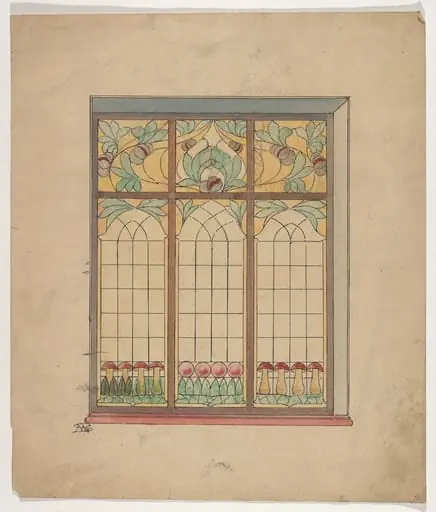 lasimaalaussuunnitelma, kasviornamentiikkaa, sieniä
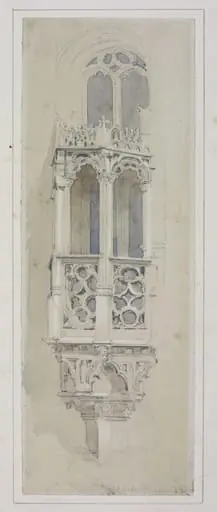 Sketch of a window and balcony, Hotel de Ville, Brussels
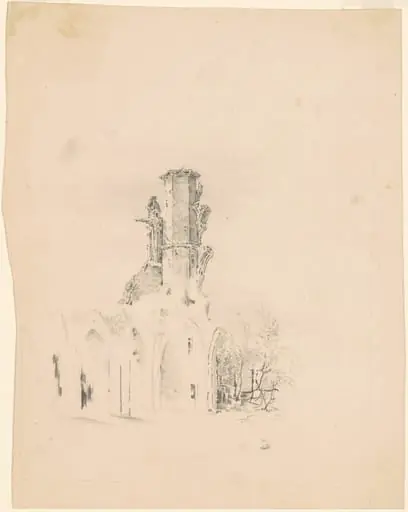 A Gothic Ruin
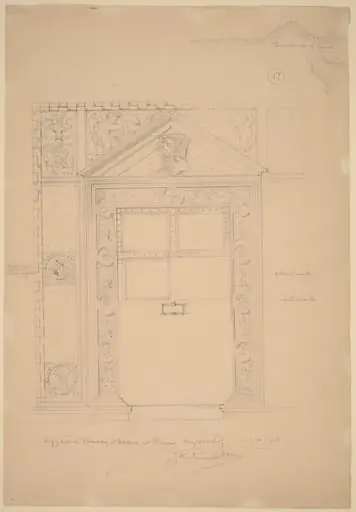 Byzantine Doorway with Duomo, Rimini
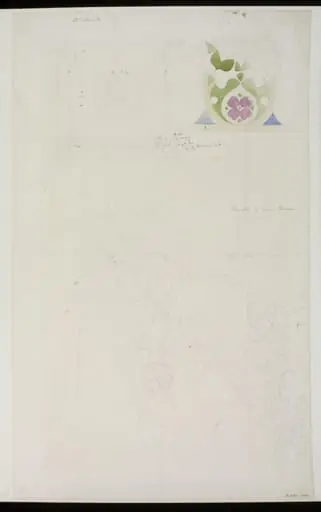 'Panells of Drawing room'
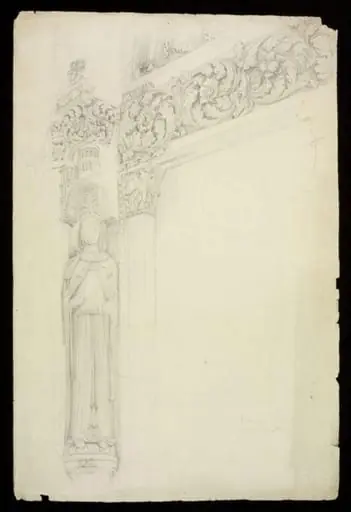 Untitled
 Untitled
 Palazzo Communale, Bologna
 Bologna Brick Wall