Artwork
Byzantine Doorway with Duomo, Rimini
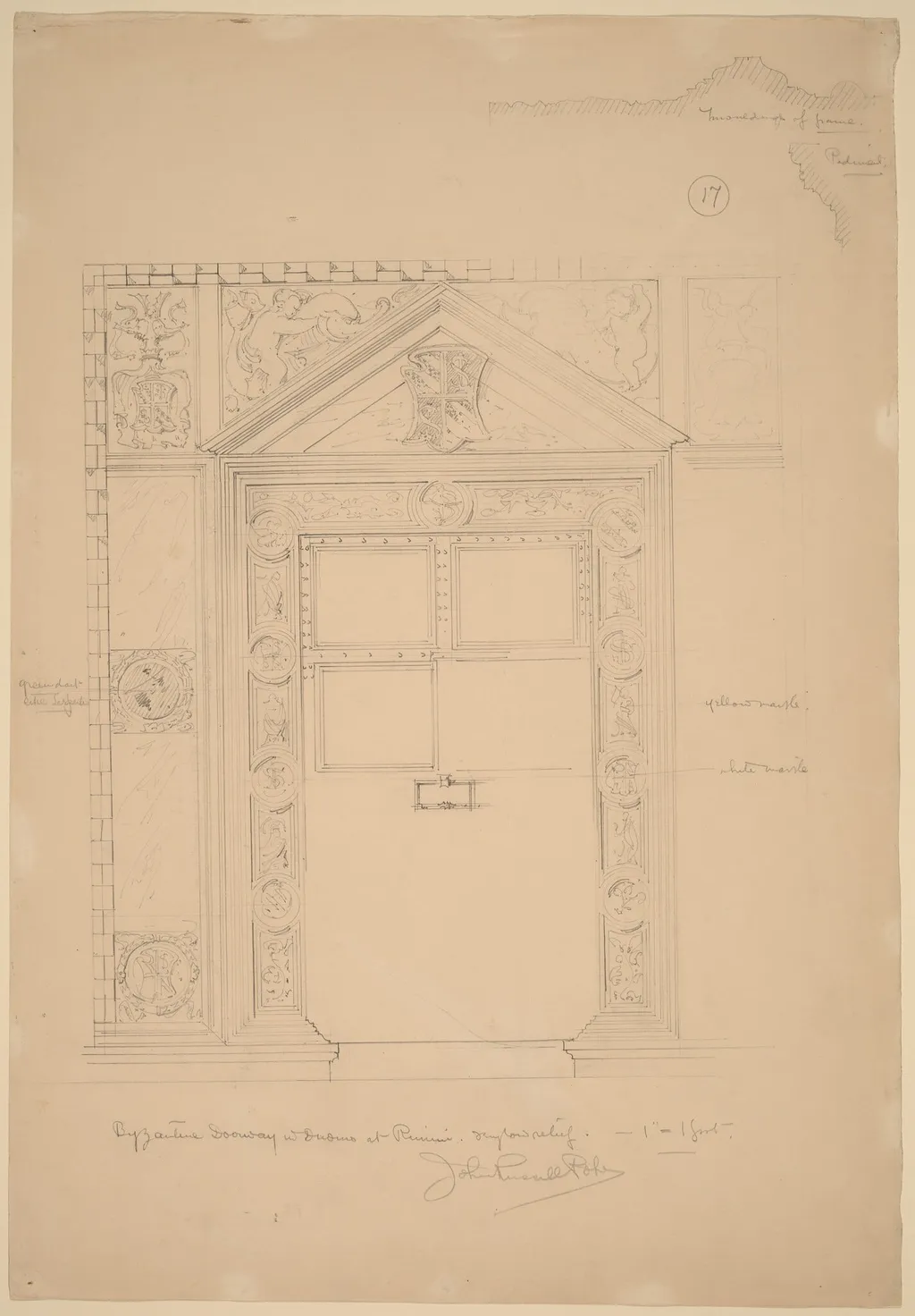
Byzantine Doorway with Duomo, Rimini is a graphite drawing by the Impressionist artist John Russell Pope. It dates from 1898 and is held in the collection of the National Gallery of Art.
About this work
Overview
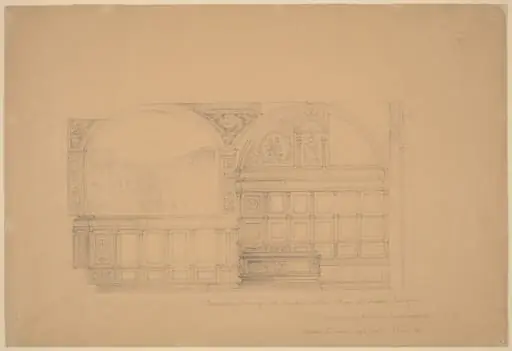
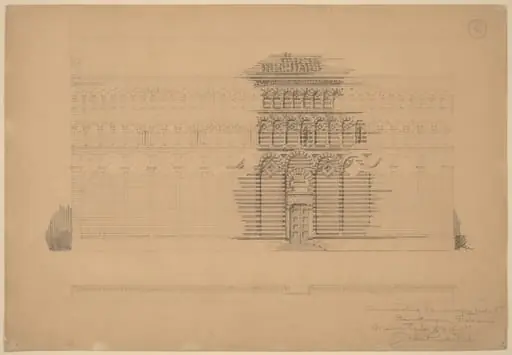
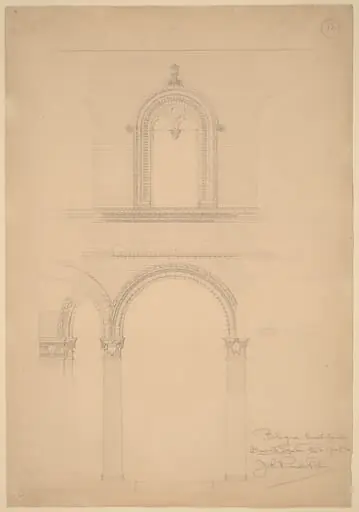
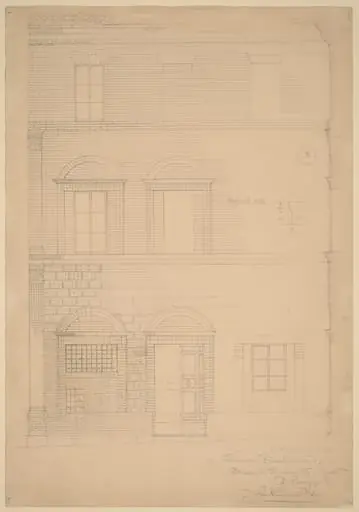
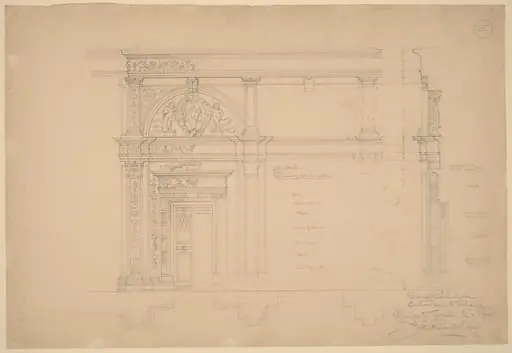
Created around 1898 by American architect John Russell Pope, this graphite drawing captures a Byzantine-style doorway in Rimini, Italy. The work functions as an architectural study, meticulously recording structural details and material qualities observed on-site. Pope’s focus on precise line work and annotated descriptions suggests its purpose was documentation rather than artistic expression.
Subject & Meaning
Decorative elements include a pointed arch with carved figures and three rectangular panels framed by columns adorned with spiral and circular motifs.
The drawing depicts a narrow, ornate doorway integrated into a larger ecclesiastical structure, likely part of the Duomo di Rimini. Decorative elements include a pointed arch with carved figures and three rectangular panels framed by columns adorned with spiral and circular motifs. These features reflect the region’s late antique and early medieval architectural heritage, emphasizing craftsmanship over grandeur.
Technique & Style
Pope employed fine graphite lines to render texture and form, using varying pressure to suggest the hardness of stone and the smoothness of marble. Subtle shading indicates light’s interaction with carved surfaces, though the drawing avoids dramatic chiaroscuro. Annotations such as 'yellow marble' and 'white marble' reveal a systematic approach, prioritizing factual accuracy over aesthetic embellishment.
History & Provenance
The drawing was made during Pope’s travels in Italy, likely as part of his architectural education or early professional research. It bears his handwritten signature and a scale, confirming its role as a working document. Its survival suggests it was retained as a reference, possibly for later projects involving classical and Byzantine motifs in American public buildings.
Context
In the late 19th century, American architects increasingly studied European historic structures to inform neoclassical and revivalist designs. Pope’s sketch aligns with this trend, reflecting a scholarly interest in regional variations of Byzantine and Romanesque forms. Such drawings were essential tools for architects seeking to translate historical details into new commissions.
Legacy
This drawing exemplifies the rigorous observational practices that shaped Pope’s later career, including his designs for the Jefferson Memorial and the National Archives. While not widely exhibited, such studies underpin his reputation for scholarly precision. They remain valuable records of architectural details now altered or lost, offering insight into the transmission of historical forms in modern American architecture.
Artist & collection


![The Erectheum, West Elevation [left half], by John Russell Pope](https://artifactworldgallery.com/img/john-russell-pope--the-erectheum-west-elevation-left-half--10b9b48e87f30a0f-w320.webp)